
Solutions
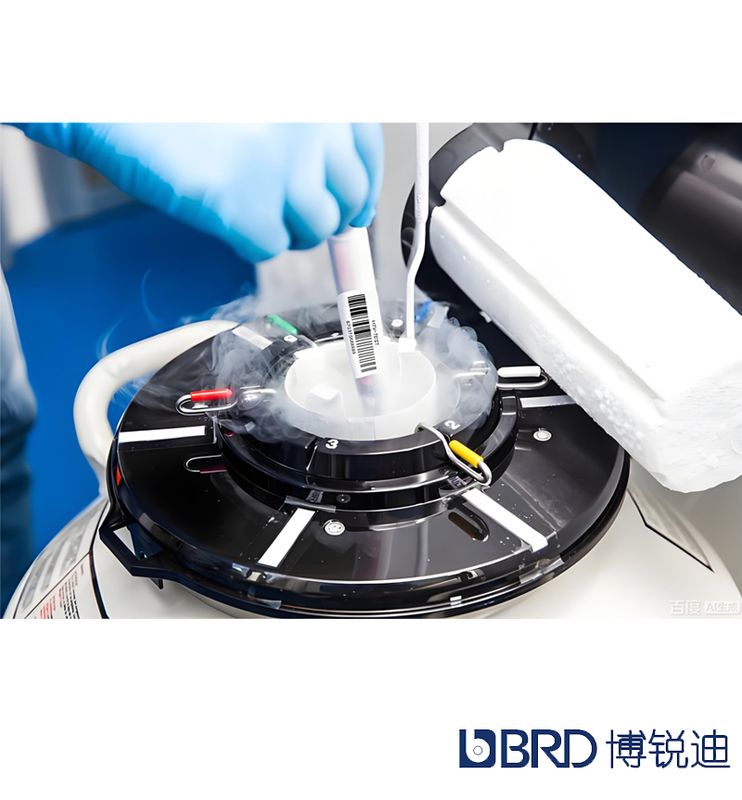
Bottom line first: selecting labels for steam sterilization packs essentially means withstanding the combined effects of 121 °C saturated steam, 100% relative humidity, approximately 0.21 MPa gauge pressure, and negative-pressure pulses during the drying stage, while simultaneously securing four requirements: "sticks firmly, prints clearly, reads reliably, traces back completely." Selection takes only three steps: first filter materials by the 121 °C moist-heat rating, then determine by application category whether the label is for the outside of the pack, the inside of the pack, or the instrument itself, and finally verify peel strength and barcode grade with a three-cycle test.
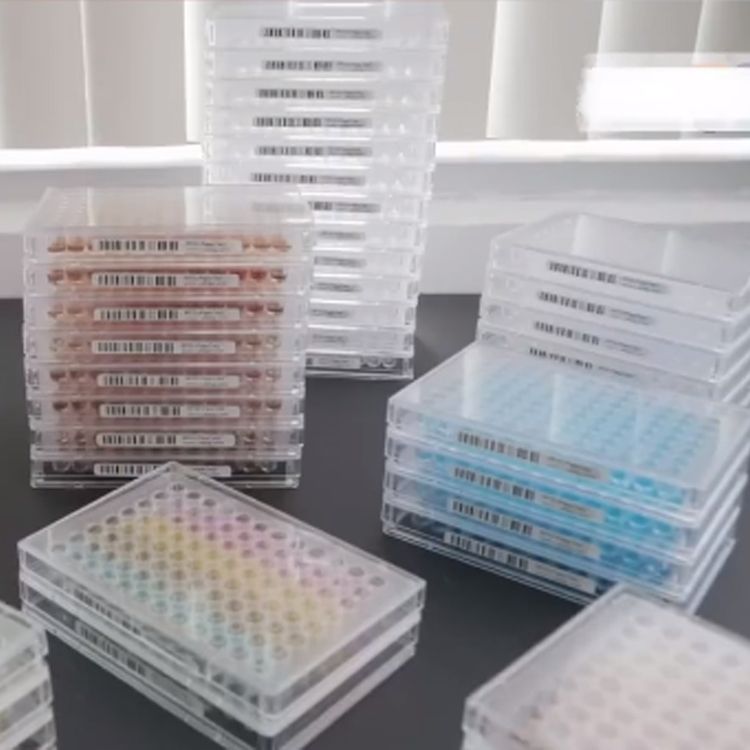
The moment a biological specimen leaves the freezer or LN₂ tank, its labeling faces conditions entirely different from static storage: temperature swings across tens or even hundreds of degrees within hours, packaging layers are repeatedly opened and closed, condensation and sublimation frost alternately form on the label surface, and the barcode must scan correctly on the first attempt in the receiving party's hands. This article provides directly actionable selection criteria: first lock in the face stock based on the lower temperature limit of the transport mode, then determine the wrap-around or flat-affix process based on container diameter, and finally assign label tiers and numbering rules according to the three-layer packaging structure.

Bottom line first: the cryo straw (also called a straw or French straw) is the specimen carrier with the smallest diameter, highest curvature, and lowest storage temperature in the laboratory, and conventional flat labels almost all fail here. What selection really needs to solve is not "which label adheres most firmly,"
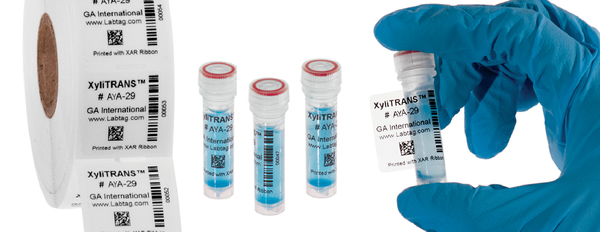
Bottom line first: For label selection for lyophilized (freeze-dried) formulation vials, the core issue is not "low-temperature resistance," but whether the label can withstand continuous switching across four process windows simultaneously: the deep-freezing pre-freeze stage, the vacuum sublimation stage, the secondary drying temperature-ramp stage, and the ambient/refrigerated storage stage after capping. Standard reagent bottle labels face only a single temperature zone, whereas labels for lyophilized vials must endure a complete cycle within 24–72 hours—from -80 °C to +40 °C, from atmospheric pressure to 0.1–0.3 mbar vacuum, and from dry conditions to high-humidity reabsorption.
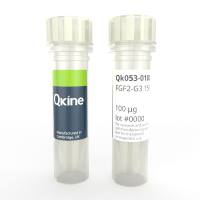
The primary cause of label detachment, bubbling, and unscannable barcodes on cell culture flasks, Petri dishes, and microplates is never that 37 °C is too high—37 °C is far below the heat resistance limit of any industrial-grade acrylic adhesive. What actually causes failure is a combination of superimposed conditions: relative humidity inside the incubator remains above 95%RH for extended periods,

In failure attribution for laboratory labels, low temperature is almost always the first suspect, but for microcentrifuge tubes this judgment is often wrong. The most common failure of microcentrifuge tube labels is not being frozen off, but being sheared off in the centrifuge. A benchtop high-speed refrigerated centrifuge with a speed of 12,000 rpm and a rotor radius of 8 cm,
Laboratory animals are the core vehicle of life science, drug evaluation, transgenic models, and toxicology research. For an SPF-grade C57BL/6 mouse, traceability across its entire life cycle—from enrollment and breeding to tissue collection—directly determines the scientific validity and regulatory compliance of experimental data. Once an animal ID code falls off, is misplaced, or creates individual ambiguity, the entire batch of experimental data may enter a "non-traceable" black box, usable neither for registration filing nor for inclusion in preclinical research reports.
Inventory, expiry, and batch traceability management of laboratory label consumables turns "that box of 200 m thermal-transfer ribbon next to the printer" and "the cryogenic label box on the third shelf in the reagent room" into auditable compliance assets under ISO 17025:2017 Clause 6.4 (Equipment) and Clause 6.5 (Metrological Traceability).
Laboratory TTI time-temperature indicator labels are irreversible color-changing labels. Applied to the surface of specimen cryovials, cold-chain shipping boxes, or reagent bottles, they present the "temperature exposure history" to the recipient as a visible color migration via chemical diffusion or enzymatic reaction. How to select: choose the mechanism and threshold window based on the storage temperature zone (-0.5 °C / 2-8 °C / 8-15 °C / -20 °C / -80 °C) and the cumulative duration window (30 min / 2 h / 8 h / 24 h),
Bottom line up front: Zoning and specimen-location labeling in laboratory refrigerators is not a "slap on a label and make it look nice" exercise—it is the infrastructure layer for cold-chain traceability of biological specimens/reagents. Per the compliance requirements of ISO 20387:2018 and ISO 15189:2022, refrigerator zoning must establish a four-level coding system of storage—zone—rack—box,
Bottom line up front: The core of LN₂ tank specimen localization is not "whether the label sticks firmly," but rather encoding the four-level spatial information—tank number, canister number, box number, and grid position—into the 2D barcode on each cryovial according to a unified coding rule, then using a barcode scanning system to locate specimens by the map. This article follows ISO 20387:2018 "Biobanking—General Requirements for Biobanking" and ISO/IEC 15416 barcode print quality assessment criteria,
With the rapid development of biopharmaceuticals, synthetic biology, and research on highly pathogenic agents, laboratory biosafety management is receiving increasing regulatory and public attention. As the core of a laboratory's "visual language," biosafety signage carries multiple functions—risk notification, personnel warning, operational guidance, and emergency contact—and serves as the first visual barrier for implementing a biosafety system (BSL-1/2/3).