
Laboratory TTI time-temperature indicator labels are irreversible color-changing labels. Applied to the surface of specimen cryovials, cold-chain shipping boxes, or reagent bottles, they present the "temperature exposure history" to the recipient as a visible color migration through chemical diffusion or enzymatic reaction. How to select: choose the mechanism and threshold window according to the storage temperature zone (-0.5 °C / 2-8 °C / 8-15 °C / -20 °C / -80 °C) and the cumulative duration window (30 min / 2 h / 8 h / 24 h), and complete the labeling SOP and audit trail per the three frameworks of ISO 20387:2018, GSP, and ISO 17025:2017.
In compliance audits of biological specimen cryovials, IVD reagent kits, cold-chain packaging for biologics, and hospital clinical laboratory reagent inventories, "has this tube of specimen experienced an excursion" is a frequently asked but difficult-to-trace question. TTI time-temperature indicator labels are designed precisely for this question: they use physicochemical mechanisms to deposit the "temperature exposure history" onto a single label, enabling the recipient to make a visual determination without relying on electronic data loggers. This article systematically breaks down TTI selection, labeling SOP, and audit trail pathways in the biological specimen and in vitro diagnostic reagent storage and transport chain per the three frameworks of ISO 20387:2018 biobanking, ISO 17025:2017 laboratory competence, and GSP pharmaceutical cold chain, and provides a compliance checklist for the combined implementation of BRD 博锐迪 Lab series cryogenic labels and GA International TempDot series.
I. What Is a TTI Time-Temperature Indicator Label: Definition, Mechanism, and Irreversibility
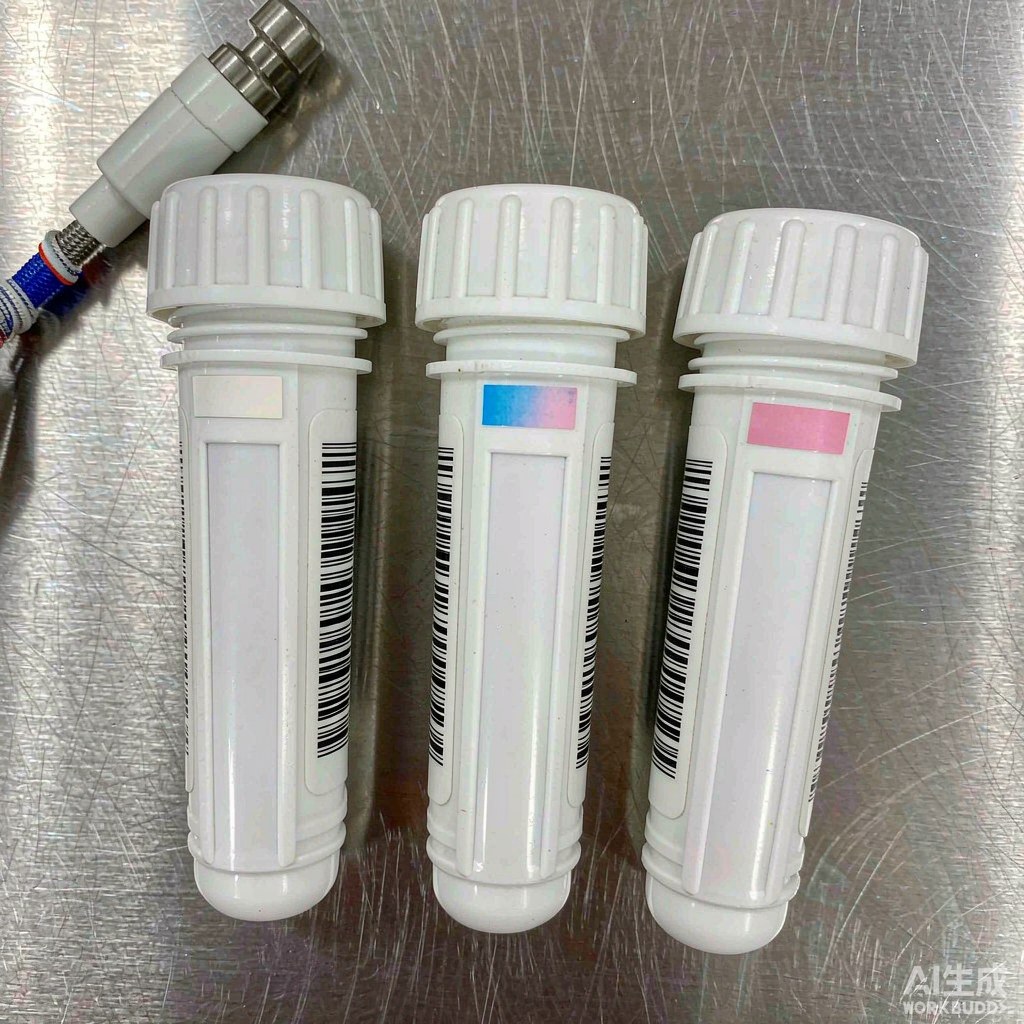
A TTI time-temperature indicator label (Time-Temperature Indicator) is an irreversible color-changing label applied to the surface of specimen cryovials, cold-chain packaging, or reagent bottles. Its core characteristic is the "cumulative and irreversible nature of the physicochemical reaction"—once the temperature exceeds a preset threshold and persists for a certain duration, the color band on the label shows a visible color migration or the color block crosses the scale line, and this process cannot be reversed.
By working mechanism, TTI is divided into three major categories:
| Mechanism type | Working principle | Accuracy (threshold ±°C) | Reusable | Typical lifetime | Typical application |
|---|---|---|---|---|---|
| Chemical diffusion type (ester/wax) | Esters diffuse along the label color band at a temperature-dependent rate; when the color front crosses the preset scale, an excursion has occurred | ±1.0 °C | No (single-use) | 1-3 years | Temperature zone threshold monitoring, incubator monitoring |
| Enzymatic type | Enzyme inactivation at a specific temperature causes substrate color change; color change correlates with the cumulative temperature integral | ±0.5 °C | No (single-use) | 6-12 months | High-precision vaccine/blood monitoring |
| Electronic type (RFID/e-TTI) | Built-in temperature sensor + microchip periodically records the temperature curve, readable via NFC/USB | ±0.2 °C | No (single-use) | 1-2 years | High-value specimens/drugs, requiring traceable curves |
Chemical diffusion TTI achieves ±1.0 °C threshold accuracy in the three temperature zones of 2-8 °C / 8-15 °C / -20 °C, sufficient for general biological specimen and reagent storage and transport; enzymatic type reaches ±0.5 °C for high-precision scenarios such as blood products and vaccines; electronic type at ±0.2 °C is used for full-chain traceability of high-value cell therapy products. In the combined BRD 博锐迪 and GA International TempDot solution, chemical diffusion type is the mainstay, with enzymatic and electronic types expanded according to precision requirements.
II. Common Laboratory Temperature Zone Threshold Windows and Cumulative Duration Comparison
The common laboratory specimen and reagent storage and transport temperature zones and corresponding TTI threshold windows can be summarized in the table below. Actual selection must be comprehensively judged in combination with the specimen's temperature tolerance curve and regulatory framework (e.g., GSP requires 2-8 °C throughout, WHO TRS 961 Annex 9 has dedicated thresholds for vaccines).
| Temperature zone threshold | Typical specimen/reagent | TTI threshold window | Mechanism selection | BRD recommended combination |
|---|---|---|---|---|
| -0.5 °C ~ +0.5 °C | Plasma/red blood cell products/platelet agitation storage | 30 min / 2 h | Chemical diffusion type (ester) + enzymatic type backup | T209 + TempDot 2-8 °C |
| +2 °C ~ +8 °C | Immunodiagnostic reagent kits / IVD calibrators / cell culture media | 2 h / 8 h | Chemical diffusion type (primarily ester) | T249 + TempDot 2-8 °C |
| +8 °C ~ +15 °C | Room-temperature drugs for short-haul / some POCT reagents | 8 h / 24 h | Chemical diffusion type (long-window type) | T249 + TempDot 8-15 °C |
| -20 °C ~ -15 °C | Enzymes / diagnostic antigens / short-term frozen specimens | 30 min / 2 h | Chemical diffusion type (low-temperature threshold type) | T449 + TempDot -20 °C |
| -80 °C ~ -60 °C | Biological specimen intermediates / cell cryovial transport segment | 2 h / 8 h | Chemical diffusion type (deep low-temperature threshold type) + dry ice control | T509 + TempDot -80 °C |
The "BRD recommended combination" in the table is based on actual compatibility testing of the 博锐迪 cryogenic label specifications and the GA International TempDot product matrix: TempDot 2-8 °C / 8-15 °C / -20 °C / -80 °C four threshold windows applied to the four base material models T209/T249/T449/T509, verified that 24 h after labeling the holding adhesion per GB/T 4851-2014 is ≥ 8 N/25 mm, and color migration interpretation is not affected by base material masking.
III. Three Typical Applications of TTI in the Biological Specimen and Reagent Storage and Transport Chain
TTI has three typical applications in the biological specimen and reagent storage and transport chain, covering biobanks, hospital clinical laboratories, and in vitro diagnostic reagent distribution.
Application 1: Specimen receiving at biobanks. When specimens arrive at the biobank from external collection points or partner institutions, the recipient verifies "no temperature zone excursion" per ISO 20387:2018 Clause 7.10. The traditional approach is to ask the transporter for temperature records or read electronic temperature data loggers, but if the transporter is not equipped with a data logger or the recorded data is incomplete, TTI can serve as visual evidence to complete the chain. BRD 博锐迪 recommends: apply TTI to each cryovial + place one electronic data logger in the cryobox for dual-channel verification.
Application 2: Reagent receiving at hospital clinical laboratories. Clinical laboratories, per ISO 15189:2022 medical laboratory quality and competence requirements, verify the storage and transport compliance of IVD reagent kits, reference materials, and quality control materials entering the laboratory. If a temperature excursion occurs during long-haul transport of reagent kits (e.g., brief power loss in a cold-chain vehicle in summer), the TTI color state serves as the basis for determining specimen acceptability criteria. Excursion reagents trigger the deviation assessment and rejection process per SOP.
Application 3: In vitro diagnostic reagent distribution. IVD manufacturers, per GSP pharmaceutical cold-chain management requirements, are responsible for the full-chain storage and transport compliance of reagent kits from factory to end user. Apply TTI to the inner wall or outer box of the shipping box so that the end customer can immediately determine whether this shipment is compliant upon receipt, avoiding the use of excursion reagent kits that could cause clinical test result deviations.
The common point of the three applications is "end-point visual verification." TTI cannot replace continuous temperature recording during cold-chain transport (this is borne by the temperature data logger), but as the final visual credential at the receiving end, it has irreplaceable evidentiary value in compliance audits.
IV. Labeling SOP: Full-Process Breakdown from Selection and Activation to Audit Trail
The TTI labeling SOP includes six steps, covering selection, activation, labeling, equilibration, scanning, and archiving. Each step has quantifiable acceptance criteria and trail fields.
Step 1: Selection. Select the TTI label with the corresponding threshold window according to the target temperature zone of the specimen/reagent (e.g., 2-8 °C) and the acceptable excursion duration (e.g., 2 h). BRD 博锐迪 recommends table-based selection from the three-parameter matrix of "specimen temperature zone × regulatory framework × TTI threshold window" to avoid empirical estimation.
Step 2: Activation. Chemical diffusion TTI requires "activation" before labeling—press the activation button on the label or peel off the release film to bring the ester into contact with the color band. The activation moment is the starting point of "temperature exposure accumulation," recorded in the LIMS or specimen receiving form.
Step 3: Labeling. Verify the peel force 24 h after labeling is ≥ 8 N/25 mm per the GB/T 2792-2014 pressure-sensitive adhesive 180° peel strength test method. Apply the label to a flat surface of the cryovial, reagent bottle, or shipping box, avoiding curved surfaces or areas where the adhesive layer has been contaminated. After labeling, press with the thumb for 5 seconds to ensure complete adhesive wet-out.
Step 4: Equilibration. If the specimen immediately enters low-temperature storage after labeling (e.g., -80 °C or liquid nitrogen vapor phase), equilibrate at 2-8 °C for 30 min first to avoid abrupt cooling causing adhesive layer stress concentration and label detachment. BRD 博锐迪 T series cryogenic labels, after 30 min equilibration at 2-8 °C and transfer to -80 °C, show no lifting 12 months after labeling.
Step 5: Scanning/Interpretation. Upon arrival at the receiving end, the scanner determines whether this shipment is compliant based on the TTI color state. For chemical diffusion TTI, if the color front crosses the threshold scale line, it is judged as an excursion; for enzymatic type, judge against the color comparison card based on substrate color change; for electronic type, read the temperature curve via NFC/USB and judge manually or automatically.
Step 6: Archiving. Compliance audits require the TTI state to be archived as part of the specimen receiving record. Archiving fields include: TTI threshold window, activation time, scanning time, color state determination, determiner, corresponding specimen ID. The archiving medium can be a scanned copy of the paper receiving form, a LIMS system record, or an electronic signature audit log.
V. Compliance Framework Comparison: Differences Among ISO 20387:2018 / GSP / ISO 17025:2017
There are three main compliance frameworks applicable to laboratories and biobanks: ISO 20387:2018 biobanking, ISO 17025:2017 testing and calibration laboratories, and GSP pharmaceutical cold chain. The three frameworks differ in their mandatory requirements for TTI and audit trail fields, and must be mapped separately in the SOP.
| Compliance framework | Applicable to | Mandatory requirements for TTI | Audit trail fields |
|---|---|---|---|
| ISO 20387:2018 biobanking | Biobanks | The specimen receiving process must falsifiably demonstrate "no temperature zone excursion"; TTI can serve as visual evidence; specimens traceable to donor | TTI threshold window, activation time, scanning time, corresponding specimen ID |
| ISO 17025:2017 testing and calibration laboratories | Third-party testing laboratories / hospital clinical laboratories | Reagents/reference materials must be verified for storage and transport compliance upon entering the laboratory; TTI abnormality triggers deviation assessment | TTI color state determination, reagent lot number, receipt time, determiner |
| ISO 15189:2022 medical laboratories | Hospital clinical laboratories / independent medical testing laboratories | The pre-examination process must meet specimen acceptability criteria; specimens with TTI abnormality are handled per the rejection process | TTI color, specimen type, rejection reason code |
| GSP pharmaceutical cold chain | In vitro diagnostic reagents / biologics | The storage and transport process must be traceable; excursion deviations must trigger deviation investigation and CAPA | TTI threshold window, deviation start/end time, deviation level, corrective and preventive actions |
| WHO TRS 961 Annex 9 | Vaccines / biologics international transport | Cold-chain breakpoints must be visually recorded; TTI used for end-point verification | TTI color, arrival temperature, transport segment number |
The difference among the three frameworks lies in the "handling process after TTI abnormality": ISO 17025:2017 requires "trigger deviation assessment," ISO 15189:2022 requires "handle per rejection process," and GSP requires "trigger deviation investigation and CAPA." The SOP should clearly specify which of the above handling pathways a TTI abnormality corresponds to, to avoid the receiving end making an interpretation with no follow-up.
Featured Products
For the label materials and application scenarios covered in this article, the following 博锐迪 (BRD) products are available for selection reference (click to view specifications and request a quote):
- Lab208-509/25.4x63.5 wrap-around cryovial biobank capillary LN₂ classification label (Request a Quote)
- Lab127-449/60x30 biobank medical vessel identification gloss white PET biobank label (Request a Quote)
VI. Combined Solution of TTI and Cryogenic Labels: GA International TempDot + BRD 博锐迪
The combined solution of TTI and cryogenic labels is the core method of BRD 博锐迪 implementation in biobanks and clinical laboratories: cryogenic labels carry the "identity identification of the specimen/reagent," TTI carries the "temperature exposure record experienced by the specimen/reagent," and the two are applied to the surface of the same cryovial or reagent bottle, neither replacing the other.
BRD 博锐迪 Lab series T209/T249/T449/T509 cryogenic labels are classified by base material and applicable temperature zone: T209 polyimide (PI) withstands -196 °C to +200 °C, used for LN₂ cryovials; T249 polyolefin withstands -40 °C to +80 °C, used for room-temperature/refrigerated specimen 2D barcode traceability; T449 polypropylene (PP) withstands -80 °C to +120 °C, used for microcentrifuge tubes, cryovials, PCR plates; T509 vinyl withstands -196 °C to +100 °C, used for ULT freezer specimens and microplates. GA International TempDot series TTI is classified by threshold temperature zone: 2-8 °C / 8-15 °C / -20 °C / -80 °C four windows, covering 99% of routine laboratory storage and transport scenarios.
Compliance checklist for combined implementation:
- Equilibrate cryogenic labels at 2-8 °C for 30 min before labeling, and activate TTI;
- Perform GB/T 2792-2014 peel force spot testing within 24 h after labeling (≥ 8 N/25 mm);
- Confirm the TTI color front has not crossed the activation scale line before cryovials enter the -80 °C freezer;
- At the receiving end, simultaneously interpret the cryogenic label (barcode readability) and TTI (color state);
- At archiving, associate the cryogenic label ID and TTI state to the same receiving form;
- Specimens with TTI abnormality are handled per the ISO 15189:2022 rejection process, and a GSP deviation investigation is triggered.
GA International TempDot series is available in the Chinese market through the 博锐迪 BRD channel, with localized technical support provided by the BRD team, ensuring that laboratory users have full-chain support from selection to interpretation.
FAQ (Frequently Asked Questions about Laboratory TTI Time-Temperature Indicator Labels)
Q1: What is the core difference between TTI and electronic temperature data loggers (USB Tag)?
TTI is a visually readable "credential label" applied to the specimen/packaging, requiring no power source or reading device, and the color state is the compliance evidence; an electronic temperature data logger is a continuous recorder that provides a complete temperature curve but requires dedicated reading software. The two are complementary in the compliance chain: TTI is used for rapid visual determination at the receiving end, and the electronic data logger is used for post-hoc evidence collection across the full chain. BRD 博锐迪 recommended combination: apply TTI to cryogenic cryovials + place an electronic data logger in the cryobox.
Q2: Can chemical diffusion TTI be stored long-term in -80 °C liquid nitrogen vapor phase?
Chemical diffusion TTI is designed to monitor the cumulative duration of deviation above the threshold temperature, and has no "activation" effect on long-term stable storage below -80 °C itself; its role is to monitor the threshold window when specimens are transferred from -80 °C to room temperature or during the dry ice transport segment. If specimens require long-term LN₂ storage followed by cryovial compliance verification, TTI should be applied at the stage of leaving LN₂ and entering the next temperature zone, rather than being placed long-term in LN₂.
Q3: Is the "cumulative duration" within the TTI threshold window continuous overtime or discrete counting?
Both chemical diffusion and enzymatic types are continuous cumulative mechanisms: when the temperature is above the threshold, the diffusion/inactivation reaction rate increases nonlinearly with temperature (typical Q10 ≈ 2-3); when the temperature is below the threshold, the reaction is almost stagnant. Therefore, the TTI color front position reflects the integral result of "temperature × time," rather than simple discrete counting. BRD 博锐迪 specifies in the product parameters "crossing the threshold line after Y hours at X °C."
Q4: Does ISO 20387:2018 mandate the use of TTI?
ISO 20387:2018 Clause 7.10 requires biobanks to "maintain traceability during specimen receiving and processing, and retain records of temperature zone deviations," but does not mandate the use of TTI as a specific tool. TTI is one of the visual implementation means to meet this requirement, equivalent to electronic data loggers and manual temperature records. Whether to use TTI depends on the visual determination needs at the receiving end and cost trade-offs.
Q5: Can labels be stored long-term in a -80 °C freezer after TTI application? Will the label adhesive fail?
BRD 博锐迪 Lab series T209/T249/T449/T509 series use low-temperature acrylic pressure-sensitive adhesive, verified per the GB/T 4851-2014 holding adhesion test method: 24 h after labeling, holding adhesion ≥ 8 N/25 mm, no lifting after 12 months of storage at -80 °C. Before LN₂ vapor phase storage, equilibrate at 2-8 °C for 30 min first to avoid abrupt cooling causing adhesive layer stress concentration.
Q6: Can temperature-humidity indicator labels simultaneously monitor humidity? How should the humidity threshold be set?
Some extended TTI simultaneously monitor humidity, with color zones separately displaying two scales of cumulative temperature and cumulative humidity. Biological specimen storage and transport is less sensitive to humidity (humidity inside sealed cryovials is determined by packaging), so mainstream applications still focus on temperature thresholds; IVD reagent kits are more sensitive to humidity (some lyophilized products deliquesce and fail after long-term exposure at RH > 60%), and a humidity threshold window of 10% / 60% / 80% RH cumulative 24 h is recommended. BRD 博锐迪 provides dual-indicator TTI labels on request.