
With the rapid development of biopharmaceuticals, synthetic biology, and research on highly pathogenic agents, laboratory biosafety management is receiving increasing regulatory and public attention. As the core of a laboratory's "visual language," biosafety signage carries multiple functions—risk notification, personnel warning, operational guidance, and emergency contact—and serves as the first visual barrier for implementing a biosafety system (BSL-1/2/3). This article systematically reviews the regulatory basis, internationally recognized symbols, material selection, and implementation SOPs for biosafety signage, helping laboratories establish a complete, traceable, and sustainable signage system.
1. Biosafety Levels (BSL) and Signage Classification
The World Health Organization (WHO) Laboratory Biosafety Manual classifies laboratory biosafety levels (BSL) into four tiers (BSL-1 to BSL-4). China's General Requirements for Laboratory Biosafety GB 19489-2008 and the Regulations on the Biosafety Management of Pathogenic Microorganism Laboratories set clear requirements for the facilities, equipment, and management of BSL-1/2/3 laboratories. As an intuitive visual means of risk notification, signage classification corresponds strictly to laboratory level.
| Level | Research subject | Recommended sign color | Core sign elements |
|---|---|---|---|
| BSL-1 | Non-pathogenic microorganisms | Blue/green | Biohazard symbol, level text |
| BSL-2 | Moderate pathogens | Yellow/orange | Biohazard symbol, BSL-2, responsible person |
| BSL-3 | Highly pathogenic agents | Red | Biohazard symbol, BSL-3, emergency contact |
| BSL-4 | Most dangerous pathogens | Red + special warning | Highest-level warning, dedicated control |
2. Regulatory and Standards Basis for Signage
Standardized management of biosafety signage has a clear regulatory and standards basis:
- GB 19489-2008 General Requirements for Laboratory Biosafety: specifies requirements for laboratory biosafety signage, warnings, and notification;
- WS 233-2002 General Guidelines for Biosafety of Microbiological and Biomedical Laboratories: details laboratory classification and signage management;
- WHO Laboratory Biosafety Manual (3rd/4th edition): internationally accepted reference for biohazard symbols and signage classification;
- ISO 15189:2022 Medical Laboratories—Requirements for Quality and Competence: sets requirements for laboratory environment and safety signage;
- GB 18218-2018 Identification of Major Hazard Installations for Dangerous Chemicals: implemented in conjunction where dangerous chemicals are involved.
Laboratories should establish a signage inventory and a regulatory cross-reference table to ensure every sign has a clear regulatory basis and is reviewed periodically.
3. Core Elements: Symbols, Colors, and Text
The internationally recognized Biohazard Symbol is a black three-ring pattern superimposed within an orange triangle (ISO 7010 W009), and is a mandatory element for BSL-2 and above laboratories. A complete sign should include:
| Element | Specification requirement |
|---|---|
| Biohazard symbol | Complies with ISO 7010 W009 or the corresponding national standard graphic |
| Level text | BSL-1/2/3 in Chinese + English |
| Responsibility information | Laboratory manager, emergency contact phone |
| Access notice | Warning text such as "Authorized personnel only" |
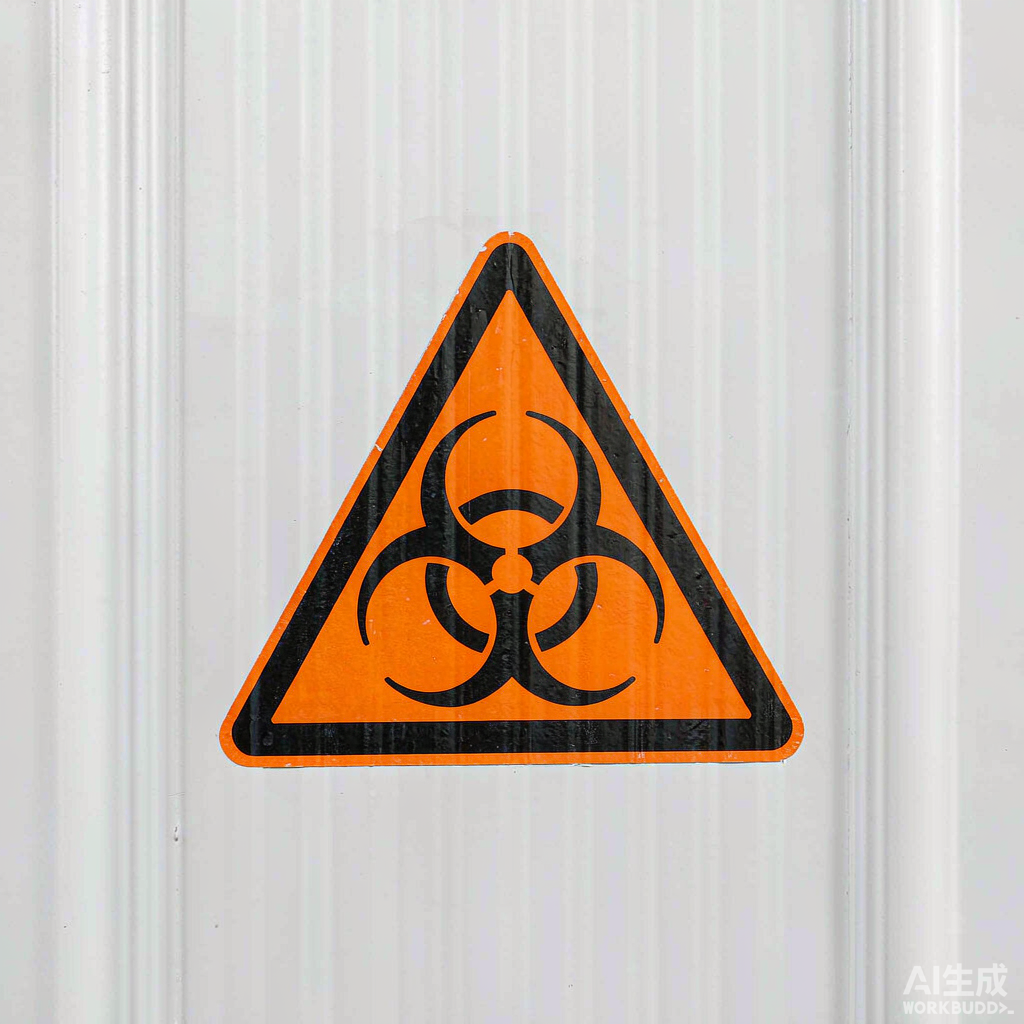
Bilingual Chinese-English signage aids international collaboration and rapid identification in emergencies, and is recommended as standard for BSL-2/3 laboratories.
4. Signage Materials and Selection: Disinfectant Resistance Is Key
Biosafety signage is continuously exposed to disinfectant wiping, UV irradiation, and frequent contact, placing far higher demands on materials than ordinary labels. Key performance requirements include:
- Disinfectant resistance: withstands repeated wiping with 75% alcohol, chlorine-based disinfectants, peracetic acid, and other routine disinfectants;
- UV resistance: face stock resists fading or embrittlement under UV irradiation;
- Reliable adhesion: long-term resistance to edge lifting and detachment on common laboratory surfaces such as glass doors, metal doors, color steel panels, and PVC boards;
- Barcode/number legibility: equipment signage must retain numbers or barcodes for asset and maintenance traceability;
Recommended face stocks: polyester (PET) solvent-resistant series, polypropylene (PP) economy series; adhesives should be permanent pressure-sensitive adhesives (high initial tack, strong final adhesion) to prevent edge lifting after disinfection. Verify peel strength per GB/T 2792-2014.
5. Signage Implementation SOP: Apply, Check, Replace, Record
Standardized management of biosafety signage requires a four-step "Apply, Check, Replace, Record" SOP:
- Apply: post signs per the inventory at laboratory entrances, biosafety cabinets, autoclaves, refrigerators, sample storage areas, and other locations;
- Check: monthly inspection of sign integrity, legibility, and adhesion;
- Replace: replace immediately upon detachment, blurring, or disinfectant erosion;
- Record: establish a signage file (location, number, activation date, replacement records) and incorporate it into the laboratory biosafety management system.
It is recommended to include signage inspection in the laboratory's monthly biosafety self-inspection checklist, conducted alongside personnel training and emergency drills.
6. Typical Scenario: Example BSL-2 Laboratory Signage Inventory
Taking a BSL-2 microbiology laboratory as an example, the signage inventory should cover the following key locations:
| Location | Sign type | Special requirement |
|---|---|---|
| Laboratory entrance door | Biohazard symbol + BSL-2 + responsible person | Posted on both outside and inside of door |
| Biosafety cabinet | Usage guidelines + maintenance records | Disinfectant-resistant face stock |
| Autoclave | Biohazard + operational warning | High-temperature wipe resistant |
| Sample refrigerator/LN₂ dewar | Biohazard + sample type | Low-temperature resistant + disinfectant resistant |
| Sink/emergency shower | Emergency use signage | High-visibility color + arrows |
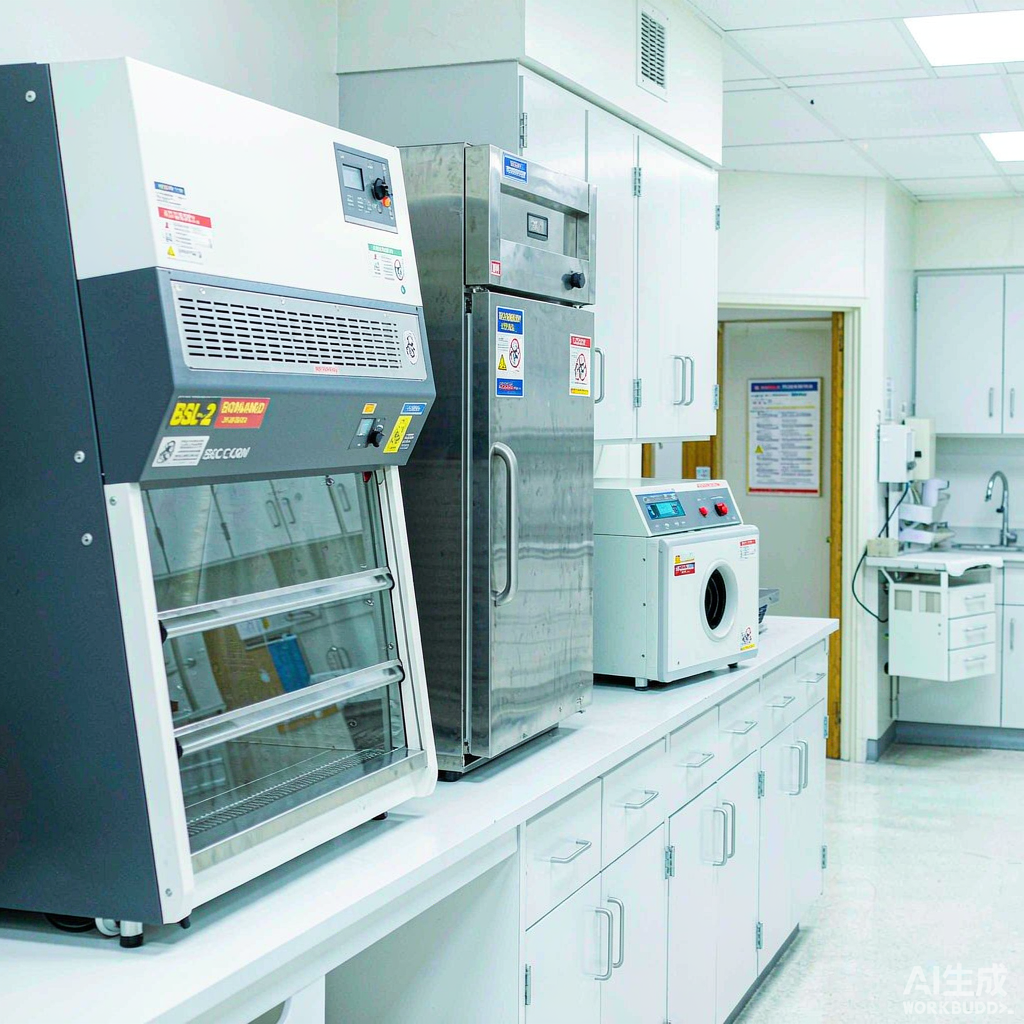
A complete inventory helps new employees quickly build spatial risk awareness and is also important evidence for biosafety audits.
7. Digitalization and Traceability: The Upgrade Direction for Signage
As laboratories advance digitalization, biosafety signage is also upgrading toward "visualization + traceability": access-control signage overlaid with RFID or QR codes can link to personnel authorization systems; equipment signage bound to asset management systems enables traceable maintenance and calibration records; sample storage signage linked to LIMS enables one-click queries of biosafety levels and disposal requirements. Signage is no longer merely notification—it becomes the "physical anchor" of the laboratory's digital twin. For medical laboratories planning ISO 15189 accreditation, integrating biosafety signage with a quality system digital platform is a worthwhile investment.
8. Common Selection Pitfalls and Corrections
| Pitfall | Recommended correction |
|---|---|
| Using ordinary printer paper instead of professional labels | Switch to PET/PP solvent-resistant face stock + permanent adhesive |
| Ignoring disinfectant resistance | Test actual condition after wiping with 75% alcohol/chlorine disinfectant |
| Incomplete sign information | Complete symbol/level/responsible person/emergency phone |
| Posting only at entrances, not at risk points | Cover biosafety cabinets/autoclaves/refrigerators per the inventory |
| Never checking or replacing | Establish monthly self-inspection and preventive replacement system |
Standardized selection and management matter more than simply pursuing signage quantity. Getting the three things right at once—materials, elements, and SOP—is what enables biosafety signage to truly fulfill its role as a "visual defense line."
Featured Products
For the label materials and application scenarios covered in this article, the following BRD products are available for selection reference (click to view specifications and request a quote):
- Lab058-329/100x100mm sample bank cryovial—off-white cryogenic LN₂ polyester label BRD (Request a Quote)
- Lab096-329-.6-OR-80x60mm biological sample bank color-coded classification identification cryogenic LN₂ label BRD (Request a Quote)
- Lab096-329-600-RD/80x60mm biological sample bank color-coded classification identification cryogenic LN₂ label BRD (Request a Quote)
- T439 sample bank -80 °C LN₂ polyester PET freezer cryogenic color label sticker for laboratory sampling (Request a Quote)
FAQ
Q: Must BSL-2 laboratories post the biohazard symbol?
Yes. According to GB 19489 and the WHO manual, BSL-2 and above laboratories should post the internationally recognized biohazard symbol at entrances and key risk points, together with level text and responsible person information.
Q: How often should signage be replaced?
There is no fixed cycle. Monthly inspection is recommended, with immediate replacement upon detachment, blurring, or disinfectant erosion; normal signage is recommended for preventive replacement every 2-3 years.
Q: Can ordinary printed labels replace professional biosafety signage?
Not recommended. Ordinary labels cannot withstand repeated disinfectant wiping and will blur and detach within a short time. Professional biosafety signage requires solvent-resistant face stock and permanent adhesives, verified for peel strength per GB/T 2792-2014.
Q: How should the emergency contact phone on signage be set up?
It is recommended to set both primary and backup contacts: laboratory manager + laboratory biosafety officer + medical institution emergency line. BSL-3 should additionally include the local CDC emergency line.
Q: Can signage be bilingual Chinese-English?
Strongly recommended. BSL-2 and above laboratory signage is recommended to be bilingual Chinese-English, meeting both the requirements for international collaboration and rapid identification in emergencies, and the ISO 15189 recommendations for internationalized signage.
Q: What additional requirements apply to BSL-3 laboratory signage?
In addition to the biohazard symbol and level text, BSL-3 signage should clearly indicate negative-pressure status, personal protective equipment (PPE) requirements, and emergency response procedures, and work with access control systems to restrict unauthorized entry.
Related Compliance Standards
Standardized management of biosafety signage can be implemented with reference to GB 19489-2008 General Requirements for Laboratory Biosafety and WS 233-2002 General Guidelines for Biosafety of Microbiological and Biomedical Laboratories; the internationally recognized biohazard symbol follows ISO 7010 W009; overall medical laboratory quality and competence meets ISO 15189:2022; signage material peel strength is verified per GB/T 2792-2014.
9. Summary and Action Recommendations
Biosafety signage is not an isolated sticker but the "visual extension" of a laboratory's biosafety management system. It is recommended to advance quickly in three steps: first, inventory existing signage per the checklist in this guide and fill in missing BSL level and responsible person information; second, gradually replace existing ordinary labels with professional signage using PET/PP solvent-resistant face stock + permanent adhesive; third, incorporate signage inspection into monthly biosafety self-inspection and annual internal audits to keep standardized management running continuously. With these three steps completed, the laboratory's "visual defense line" can be truly established.