
Solutions
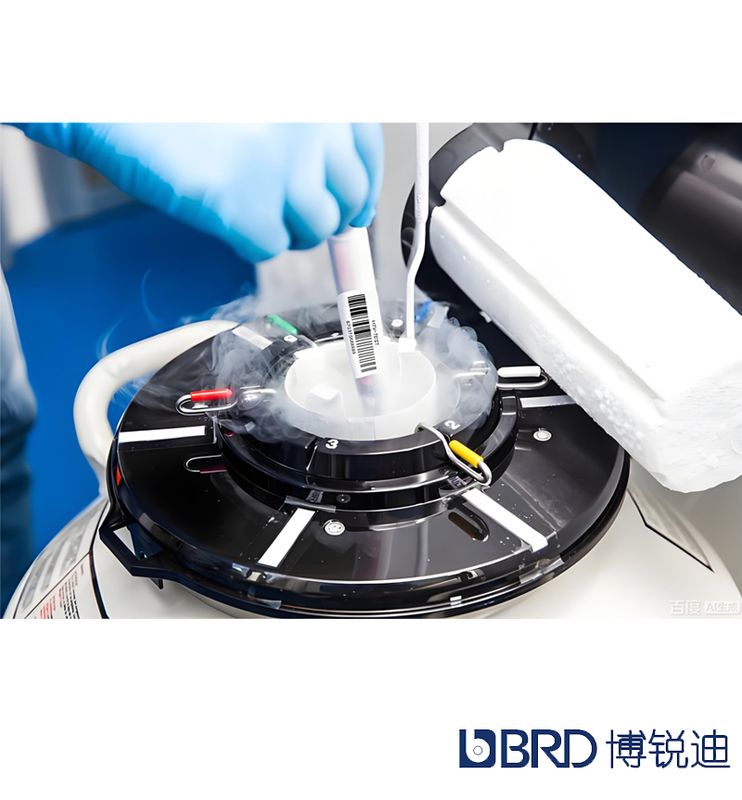
Retrieving a cryovial from a -196 °C LN₂ tank and picking up the barcode scanner—a single "beep," and the screen shows the barcode cannot be read. This is a scenario biobank operators encounter almost daily. In fact, during on-site surveys of multiple biobanks, BradyLAB BRD found that the first-scan failure rate for LN₂ labels after removal from ultra-low temperature environments ranges from 5% to 15%, and in extreme cases can reach 30%.
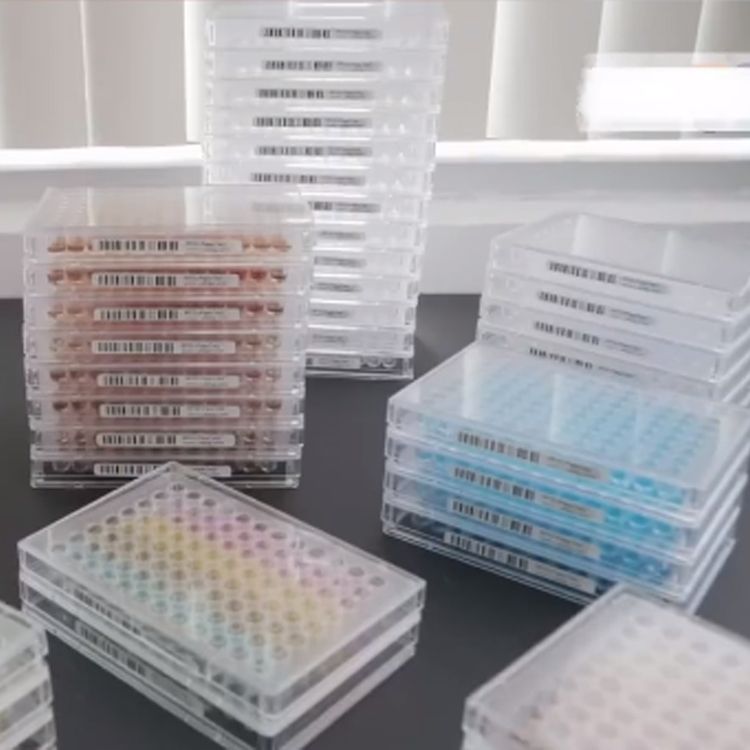
Applying LN₂ tank labels looks simple—peel off the release liner, stick it on the tube wall, press a few times. But biobank frontline operators know: with the same batch of labels, some stay put for 12 months, while others lift at the edges the very next day. The difference isn't the label itself—it's the application technique and pretreatment. In its investigation of more than 200 cases of LN₂ label detachment, BRD found that application errors accounted for up to 62% of detachments, far exceeding label material issues (23%) and environmental factors (15%).

Cryovials are among the most frequently used storage containers in biobanks. From collection and processing to storage in a -196 °C LN₂ tank, a 2 mL cryovial relies on the barcode or 2D code on its label for tracking throughout the entire workflow. If a label detaches in liquid nitrogen, becomes illegible, or fails to scan, the sample becomes "unidentified" dead stock—which is unacceptable in clinical sample management.
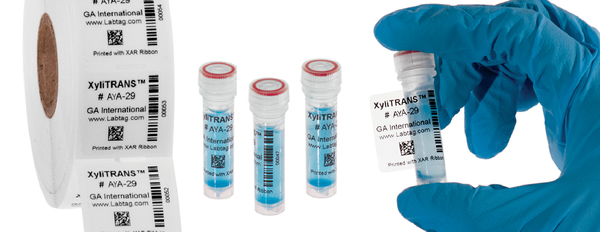
In the daily work of biobanks and laboratories, the print quality of LN₂ labels directly affects specimen traceability and management efficiency. However, many users often overlook a key factor when printing BradyLAB BRD LN₂ labels—the correct matching of the ribbon. Choosing the wrong ribbon type can, at best, result in unclear printed content and, at worst, cause labels to detach quickly in the liquid nitrogen environment, creating serious risks for specimen management.
In daily work at biobanks and laboratories, BradyLAB BRD LN₂ labels need to remain in a -196 °C liquid nitrogen tank environment for the long term, and the print quality of the labels directly determines the reliability of specimen identification and traceability security. Many laboratory staff ask the same question when purchasing LN₂ labels: Can BradyLAB BRD LN₂ labels be printed with an ordinary printer?
In the daily operations of a biobank, cryovials and cryoboxes do not stay quietly in the LN₂ dewar forever. Every retrieval, inventory check, and transfer of specimens means the LN₂ label must undergo a dramatic temperature jump from -196 °C to room temperature. These repeated freeze–thaw cycles are the ultimate test of label face stock, adhesive, and print quality.
In the daily management of biobanks, laboratory personnel often face a question: can labels used in -80 °C ULT freezers be applied directly to cryovials stored in LN₂ tanks? Through years of serving biobank customers, BRD has found that this seemingly simple question hides deep differences in materials science and adhesive technology.
In daily biobank operations, label detachment is one of the most frustrating problems. Temperatures inside LN₂ tanks drop to -196 °C, and ordinary labels become brittle, lift at the edges, or even fall off completely under such extreme cold. Even with dedicated cryogenic labels, detachment rates remain significant if the wrong product is selected or handling is not standardized. Over the past three years, the BRD technical service team has handled more than 200 consultation cases involving LN₂ label detachment.
Liquid nitrogen labels (LN₂ labels) are a type of specialty cryogenic label that maintains adhesion and legibility over the long term in liquid nitrogen environments (-196 °C). They are widely used in biobanks, cell therapy, gene sequencing, drug discovery, and other scenarios requiring ultra-low temperature storage and identification management of biological samples. Ordinary paper labels or pressure-sensitive labels quickly become brittle, peel off, or lose adhesion in liquid nitrogen environments, whereas professional LN₂ labels, through specialized face stock and adhesive formulations, maintain complete physical performance and identification function at extreme low temperatures.
With the rapid development of biopharmaceuticals, precision medicine, and biobank construction in China, laboratory demand for cryogenic labels continues to grow. Traditional imported cryogenic labels are expensive, have long lead times, and struggle to meet local customers' customization needs. Drawing on years of experience in label material R&D, BRD 博锐迪 introduces a domestic OEM labeling solution for biological laboratories and biobanks.
As a key carrier for long-term biological sample storage, the LN₂ dewar has an internal temperature as low as -196 °C, placing extremely high demands on the low-temperature performance of labels. BRD BradyLAB Lab series cryogenic freezer labels have been verified through multiple rounds of testing in liquid nitrogen environments and have been successfully applied in multiple biobank projects. The environment inside the LN₂ dewar has the following characteristics: extremely low temperature, large humidity fluctuations, and frequent access to sample tubes.
The BRD 博锐迪 Lab series cryogenic labels are designed for laboratories and biobanks and have been successfully applied in CDC centers, tertiary hospitals, research institutes, and biotechnology companies across multiple provinces and cities in China, making them an important choice for cryogenic specimen labeling. The Lab series cryogenic labels cover a variety of sizes and materials and are compatible with common laboratory containers such as 1.5 mL/2.0 mL microcentrifuge tubes, cryovials, microplates, and microscope slides.