
Bottom line first: When selecting labels for a tissue paraffin block bank, the first criterion is not whether the label can adhere to the narrow ~8-10 mm front wall of the embedding cassette, but whether the ID can pass through all six ledger stages—grossing, embedding, sectioning, storage, retrieval, and disposal—with zero loss when the same tissue exists in parallel across three carriers: room-temperature permanent paraffin block archive, frozen tissue at -80 °C or in liquid nitrogen, and room-temperature slide archive. The tiered selection conclusion is: the room-temperature paraffin block and embedding cassette tier follows the xylene- and H&E-staining-resistant route; the official T424 covers liquid nitrogen -196 °C, hot water 100 °C, and room temperature, but cannot cover the -80 °C freezer tier; for the cryogenic tier, select T629 nylon cloth or T459 self-laminating; the slide archive tier uses T419 bright white PET, whose official lower temperature limit is -40 °C and cannot cover the -80 °C and liquid nitrogen -196 °C tiers. The correct approach for tissue paraffin block bank identification is to assign one material set per tier, then link the six ledger stages with a unified location code.
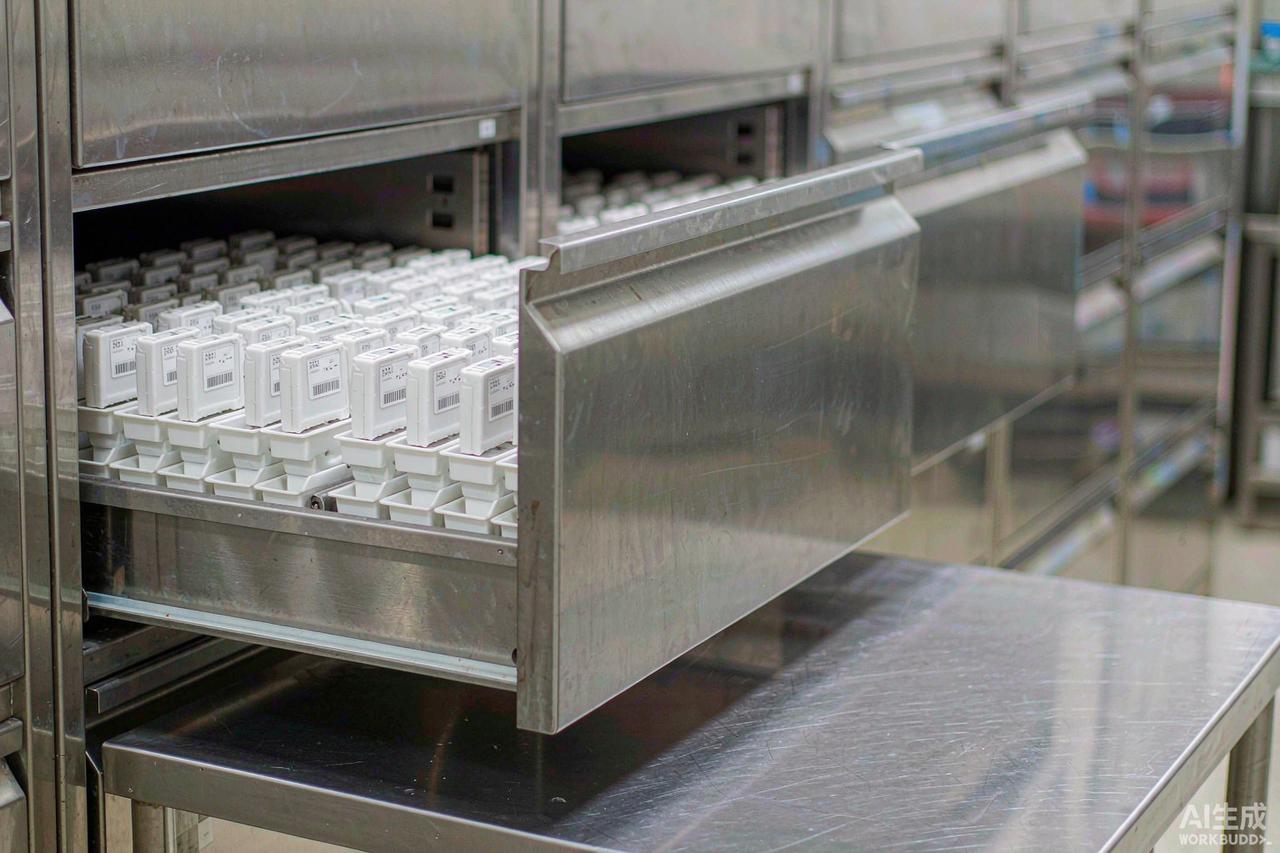
1. The three-tier parallel structure of a tissue paraffin block bank: why a single material inevitably fails
The most common mistake in pathology archives and tissue biobanks is attempting to cover all carriers with one label: after grossing, a tissue block is divided into three parts—one portion goes into an embedding cassette as a room-temperature permanently stored paraffin block, one portion goes into a cryovial in a -80 °C freezer or LN₂ dewar for subsequent nucleic acid and protein extraction, and another portion is cut into 3-5 μm thin sections mounted on microscope slides for the room-temperature slide archive. These three lines differ completely in temperature, medium, chemical exposure, and storage duration; any single material can only hold up in one of these segments.
The specific differences can be quantified: the paraffin bath during embedding typically operates at 60-65 °C, paraffin melting points are mostly 56-60 °C, and the label must withstand one molten paraffin pouring impact; after sectioning, slides undergo xylene dewaxing, typically 2 rounds of 10-15 minutes each, followed by hematoxylin-eosin (H&E) staining and graded ethanol; the frozen tissue segment faces -80 °C freezers and -196 °C liquid nitrogen vapor, with ice crystals, frost layers, and repeated freeze–thaw interfaces as the medium. The three media damage adhesive systems and face stocks through entirely different mechanisms: hot paraffin tests the adhesive layer's resistance to displacement at high temperature and low viscosity, xylene tests the face stock and ink's solvent resistance, and cryogenic conditions test the adhesive layer's holding power and crack resistance below the glass transition point.
Therefore, the identification design for a tissue paraffin block bank must first be tiered, then materials selected within each tier. The only coupling point between tiers is not the material but the ID: the same pathology number or specimen number must appear on all three carriers under the same coding rule, and each ledger stage must be traceable back to the previous stage.
2. Tier 1: Room-temperature permanent archive tier for paraffin blocks and embedding cassettes
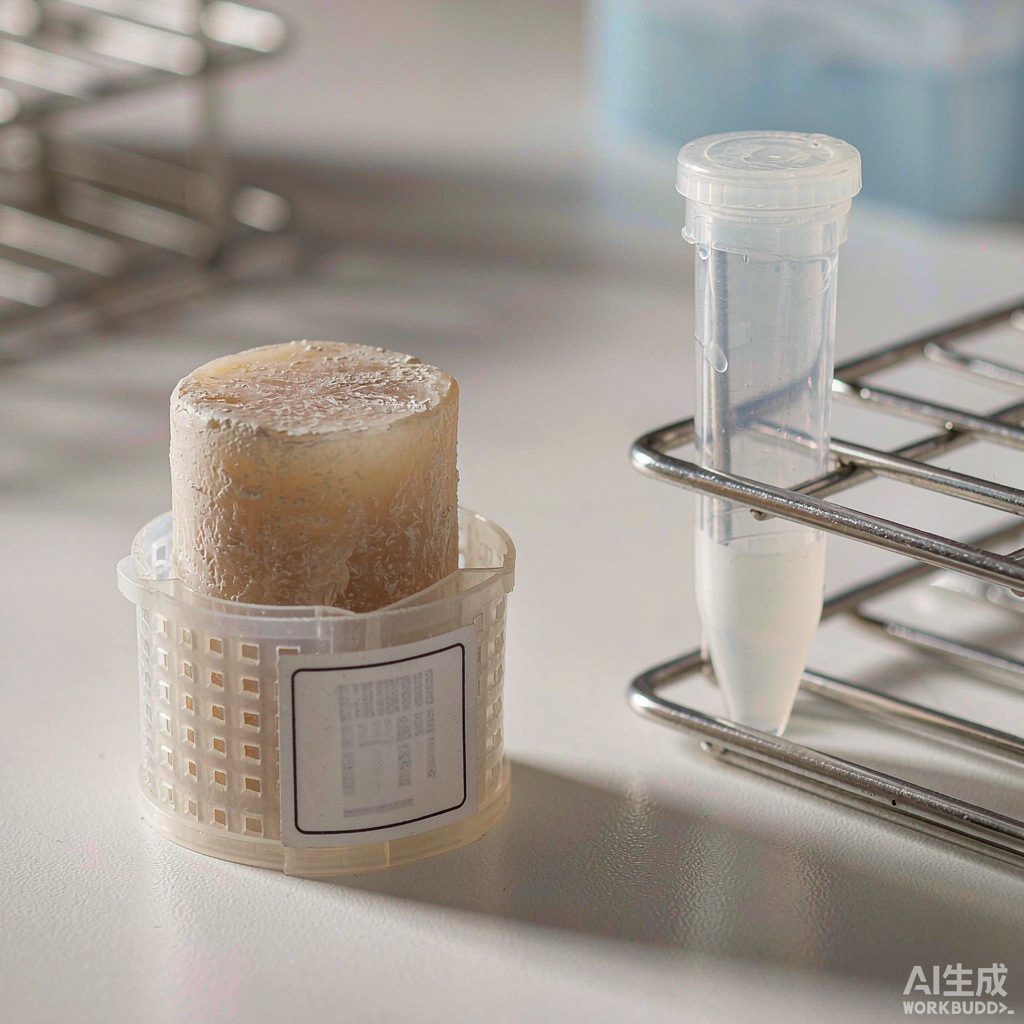
The paraffin block tier is the longest-stored tier in a tissue biobank. Routine paraffin-embedded blocks can be stably stored for over ten years under room temperature, dry, and dark conditions, and are the most reliable physical evidence for pathology review, consultation, and retrospective studies. They do not enter freezers or liquid nitrogen, yet they must withstand the harshest chemical segment of the entire tissue processing workflow.
Labels at this tier must pass three tests. The first is embedding: after the cassette is placed in the mold, 60-65 °C liquid paraffin is poured directly onto the cassette body; if the label is affixed to the outside of the cassette, it must withstand instantaneous thermal shock—the adhesive layer must not soften or flow, and edges must not lift. The second is block trimming and sectioning: the paraffin block is clamped onto the microtome chuck, with clamping force and vibration concentrated on both sides of the cassette body; a label on the stressed surface will be crushed or torn. The third is dewaxing and staining: after section mounting, slides undergo 2 rounds of xylene dewaxing; if the label material is not solvent-resistant, the print will smear or dissolve.
In the official material guide table, the corresponding material for this tier is T424: excellent chemical resistance, resistant to xylene and H&E staining processes, and must be used with resin-based ribbons for printing. The guide table checks T424 for liquid nitrogen -196 °C, hot water 100 °C, room temperature, and microscope slides. A boundary note is essential: T424 cannot cover the -80 °C freezer tier or the 121 °C autoclave tier—neither column is checked in the official guide table—so the cryogenic tier and sterilization tier must use different materials.
Regarding dimensions, the labelable height on the front wall of an embedding cassette is typically only 8-10 mm, and the cassette lid slope width is about 20-30 mm. It is recommended to affix labels preferentially to the cassette lid slope or the flat section of the front wall, avoiding the chuck clamping zone and the cassette bottom edge; label width should be kept within 80% of the usable width to leave a margin against edge lifting.
3. Tier 2: -80 °C and liquid nitrogen tier for frozen tissue
The frozen tissue tier operates under completely different conditions from the paraffin block tier. If tissue is stored in a -80 °C freezer after excision, RNA integrity is typically assessed on a 1-5 year scale and declines with storage time; if placed in -196 °C liquid nitrogen vapor or liquid phase, it can theoretically be stored long-term, but the label faces an entirely different failure mode—not chemical attack, but low-temperature shrinkage mismatch and frost formation/refrosting.
The official mainstay for this tier is T629 nylon cloth label: easy to apply, resistant to high and low temperatures, good conformability. The official guide table checks it for four temperature tiers—liquid nitrogen -196 °C, freezer -80 °C, hot water 100 °C, and autoclave 121 °C—and also checks room temperature, microscope slides, cryovials/test tubes, and conical tubes as application targets, making it the broadest-coverage general-purpose option in the entire table. After tissue blocks are placed in cryovials or tissue cryobags, the conformable cloth-based face stock can deform with the tube wall, making it the most reliable cryogenic tier choice.
If specimens subsequently require liquid level observation inside an LN₂ dewar, or if the printed content needs protection from frost abrasion, T459 ultra-thin polyester self-laminating label can be used: the self-laminating structure with a transparent tail applies a protective film over the printed content and leaves a transparent viewing window for liquid level observation; all four temperature tiers apply. Multi-center projects often use color coding by tissue type; the official T439 is a 6-color pre-printed cryogenic label with pre-printed color at the top of the label for rapid differentiation of container types, reducing the time spent reading codes one by one in cryogenic environments.
Application notes: labeling in the cryogenic segment should be completed before specimens enter the freezer, and the labeling surface must be frost-free and free of condensation film; do not peel off labels after removal from liquid nitrogen until fully rewarmed, to avoid the adhesive layer being lifted off in one piece in the glassy state.
4. Tier 3: Room-temperature archive tier for sections and slides
The section tier is the largest in quantity and smallest in unit size. A single paraffin block can typically yield dozens to over a hundred consecutive sections, each corresponding to a slide number that must be traceable back to the parent block number. Slides are stored at room temperature in slide cabinets, not in contact with liquids, but they are exposed to xylene mounting medium and long-term light.
The commonly used material for the slide archive tier in the official table is T419 bright white PET, used for cryovials and microcentrifuge tubes, officially positioned for environments above -40 °C, checked for room temperature, cryovials/test tubes, general-purpose, and packaging identification. Its whiteness and print contrast suit high-density barcodes, making it an economical solution for room-temperature slide cabinet archiving. The boundary must be clearly drawn: T419's official lower temperature limit is -40 °C and cannot cover the -80 °C and liquid nitrogen -196 °C tiers; using it in the frozen tissue tier is one of the most common mismatches.
The labelable area on a microscope slide is typically only the frosted section at one end, about 20 mm × 10 mm, which limits width. At this width, the number of bars in a 1D barcode is compressed too low; it is recommended to switch to 2D DataMatrix: within a 10 mm square, over 20 characters can be stably encoded, with configurable error correction levels, and human-readable ID as a fallback when unreadable.
5. Three-tier × material × temperature zone official comparison matrix
The following two tables can be used directly for selection review. The first table presents the tiered conclusions; the second table provides an item-by-item comparison of the official material guide table for this scenario.
| Tier | Typical carrier | Temperature zone | Recommended material | Key constraints |
|---|---|---|---|---|
| Room-temperature permanent archive tier | Paraffin blocks, embedding cassettes | Room temperature | T424 | Resistant to xylene and H&E staining; use resin-based ribbon; affix to cassette lid slope, avoiding clamping zone |
| Cryogenic tissue tier | Cryovials, tissue bags | -80 °C / -196 °C | T629, T459 | Label before entering freezer; labeling surface frost-free and condensation-free; rewarm after freeze–thaw before handling |
| Multi-center color code tier | Cryovials, conical tubes | -80 °C / -196 °C | T439 | Top pre-printed in 6 colors for rapid tissue type grouping |
| Slide archive tier | Microscope slides | Room temperature | T419 | Only suitable above -40 °C; labelable area ~20 mm × 10 mm, prefer DataMatrix |
| Material code | Official description highlights | LN₂ -196 °C | Freezer -80 °C | Hot water 100 °C | 121 °C | Room temp. | Microscope slides | Recommended tier in this article |
|---|---|---|---|---|---|---|---|---|
| T424 | Excellent chemical resistance, resistant to xylene and H&E staining, use with resin-based ribbon | √ | — | √ | — | √ | √ | Paraffin block embedding tier |
| T629 | Nylon cloth label, high/low temperature resistance, good conformability | √ | √ | √ | √ | √ | √ | Cryogenic tissue tier |
| T459 | Ultra-thin polyester self-laminating, transparent tail with liquid level viewing window | √ | √ | √ | √ | — | — | Long-term LN₂ tier |
| T439 | 6-color cryogenic label, top pre-printed color for easy classification | √ | √ | √ | — | — | — | Multi-center color code tier |
| T419 | Bright white PET, for cryovials and microcentrifuge tubes | — | — | — | — | √ | — | Slide archive tier |
In Table 2, "—" indicates the column is not checked in the official guide table, meaning the material should not be used under that condition. If the temperature specifications on the site product page differ from this table, this table prevails for selection.
6. Location coding and six-stage ledger: how IDs pass through with zero loss
The truly difficult part of a tissue paraffin block bank is never the labeling itself, but ensuring the ID is not lost when the carrier changes. A four-segment format is recommended: "pathology number + tissue block number + carrier type code + location code." The pathology number locks the patient and submission batch, the tissue block number locks the sampling site (e.g., A, B, C), the carrier type code distinguishes W (paraffin block), F (frozen), S (section), and the location code gives the physical position in a four-level "cabinet-layer-box-position" hierarchy. A standard paraffin block drawer typically holds 100-150 blocks; the number of digits in the location code must cover the maximum capacity after cabinet expansion to avoid code overflow after a few years.
| Stage | Carrier change | Fields that must appear on the label | Common loss points |
|---|---|---|---|
| Grossing | Tissue block → embedding cassette | Pathology number, tissue block number, sampling site | Tissue block numbers not differentiated for multi-site sampling |
| Embedding | Embedding cassette → paraffin block | Pathology number, tissue block number, W code | Labels not reprinted after cassette change |
| Cryopreservation | Tissue block → cryovial | Pathology number, tissue block number, F code, cryopreservation date | Cryovial and paraffin block IDs inconsistent |
| Sectioning | Paraffin block → slide | Parent block number, section serial number, S code | Section serial number starting from 0 vs. 1 not agreed upon |
| Storage | Carrier → location | Four-level cabinet-layer-box-position code | Ledger not updated after location change |
| Retrieval and disposal | Borrowed / returned / destroyed | Status marker, operator, date | Status not reset after return |
Another advantage of the four-segment code is that it can serve directly as barcode content: 1D Code 128 is most cost-effective when width is sufficient, while 2D DataMatrix is more reliable on the narrow surfaces of slides and embedding cassettes. Whichever is chosen, do not include variable-length free text in the barcode content—variable length causes print density drift, directly affecting the grade verification discussed in the next section.
7. Printing and barcode verification: ribbon matching and ISO/IEC 15416 grades
All three tiers of a tissue paraffin block bank should use thermal transfer rather than direct thermal: direct thermal labels darken overall under xylene and long-term light exposure, and are affected by ambient thermal disturbances, making ten-year archive risk uncontrollable. Thermal transfer requires ribbon matching—polyester and PET face stocks require resin-based ribbons; wax-based or wax/resin ribbons cannot meet archive requirements for solvent and abrasion resistance.
After printing, quality gating must be performed. 1D barcodes are graded per ISO/IEC 15416, and 2D per ISO/IEC 15415, with grades from A (4.0) to F (0.0). For labels entering archive storage, an internal lower limit of Grade C (1.5) or above is recommended, with sampling rate no less than 5% per batch. Batches failing verification should be reprinted directly—do not rely on visual judgment: the human eye can distinguish "legible," but a barcode scanner requires "reflectance curve compliance"—these are not the same thing.
For adhesion, a pre-storage self-test can be performed using the holding power concept of GB/T 4851-2014: after 24 hours of labeling, suspend specified weights at room temperature and at operating temperature, and observe displacement. The pass/fail thresholds for the room-temperature tier and the cryogenic tier should be set separately; using the same threshold assumes the two adhesive systems behave identically, which is not valid.
8. Retrieval, external loan, and disposal: long-term usability of the room-temperature tier
The value of the paraffin block tier remains valid after ten years, provided the ledger is searchable, the physical item can be retrieved, and the label is still readable. When lending slides or paraffin blocks externally, it is recommended to place an "in-place status card" at the original location; the card itself also carries an ID, preventing the location from being occupied by other specimens after loan and causing misplacement upon return. Upon return, label integrity and barcode readability must be re-verified; if the barcode grade has dropped below Grade C, reprint on the spot rather than waiting until the next retrieval to discover it.
The disposal stage also requires label actions: photograph for records before disposal, and in the system void the location code and ID together rather than deleting them, ensuring future audits can trace back "this tissue once existed, when it was destroyed, and who approved it." For tissue biobanks established per ISO 20387:2018 and pathology laboratories operating per ISO 15189:2022, this traceability chain is a mandatory review item; disposal of infectious tissue must also comply with GB 19489-2008 laboratory biosafety requirements.
9. Common failure modes and troubleshooting checklist
| Symptom | Possible cause | Troubleshooting action | Resolution |
|---|---|---|---|
| Paraffin block label print smears after dewaxing | Ribbon is wax-based or wax/resin | Verify ribbon model against face stock matching table | Switch to resin-based ribbon and reprint entire batch |
| Embedding cassette label edge lifting | Affixed to clamping stress surface or curved cassette body | Check whether labeling position avoids chuck zone | Re-affix to flat section of cassette lid slope |
| Cryovial label peeling off entirely after entering freezer | Condensation film or frost on labeling surface | Verify surface preparation was completed before labeling | Rewarm, wipe dry, re-affix, and allow 24 h settling |
| Slide barcode unreadable | Insufficient bars in 1D code within 10 mm width | Use verifier to read grade rather than visual judgment | Switch to DataMatrix and increase error correction level |
| Section number does not match parent block | Section serial number starting rule not standardized | Spot-check 10 slides from same batch for ID traceback | Standardize rule and update ledger |
| Location code cannot locate physical item | Location change not updated after retrieval | Trace system records using four-segment code | Establish loan placeholder cards and return verification |
10. Tissue paraffin block bank identification implementation SOP
- Define the three-tier list: for each specimen, specify which go to paraffin blocks, which go to cryopreservation, and which are retained as sections—do not default to "do all."
- Define coding rules: four-segment format of pathology number + tissue block number + carrier type code + location code, with reserved expansion digits in the location code.
- Tiered material selection: T424 for the paraffin block tier, T629 or T459 for the cryogenic tier, T439 for the color code tier, T419 for the slide tier.
- Define labeling positions: affix to the cassette lid slope or flat section of the front wall, avoiding the chuck clamping zone and cassette bottom edge.
- Match ribbons: polyester and PET face stocks require resin-based ribbons; wax-based ribbons are prohibited from entering the archive workflow.
- Surface preparation: labeling surface free of oil, water, and frost; for the room-temperature tier, wipe with anhydrous ethanol and allow to dry.
- Settling: after labeling, allow to settle at room temperature for no less than 24 hours before entering operating conditions.
- Print verification: perform grade verification per ISO/IEC 15416 and ISO/IEC 15415, with a lower limit of Grade C.
- Storage and filing: scan into storage, write the location code back to the system, and perform two-way verification of physical items against the ledger.
- Periodic review: every 12 months, spot-check barcode grades and adhesion status; reprint on the spot if non-compliant.
Recommended Products
For the three scenarios covered in this article—room-temperature paraffin block archiving, cryogenic frozen tissue storage, and slide archiving—the following BradyLAB (BRD) products are available for selection reference (click to view specifications and request a quote):
- Lab096-629/80x60mm Biobank Cryovial EP Tube Microscope Slide -196 °C LN₂ Nylon Cloth Label (¥999/roll)
- Lab121-459/66.68x15.24mm Laboratory Conical Tube Cryogenic Cryovial PET Self-Laminating Label (Price on request)
- Lab307-419/32x18mm Biobank Cryovial Microscope Slide Gloss White Cryogenic Label (Price on request)
- Lab084-439/30x15mm Biobank Cryovial 6-Color Pre-Printed Classification Cryogenic Label (Price on request)
- BRL-80-BK BradyLAB Laboratory Cryogenic Ribbon Black 80mm×300m (Price on request)
FAQ
Q1: Can paraffin blocks and frozen tissue share the same label?
A: Not recommended. The paraffin block tier faces hot paraffin impact and xylene dewaxing, while the frozen tissue tier faces low-temperature shrinkage and frost at -80 °C and -196 °C—two different failure mechanisms. The official guide table also shows different capability distributions for the two ends; forced sharing will inevitably fail in one tier. The correct approach is tiered material selection, unified by ID rather than material.
Q2: Can T424 be used directly on -80 °C cryovials?
A: No. In the official guide table, T424 cannot cover the -80 °C freezer tier or the 121 °C autoclave tier—neither column is checked; it is checked for liquid nitrogen -196 °C, hot water 100 °C, room temperature, and microscope slides. The cryogenic tier should use T629 nylon cloth or T459 self-laminating. Note: if the temperature specifications on the site product page differ from the guide table, the guide table prevails for selection.
Q3: Where should embedding cassette labels be affixed?
A: Preferentially to the cassette lid slope or flat section of the front wall, avoiding the microtome chuck clamping stress zone and cassette bottom edge. The labelable height on the front wall of an embedding cassette is typically only 8-10 mm; label width should be kept within 80% of the usable width to leave a margin against edge lifting.
Q4: What to do if the barcode on a slide is unreadable?
A: The labelable area on a slide is only the frosted section at one end, about 20 mm × 10 mm; a 1D barcode at this width has insufficient bars and density. It is recommended to switch to 2D DataMatrix, which can stably encode over 20 characters within a 10 mm square and supports configurable error correction levels. Before remediation, use a verifier to read the grade per ISO/IEC 15415—do not rely on visual judgment.
Q5: Why must archive labels use resin-based ribbons?
A: Archive cycles are measured in decades; wax-based and wax/resin ribbons do not meet requirements for solvent resistance, abrasion resistance, and light resistance, and will smear or fade after the dewaxing segment and long-term light exposure. Thermal transfer with resin-based ribbon is a basic requirement for the room-temperature permanent archive tier and is also the matching condition explicitly stated in the official T424 description.
Q6: How many digits are needed for location codes?
A: Design in four levels—cabinet-layer-box-position—with each level's digit count covering the maximum capacity after cabinet expansion rather than current capacity. A standard paraffin block drawer typically holds 100-150 blocks; if two digits are set based on current capacity, code overflow will occur after cabinet expansion, resulting in different positions sharing the same code—one of the most common causes of ledger confusion.
Q7: How to ensure section numbers can be traced back to the parent block?
A: Section numbers must include both the parent block number and the section serial number, and the serial number starting rule (0 or 1) must be fixed in the SOP. During storage, establish a parent-child relationship between section numbers and parent block numbers in the system; during retrieval, batch traceback by parent block number, avoiding the inability to locate the source paraffin block when only section serial numbers are retained.