
How to choose labels for ultrafiltration centrifugal tubes and concentrators? Conclusion first: the primary criterion is not the temperature rating, but container lifecycle stratification. A single ultrafiltration run simultaneously produces three types of containers—process items (the ultrafiltration tube body, including inner and outer tubes), endpoint items (aliquot tubes after the concentrate is transferred out), and retention items (collection tubes for the two filtrate fractions). Their lifecycles, temperature chains, and labeling budgets are entirely different; the temperature rating is merely a constraint within the endpoint-item layer. Labeling all three container types to liquid nitrogen-grade standards multiplies label costs several times over; conversely, treating aliquot tubes of concentrate destined for long-term -80 °C storage with ambient-temperature labels means the entire batch may detach on the first round of retrieval from the freezer. This article uses standard laboratory centrifugal ultrafiltration protocols and the BradyLAB (BRD) official material guide as its basis, covering 0.5 mL, 4 mL, and 15 mL ultrafiltration devices and five MWCO tiers from 3 kDa to 100 kDa, and provides a complete decision chain for material grade, size, and symbology across the three container types.
1. Stratify First, Then Select Material: The Three Container Types in a Single Ultrafiltration Run
Ultrafiltration is one of the most information-dense steps in sample preparation for proteins, antibodies, nucleic acids, and virus-like particles: a single 0.5 mL ultrafiltration tube concentrates 500 μL of sample down to 15–20 μL—a roughly 30-fold volume reduction—yet not a single piece of traceability information can be lost. The counterintuitive part is that information volume increases from process items to endpoint items, while available labeling area decreases—the outer tube of an ultrafiltration device still has nearly the entire sidewall available for writing, but once the concentrate is aliquoted into a 1.5 mL microtube, only a narrow strip of tube side remains. This is why ultrafiltration labels must be designed by layer first, before discussing material.
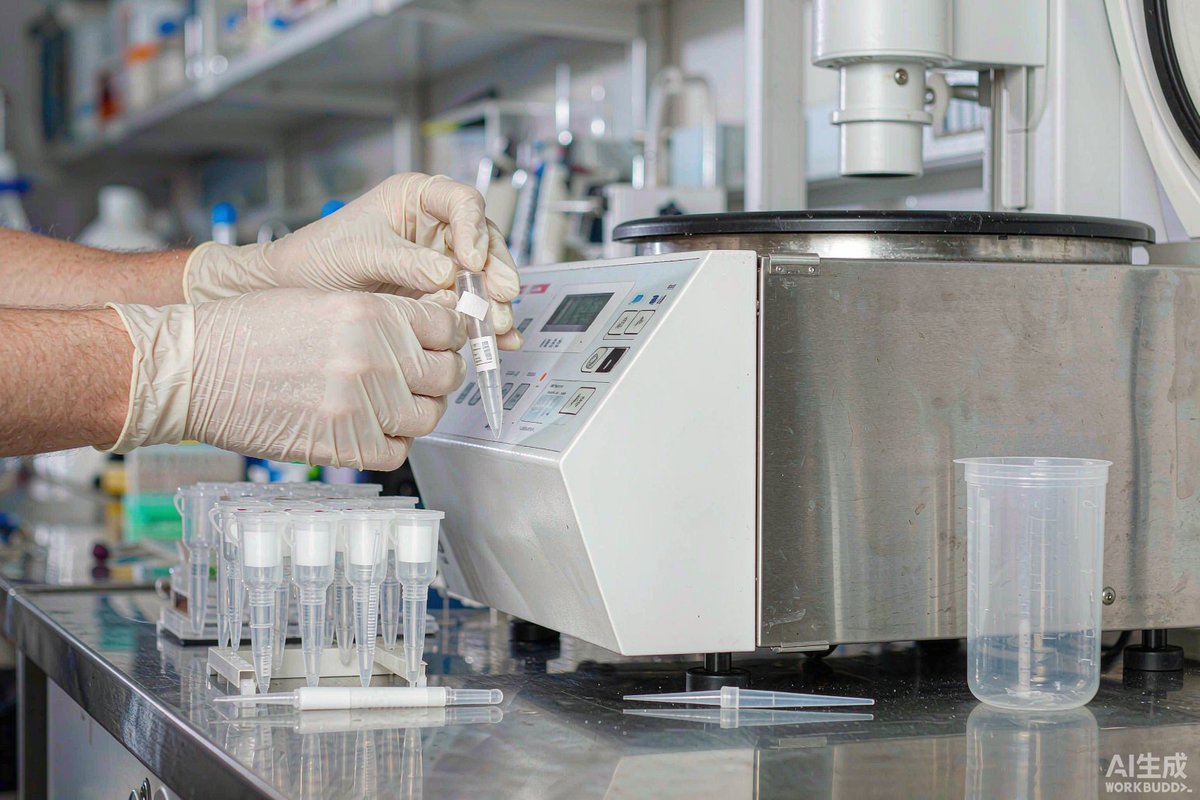
Process items refer to the ultrafiltration tube body and its matching collection tube. Their lifecycle is measured in hours: load sample, run centrifugation, pause mid-run to check, invert to recover—once the concentrate is transferred out, the ultrafiltration tube has fulfilled its purpose. Its label only needs to solve one problem—sample correspondence during multi-tube parallel processing and centrifuge balancing. The cost of misalignment is extremely high: once the concentrate on the membrane has been transferred out, there is no way to trace which tube corresponds to which sample, and mixed batches cannot be remedied.
Endpoint items refer to the destination tubes after the concentrate is transferred out, typically 0.5–2 mL microtubes or cryovials, destined for -80 °C freezing, liquid nitrogen transfer, or immediate entry into the next experimental step. Their lifecycle is measured in months or even years, and they are the focus of labeling investment; the material grade must be selected according to the target temperature chain.
Retention items refer to the collection tubes for the two filtrate fractions. Ultrafiltration protocols explicitly require that both the first and second filtrate fractions be retained until the concentrated sample has been analyzed and confirmed to meet recovery and salt removal acceptance criteria before disposal. Filtrate is the only physical evidence for recovery verification—when the concentrated sample quantifies incorrectly, whether the membrane leaked or the loading was wrong, the answer is usually in the filtrate.
2. Ultrafiltration Workflow and Container Formats: Specifications, MWCO, and Concentration Factors
Before selecting labels, one must first understand container geometry and operating conditions. Standard laboratory centrifugal ultrafiltration devices are available in four loading-volume tiers—0.5 mL, 2 mL, 4 mL, and 15 mL—with five MWCO tiers: 3 kDa, 10 kDa, 30 kDa, 50 kDa, and 100 kDa. The specification determines tube geometry and compatible rotor, and also determines the available label dimensions:
| Volume tier | Maximum loading volume | Typical final concentrate volume | Maximum centrifugal force | Typical centrifugation time | Concentrate recovery method |
|---|---|---|---|---|---|
| 0.5 mL | 0.5 mL | 15–20 μL | 14,000 × g | 10–30 min | Inverted inner tube reverse spin at 1,000 × g for approx. 2 min |
| 4 mL | 4 mL | 50–100 μL | Swing-bucket 4,000 × g / fixed-angle 7,500 × g | 10–20 min | Direct pipette aspiration |
| 15 mL | 15 mL (swing-bucket) / 12 mL (angle rotor) | 150–300 μL | Swing-bucket 4,000 × g / 35° angle rotor 5,000 × g | 15–60 min | Direct pipette aspiration |
Several figures directly constrain label design: the 0.5 mL tier achieves approximately 30-fold concentration, while the 4 mL and 15 mL tiers achieve approximately 80-fold; measured with 1 mg/mL BSA and IgG, officially published protein recovery typically exceeds 90%, the first round of buffer exchange removes 95%–98% of salt, and cumulative desalting after the second exchange round reaches approximately 99%. The MWCO selection rule is that the target molecular weight should be at least 2× the cutoff value—for example, 150 kDa IgG paired with a 30K or 50K tier. All of these parameters must enter the label field set (see Section 6). Regarding process temperature, to preserve protein activity, concentration centrifugation is typically performed at 4 °C with a refrigerated rotor or in a cold room, followed by return to room temperature for inverted recovery—this 4 °C to room temperature round trip is the condensation-film interface that process-item labeling must contend with, and the window where label initial tack is most prone to failure.
3. Process-Item Identification: Temporariness, Condensation Interface, and Positional Identification
The labeling requirements for process items can be summarized as "sticks firmly, identifies clearly, peels off cleanly." Material grade determination: the operating temperature range is between 4 °C and room temperature, with no low-temperature requirement whatsoever—simply select a model checked in the ambient-temperature column of the official material guide. The nylon cloth T629 and the vinyl cloth T625 are both in the ambient-temperature column; T625's value lies in removability: repositionable, peels off without adhesive residue, suitable for disposable ultrafiltration outer tubes without complicating waste sorting. Note that rigid plastic tube surfaces have lower surface energy than glass and metal, and tube walls rapidly develop condensation after removal from 4 °C; labeling should wait until the tube returns to room temperature and the condensation film is wiped dry—otherwise the adhesive layer bonds with the water film first, and holding power drops sharply.
Size and content determination: process-item labels carry only sample correspondence information—sample ID plus tube position number is sufficient. Narrow strip labels are recommended—the 0.5 mL device pairs with a standard 1.5 mL micro collection tube, approximately 11 mm outer diameter and 34.6 mm circumference, matched with a 25 mm-class narrow strip; the 4 mL device outer tube is in 15 mL conical centrifuge tube format, approximately 17 mm outer diameter and 53.4 mm circumference, and a 50.8 × 6.35 mm narrow strip wraps exactly one full turn. During multi-tube parallel processing, the sample ID combined with aliquot position suffix (e.g., -01, -02) forms a dual identifier; verify tube by tube before inverted recovery—this is the last manual checkpoint against batch mixing.
4. Endpoint-Item Identification: -80 °C Freezer Archive and Small-Diameter Symbology
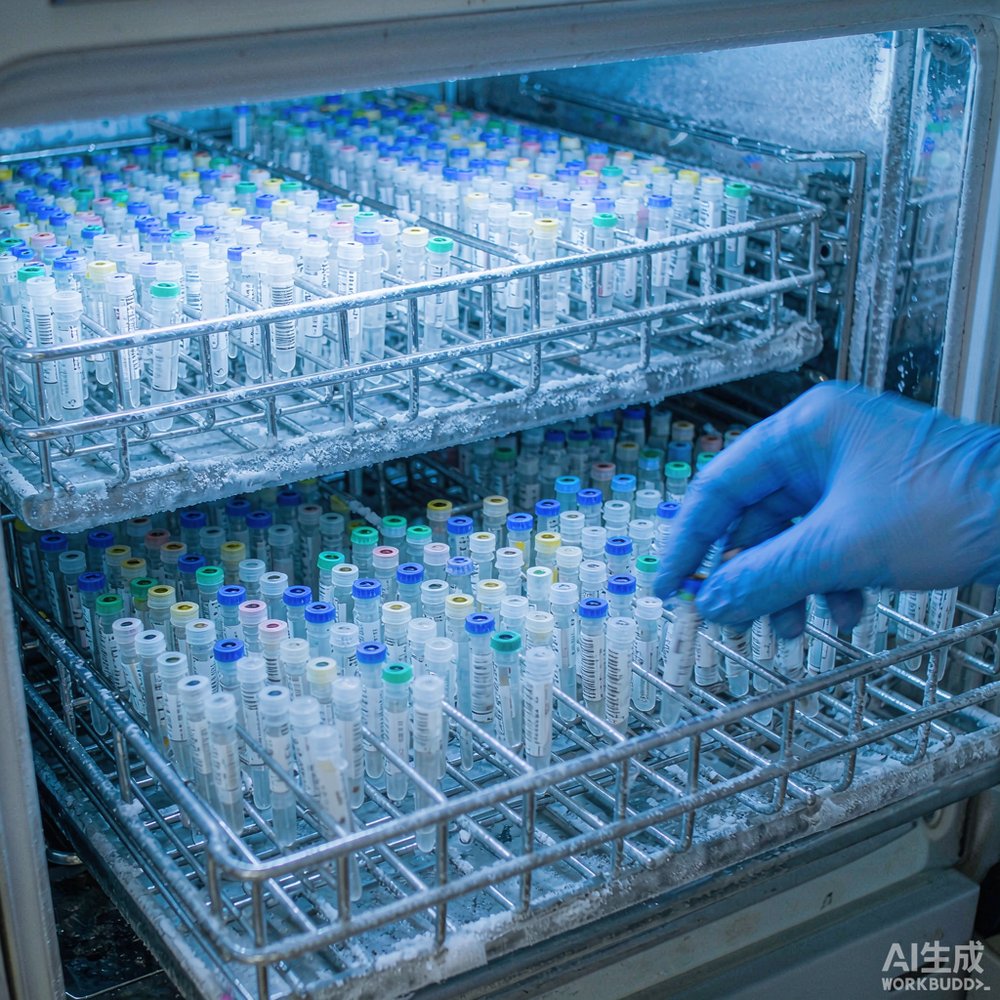
Endpoint items are the primary battleground for material grade. The temperature chain is room-temperature recovery, aliquoting, then long-term -80 °C freezing; if the biobank plan includes liquid nitrogen gas-phase transfer, select the -196 °C tier as well. The determination rule returns to the official material guide: standard freezer grades rated to -40 °C and above do not cover -80 °C; long-term -80 °C storage requires materials checked in the freezer -80 °C column, and scenarios involving ultra-low temperature and liquid nitrogen also require verification against the liquid nitrogen -196 °C column.
| Material code | Structural features (official specification) | Liquid nitrogen -196 °C | Freezer -80 °C | Hot water 100 °C | Autoclave 121 °C | Ultrafiltration positioning |
|---|---|---|---|---|---|---|
| T629 | Nylon cloth label, easy to apply, good conformability, general laboratory use | √ | √ | √ | √ | General endpoint grade, suitable for microtube and conical tube sidewalls |
| T459 | Ultra-thin polyester label with transparent-tail self-laminating structure, transparent viewing window for liquid level observation | √ | √ | √ | √ | Liquid level confirmation for 15–20 μL micro-concentrates |
| T429 | Ideal choice for labeling frozen surfaces; when applied to frozen tube surfaces, overlap at least 3 mm end to end | √ | √ | √ | √ | Wrap-around labeling of conical cryovials |
| T439 | 6-color pre-printed cryogenic label, pre-printed color at top for rapid container classification | √ | √ | √ | — | Aliquot batch color-code management |
| T509 | Durable vinyl wrap-around label; requires overlap when used in liquid nitrogen environments | √ | √ | √ | — | Wrap-around identification for slender tube bodies |
| T419 / T329 | Gloss white PET and matte white PP adhesive, rated for standard freezing to -40 °C and above | — | — | — | — | Retention items at ambient and standard freezer temperatures only; not for ultra-low temperature |
"—" in the table indicates the temperature tier is not covered, not "untested." The most common grade mismatch is placing -40 °C standard freezer labels (corresponding to material codes T419 and T329) into an ultra-low temperature freezer: the label may not immediately fall off in the deep-freeze environment, but first loses adhesion and curls at the edges, the barcode becomes unreadable, and only during some freezer inventory check does one discover that an entire batch of samples has become "label orphans." Conversely, retention items—short-cycle containers at ambient to 4 °C—are perfectly served by these two materials at lower cost.
Symbology determination follows directly from geometry: a standard 1.5 mL microtube has a circumference of approximately 34.6 mm; Code 128 with 0.19 mm module width and 5 mm quiet zones on each side requires approximately 37.6 mm total width for 10 data characters—exceeding the circumference, meaning a 1D barcode on that tube diameter can carry at most about 8 characters. But ultrafiltration endpoint items must carry sample number, aliquot position, and date—8 characters are simply insufficient. The conclusion is that endpoint items default to 2D barcodes: DataMatrix 20×20 at 0.20 mm module width measures only approximately 4.0 mm square overall, more than sufficient on a 25.4 × 9.53 mm tube-side label, with remaining area reserved for human-readable fields. If the concentrate is transferred to a 2 mL screw-cap cryovial (approximately 17 mm outer diameter, 53.4 mm circumference), 1D barcodes can accommodate approximately 15 characters, but mixed-field scenarios still recommend 2D barcodes as a fallback.
5. Retention-Item Identification: The Filtrate Retention Loop
Retention items are the most easily overlooked yet critical link in the ultrafiltration quality loop. The label field set for each of the two filtrate fractions is: sample ID + fraction number (F1 first-round centrifugal filtrate / F2 exchange-round filtrate) + collection date + retain-until date. The "retain until" field is completed per ultrafiltration protocol: the corresponding filtrate may only be discarded after the concentrated sample has been analyzed and confirmed to meet recovery and salt removal acceptance criteria; where verification involves quantitative testing, extend by several days per the laboratory's record retention period conventions. The retention-item operating temperature range is ambient or 2–8 °C; select a model checked in the ambient-temperature column for material grade; if the filtrate requires freezing pending batch testing, upgrade to the corresponding tier per the storage temperature. At disposal, autoclave together with waste liquid per laboratory biosafety management requirements (general provisions of GB 19489-2008); labels are disposed of with the container and are not separately removed.
In hospital clinical laboratory and pathology settings, ultrafiltration is commonly used for concentration and enrichment of low-concentration samples such as cerebrospinal fluid and pleural/ascitic fluid; retention and record management directly correspond to ISO 15189:2022 requirements for pre-analytical and post-analytical process records. In antibody downstream small-scale runs for innovative drug R&D, concentration records of ultrafiltration aliquots enter method development archives, and laboratory quality systems manage method records and equipment operation logs per ISO 17025:2017. The common labeling requirements across both scenarios are: traceable fields, non-migrating markings, and machine-readable barcodes.
6. Field Set Design: The Seven Pieces of Information Every Ultrafiltration Run Must Carry
The value of an ultrafiltration label lies not in the material but in the fields. The following field set covers all three container types, selected on a "missing one breaks the chain" basis:
| Field | Example | Consequence of omission | Applicable containers |
|---|---|---|---|
| Sample ID | AB-2026-1103-07 | Traceability chain broken; concentrate cannot be linked to original sample | Required on all three container types |
| MWCO tier | 10K | Concentration conversion and cutoff determination lose their basis | Process items, endpoint items |
| Starting volume and final volume | 4 mL → 80 μL | Concentration factor unknown; quantitative data cannot be interpreted | Brief on process items, full on endpoint items |
| Exchange rounds and exchange buffer | 2 rounds × PBS | Salt concentration and buffer system cannot be verified | Brief on process items, full on endpoint items |
| Operator and date | WZ / 2026-10-29 | Chain of responsibility and chronology lost | Required on all three container types |
| Aliquot position | -A / -B / -C | Same-source aliquot tubes mixed up | Endpoint items |
| Fraction number and retain-until | F1 / 7 days after analysis confirmation | Retention loop fails; waste liquid discarded prematurely | Retention items |
A four-segment numbering structure is recommended: project or sample prefix - date serial - MWCO tier - position suffix, e.g., AB-20261103-10K-A. This structure allows a string of numbers to answer "which sample, what day, which membrane, which tube" on its own—even if the label is read independently of the ledger system, the information remains self-consistent. For concentrates entering long-term biobank storage, the numbering and field set should align with the biobank's unique specimen identification specification (general requirements of ISO 20387:2018 for biobank quality and traceability) to avoid renumbering after accession.
7. Print Execution: Small-Module 2D Barcodes and Resin-Based Cryogenic Ribbons
The printing step has two technical points specific to ultrafiltration scenarios. First is matching small module size to printer resolution: at 0.20 mm DataMatrix module width, a 300 dpi printer has only approximately 2.4 printed dots per module, with limited edge reproduction capability that directly affects print quality grading per ISO/IEC 15415; for small 2D barcodes, use 300 dpi or higher resolution models, calibrate print density, perform grading inspection on the first article, then proceed to batch output; 1D barcodes are accepted per ISO/IEC 15416 grading. Second is ribbon: under low-temperature and condensation cycling, resin-based or resin-dominant hybrid ribbons must be used—wax-based print layers will powder and migrate at -80 °C and under repeated condensation; the BRL series laboratory cryogenic ribbons are designed for these conditions and are used with the cryogenic label materials described above.
Acceptance criteria should be incorporated into procurement and QC procedures: cryogenic labels sampled per GB/T 2792-2014 peel strength and GB/T 4851-2014 holding tack methods, with test conditions directly simulating the actual chain—label, leave at room temperature for 24 h, then transfer to -80 °C for 48 h, remove and return to room temperature before peel testing; this exposes grade mismatches better than direct ambient testing.
Recommended Products
For the label materials and ultrafiltration scenarios covered in this article, the following BradyLAB (BRD) products are available for selection reference (click to view specifications and request a quote):
- Lab290-629/50.8 × 6.35 mm Biobank Cryovial -196 °C Liquid Nitrogen Nylon Cloth Label (¥999/roll) — Narrow strip wrap-around for 15 mL-class tube bodies and conical tubes; nylon cloth offers good conformability
- Lab115-459/9.53+65 × 9.53 Biobank Conical Tube Cryogenic Cryovial PET Self-Laminating Label (Price on request) — Self-laminating with transparent viewing window, suitable for micro-concentrate liquid level confirmation
- Lab062-429/25.4 × 9.53 mm Laboratory Cryovial Microscope Slide PET Polyester Label (Price on request) — Narrow label for small tube sides; apply with end-to-end overlap on frozen tube surfaces
- BRL-110-BK Borjer LAB Laboratory Cryogenic Ribbon 110 mm × 300 m (Price on request) — Resin-based cryogenic ribbon, matched to the label materials in this article
FAQ
Q1: Should liquid nitrogen-grade cryogenic labels be applied directly to the ultrafiltration tube body?
No. -196 °C liquid nitrogen-grade nylon cloth or polyester cryogenic labels are designed for ultra-low temperature freezing, whereas the ultrafiltration tube body operates between 4 °C and room temperature with a lifecycle measured in hours; a material checked in the ambient-temperature column (nylon cloth T629 or removable vinyl cloth T625) is sufficient. Applying liquid nitrogen-grade labels to disposable process items is pure cost waste. The only exception is when the entire ultrafiltration device operates in a low-temperature environment—this is rare; if it does occur, select according to the corresponding temperature tier.
Q2: If the concentrate is destined for long-term -80 °C storage, what grade should the label be?
For long-term -80 °C storage, only models checked in the freezer -80 °C column of the official material guide can cover it: nylon cloth T629, T459 with transparent-window self-laminating structure, and T429 for overlap application on frozen surfaces are all listed; gloss white PET and matte white PP belong to the standard freezer grade rated to -40 °C and above, cannot be used for ultra-low temperature, and are only suitable for short-cycle containers such as retention items at ambient to 4 °C. If liquid nitrogen gas-phase transfer is planned subsequently, verify against the liquid nitrogen -196 °C column before finalizing the material.
Q3: What container should be used for aliquoting 15–20 μL of concentrate, and how should labels be applied?
The standard practice is to transfer into 0.5 mL or 1.5 mL microtubes, adding a position suffix (-A/-B/-C) to each tube to prevent mixing. Use a tube-side narrow label such as 25.4 × 9.53 mm; symbology defaults to DataMatrix 20×20 (approximately 4.0 mm square overall at 0.20 mm module), with human-readable fields retaining sample ID and MWCO tier. Where visual confirmation of remaining volume is needed, choose a self-laminating structure with transparent viewing window (e.g., T459)—the liquid level is clearly visible through the window.
Q4: Why must filtrate be retained? What should be labeled, and for how long?
Filtrate is the physical evidence for recovery verification: when the concentrated sample quantifies abnormally, only the filtrate can distinguish membrane retention failure from operational error. Label each filtrate fraction with sample ID + fraction number (F1/F2) + collection date + retain-until date; retain until the concentrated sample is analyzed and confirmed acceptable; where testing verification is involved, extend by several days per the record retention period. At disposal, autoclave together with waste liquid per general laboratory biosafety requirements; do not separately remove labels.
Q5: How to choose between 1D and 2D barcodes on small tube diameters?
A simple circumference calculation makes it clear: a 1.5 mL microtube has a circumference of approximately 34.6 mm; Code 128 at 0.19 mm module and 10 mm quiet zones requires approximately 37.6 mm for 10 data characters—a 1D barcode on that tube diameter can carry at most about 8 characters, while the ultrafiltration field set far exceeds 8. Therefore, endpoint items default to 2D barcodes: DataMatrix 20×20 at approximately 4.0 mm square carries the complete number; when tube diameter increases to the 17 mm class (circumference approximately 53.4 mm), 1D barcodes can accommodate approximately 15 characters, but mixed-field scenarios still recommend 2D barcodes as a fallback.
Q6: Is it acceptable to use handwritten labels for temporary batches?
Handwriting is acceptable for short-term positional identification of process items, but note two points: first, handwriting smears and migrates under 4 °C condensation and repeated wiping—use a waterproof marker and apply a protective overlay after labeling; second, endpoint items should not use handwriting in any form—long-term -80 °C storage plus multiple rounds of retrieval-and-return condensation cycling continuously erodes marking adhesion, and the machine-readability of barcodes and 2D codes degrades to zero as markings deteriorate. Thermal transfer with resin-based cryogenic ribbon, printed in one pass, is the reliable approach for long-term frozen storage.