
When selecting labels for nucleic acid extraction, the first criterion is not whether a label can adhere to the body of a spin column or the wall of a magnetic bead tube, but whether, as the same sample travels from the lysis tube through binding and washing, elution and output, and finally into the -80 °C product cryovial, the ID has to be manually re-copied at every transfer between these four carriers. Every manual copy is another chance for error. The real question is: is there a master ID across the entire chain that can be generated once at the first stage, with each of the four carriers bearing its own scannable area?
Conclusion first: determine the ID chain, then the material
The conclusion of this article is: for label selection on nucleic acid extraction consumables, the "ID chain" should be defined first, and the material selected afterward. The reason is straightforward—the lysis tube, spin column or magnetic bead tube, elution tube, and product cryovial differ completely in geometry, volume, surface energy, and operating temperature, and no single label can achieve optimal adhesion on all four carrier types at once; however, as long as the ID is generated at the first stage and then replicated onto subsequent carriers by printing or transfer, the largest error source—"manual ID copying"—can be removed from the workflow. Material selection then reduces to a second step: matching each carrier stage to its temperature tier.
Temperature tier determination must follow the official material guide table. The BradyLAB (BRD) Lab series material guide classifies application environments into five tiers: liquid nitrogen -196 °C, freezer -80 °C, hot water 100 °C, autoclaving 121 °C, and ambient. The tiers checked after each material number define its usable boundary. When writing selection documents, it is not permitted to apply a lower-tier material to a higher-tier environment, nor to round temperature figures.
Why IDs most easily break across these four carriers
Nucleic acid extraction differs from most biochemical workflows in that a sample changes containers four to five times within a single workflow. Each container change is a "re-expression of the ID":
- Stage 1 Lysis tube: raw sample or pre-processed product, handled at ambient or 4 °C, tube body mostly 1.5 mL to 2 mL conical-bottom tubes, surface is polypropylene with low surface energy.
- Stage 2 Binding and washing: the spin column method uses a silica membrane column plus collection tube; the magnetic bead method uses a 96-well deep-well plate plus magnetic rack. This stage is mostly at ambient temperature but contacts lysis buffer, wash buffer, and ethanol.
- Stage 3 Elution tube and collection tube: product output, volume typically on the order of 30 μL to 100 μL, small tube body, cap can be unscrewed or swapped.
- Stage 4 Product cryovial: short-term at 4 °C or -20 °C, long-term at -80 °C; some library-construction samples go into liquid nitrogen at -196 °C.
If even one of the four stages uses handwritten marker, three typical accidents are inevitable: "handwriting wiped off by ethanol," "handwriting blurred after freezing," and "cap and tube body mismatched after separation." Handwriting is the cheapest option and also the most expensive source of error in this chain.
Carrier 1: Lysis tube and pre-treatment tube (ambient handling stage)
The lysis tube carries the first assignment of the raw sample's ID, so it is the physical starting point of the master ID. The operating temperature at this stage is ambient or refrigerated, not entering -80 °C, so material options are broadest, but there are two hard constraints: first, the tube body is polypropylene with low surface energy, so ordinary pressure-sensitive adhesive has insufficient initial tack; second, this stage frequently contacts lysis buffer and proteinase, and splashes onto the label surface can dissolve the printed content.
For the ambient stage, a freezer-tier material such as matte white PP pressure-sensitive adhesive can be used, for example T329, which is positioned in the official material guide table as a low-temperature freezer label resistant to -40 °C, with both the ambient tier and the cryovial/test tube tier checked; gloss white PET T419 can also be used, officially rated for environments above -40 °C, for cryovials and microcentrifuge tubes. It must be emphasized that the boundary of these two in the guide table is the -40 °C tier and cannot cover the -80 °C and liquid nitrogen tiers; applying them to product tubes destined for -80 °C constitutes tier overreach.
For the lysis tube, the labeling position is recommended on the tube body's circumferential surface rather than the cap top. The cap is repeatedly rubbed by hands or fixtures during centrifugation and vortexing, and once the cap separates from the tube body, the ID goes with it; even if part of the tube body's circumferential surface is obscured by the cryobox, the barcode area only needs to remain within the visible sector to be scanned.
Carrier 2: Spin column and magnetic bead tube (binding and washing stage)
The most common error at the spin column stage is "labeling the column itself." The silica membrane column is a disposable consumable with a thin body and large curvature; a label on the column body both affects placement into the centrifuge rotor and may detach under centrifugal force during high-speed centrifugation. The correct approach is: do not label the column; label the collection tube instead, maintaining correspondence by "the tube travels with the ID."
The carrier for the magnetic bead method is a 96-well deep-well plate. Per ANSI/SLAS 1-2004 dimensional specifications for microplates, the well pitch of a 96-well plate is 9.0 mm, and the clear width available for labels along the long edge of the plate body is very limited; a label on the plate edge that exceeds the frame will jam the magnetic rack or automated pipetting workstation. The recommended approach at this stage is to make the ID plate-level—use one label covering the side of the entire plate to print the plate number and master ID range, rather than labeling each well individually.
Carrier 3: Elution tube and collection tube (product output stage)
The elution tube is the carrier where the product first appears as a "purified substance," and it is also where ID information is most easily simplified: operators often write only the sample name without the master ID, making it impossible to trace back to the original sample in downstream qPCR or library construction. At this stage the master ID must be mandatory, and the ID area must avoid the frosted writing area on the tube wall—the frosted surface causes uneven adhesion of the thermal-transfer resin layer, reducing the reflectance of the barcode's quiet zone and directly lowering the symbol quality grade.
If the elution product also undergoes 121 °C autoclaving (e.g., subsequent sterile aliquoting), a material covering the autoclave tier must be selected. T629 nylon cloth label has all four tiers—liquid nitrogen, freezer, hot water, and autoclaving—checked in the official guide table, and also covers ambient, microscope slide, cryovial, and conical tube, making it a full-scenario option; T429 and T459 also have four tiers checked, of which T459 is a self-laminating structure with a transparent tail; the transparent window allows observation of the liquid level, suitable for situations requiring visual volume verification. When T429 is applied to the cryovial surface, the ends must overlap by at least 3 mm—this is an official, explicit application requirement.
Carrier 4: -80 °C product cryovial (long-term storage stage)
This stage is where selection opinions diverge most. After the product enters -80 °C, the label endures decreased cohesive strength of the adhesive system under deep cold and differential shrinkage of the face stock, not simply "cold." Ordinary ambient pressure-sensitive adhesive becomes brittle at -80 °C, and the friction of pulling cryoboxes is enough to make edges lift; once lifted, frost enters the adhesive surface, and the label peels off entirely upon rewarming.
For the long-term storage stage, a material covering the corresponding temperature tier should be selected: T629 nylon cloth label withstands four tiers from -196 °C to 121 °C, with good conformability, suitable for samples that go into -80 °C and also involve ambient handling; T439 is a six-color pre-printed cryogenic label with pre-printed color at the top for rapid differentiation of laboratory container categories; the official guide checks liquid nitrogen, freezer, and hot water tiers, suitable for libraries managed by sample-type color coding; T429 is a freezer flat label with all four tiers checked, suitable for cryovials with a larger flat tube body.
If the product tube is a thin tube requiring wrap-around application, consider T509: officially described as a durable vinyl label, suitable for wrapping, with good conformability; requires overlap when used in liquid nitrogen environments, with liquid nitrogen, freezer, and hot water tiers checked. For scenarios requiring wrap-around overlap, the overlap length is likewise controlled at 3 mm or more.
96-well deep-well plate: from well-by-well scanning to whole-plate batch reading
The bottleneck of magnetic bead batch extraction is not the extraction itself but the ID entry for 96 tubes. Scanning 96 times individually, at 2 seconds each, is 192 seconds, and requires opening lids or turning tubes, increasing the chance of sample warming and cross-contamination. Replacing the ID carrier with a label that can be read plate-wide is the only path in this scenario that simultaneously reduces labor hours and error rates.
The RFID approach works as follows: the label contains an antenna and chip, the reader does not need line-of-sight alignment to read, and multiple labels within a plate can be read at once. The air interface of laboratory RFID labels follows the ISO/IEC 18000 series; the near-field identification system corresponds to ISO/IEC 15693 (i.e., ISO/IEC 18000-3). The TRUF-32916 available on the site is a low-temperature-resistant, solvent-resistant, liquid-resistant UHF RFID Petri dish/microplate label, suitable for flat carriers such as microplates and Petri dishes; the specific frequency band, read distance, and actual read distance at -80 °C are subject to the measured values in the product specification, and whole-plate read-rate verification should be performed before going live.
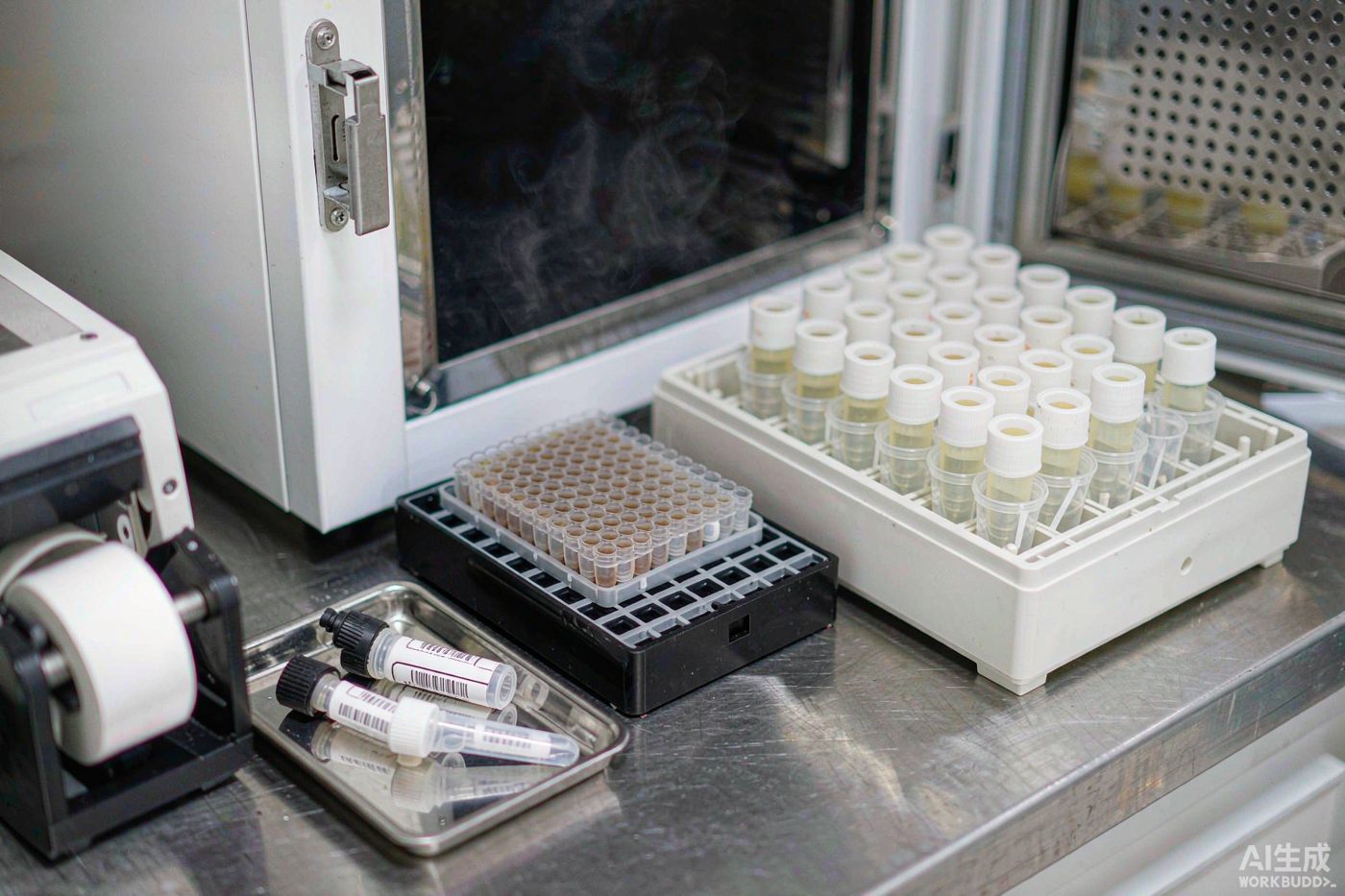
Material and temperature tier comparison table
The table below is transcribed item by item from the official Lab series material guide table; a checked tier is the usable boundary of that material, and unchecked tiers must not be used beyond tier:
| Material No. | Material description | Liquid nitrogen -196 °C | Freezer -80 °C | Hot water 100 °C | Autoclaving 121 °C | Ambient | Typical containers |
|---|---|---|---|---|---|---|---|
| T629 | Nylon cloth label, easy to apply, high/low temperature resistant, good conformability | Applicable | Applicable | Applicable | Applicable | Applicable | Cryovials, conical tubes, microscope slides |
| T439 | Six-color cryogenic label, pre-printed color at top for classification | Applicable | Applicable | Applicable | — | — | Cryovials, test tubes |
| T429 | Freezer flat label, ends must overlap by at least 3 mm when applied to cryovial surface | Applicable | Applicable | Applicable | Applicable | — | Cryovials, test tubes |
| T459 | Ultra-thin self-laminating label with transparent window for liquid level observation | Applicable | Applicable | Applicable | Applicable | — | Conical tubes, cryovials |
| T509 | Durable vinyl wrap-around label, requires overlap in liquid nitrogen environments | Applicable | Applicable | Applicable | — | — | Thin tubes, general purpose |
| T409 | Excellent chemical resistance and abrasion resistance, requires end overlap at low temperatures | Applicable | Applicable | Applicable | — | — | Test tubes, bottles |
| T329 | Matte white PP pressure-sensitive adhesive, -40 °C low-temperature freezer label | — | — | — | — | Applicable | Cryovials, microcentrifuge tubes |
| T419 | Gloss white PET material, for cryovials and microcentrifuge tubes, resistant above -40 °C | — | — | — | — | Applicable | Cryovials, microcentrifuge tubes |
| T625 | Vinyl cloth label, repositionable, removable, no residue, reusable | — | — | — | — | Applicable | Cryovials, test tubes |
Special attention is needed for the T329 and T419 rows in the table: their temperature boundary in the guide table is the -40 °C tier and cannot cover the -80 °C and liquid nitrogen tiers. If temperature markings on the site's product pages are inconsistent with this table, this table prevails for selection; for precise confirmation of material and temperature resistance, please contact the product manager.
Labeling positions, dimensions, and restricted zones for the four carriers
Dimensions and position determine "whether it can be scanned," and errors occur earlier than with material. The table below gives recommended practices for the four carriers:
| Carrier | Recommended labeling position | Recommended label size | Labeling restricted zone | Common materials |
|---|---|---|---|---|
| Lysis tube 1.5 mL | Tube body circumferential surface, barcode along tube axis | 25.4 mm × 9.53 mm | Cap top, frosted writing area | T629, T329 |
| Spin column collection tube | Tube body flat surface, avoiding column insertion depth | 25.4 mm × 9.53 mm | Column body itself, cap top | T629, T429 |
| Elution tube 0.5 mL | Tube body circumferential surface + cap top, in duplicate | 25.4 mm × 9.53 mm | Tube wall frosted area, liquid level observation window | T629, T459 |
| Product cryovial | Tube body circumferential surface, wrap-around overlap if necessary | 25 mm × 17 mm (three-column) or 30 mm × 15 mm | Threaded area, sectors obscured by cryobox | T629, T439, T429 |
| 96-well deep-well plate | Whole-plate label on plate body side or plate bottom flat surface | Cut to plate edge clear width, not exceeding the frame | Plate edge upper surface, well opening sealing area | RFID microplate label |
Coding rules for the four-stage ID
The problem the coding rules must solve is "when the same sample has one label on each of four carriers, does scanning yield the same object?" The recommended minimum viable rules are as follows:
| Field | Digits | Meaning | Generation timing | Handwriting allowed |
|---|---|---|---|---|
| Project code | 3 digits | Project or client number | At project initiation | Not allowed |
| Master ID | 6 digits | Unique identifier of a sample | Generated once when the lysis tube is assigned an ID | Not allowed |
| Stage code | 1 digit | 1 lysis, 2 binding, 3 elution, 4 cryopreservation | Appended at printing of each stage | Not allowed |
| Batch code | 4 digits | Extraction batch, for tracing reagents and consumables | At batch creation | Not allowed |
| Position code | 3 digits | Box-row-column, e.g., A01 | At storage | Not allowed |
The key to this rule set is that the master ID is generated only once at the first stage; the subsequent three stages only append the stage code and position code, without regenerating. Thus even if a label at one stage detaches, as long as one of the other three stages is readable, the master ID can be inferred, and the ID chain will not break at a single point.
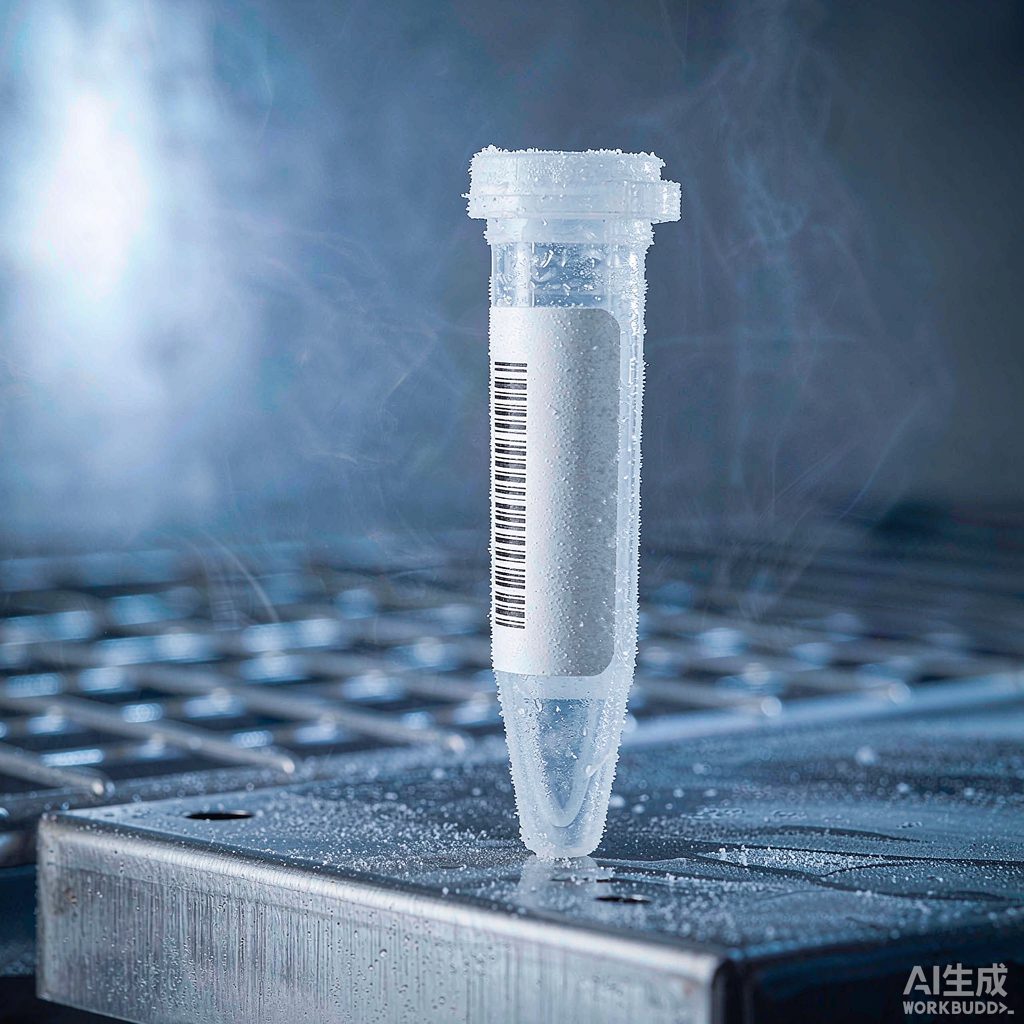
Matching ribbons and print parameters
Low-temperature labels use thermal-transfer printing; the image comes from the ribbon rather than direct heating of the printhead, so ribbon selection directly determines whether the printed content survives low temperatures and solvent wiping. Resin ribbons have better rub resistance and solvent resistance than wax and wax/resin, and are the default choice for low-temperature labels; wax ribbons are not resistant to ethanol wiping and are not recommended in nucleic acid extraction scenarios where contact with ethanol wash solutions is inevitable.
| Item | Recommended value | Notes |
|---|---|---|
| Ribbon type | Resin-based | Ethanol-wipe resistant and low-temperature resistant, default for nucleic acid extraction scenarios |
| Ribbon specification | 80 mm × 300 m or 110 mm × 300 m | Select according to the printer's maximum ribbon width |
| Print darkness | Fixed at a higher range after test printing per material | Insufficient darkness leads to insufficient bar/space reflectance of the barcode |
| Print speed | Medium-low | At high speed, resin transfer is insufficient and symbol grade drops |
| Barcode type | Code 128 for 1D, DataMatrix for 2D | DataMatrix preferred for small carriers |
| Symbol grade | ISO/IEC 15416 grade not lower than 3.0 | Barcodes below 3.0 are difficult to read under frost and glare |
The low-temperature ribbons available on the site are BRL-80-B09 (80 mm × 300 m) and BRL-110-13 (110 mm × 300 m), both BradyLAB LAB laboratory-specific low-temperature ribbons; the specific compatibility with printers is subject to actual test printing results.
Common failure modes and troubleshooting
The table below summarizes the most frequent failure phenomena and their root causes in nucleic acid extraction scenarios, and can serve as an on-site troubleshooting checklist:
| Failure phenomenon | Direct cause | Root cause | Action |
|---|---|---|---|
| Label edges lift after freezing | Adhesive layer embrittles under deep cold | Material not covering the -80 °C tier used | Switch to a material covering the corresponding temperature tier and re-verify |
| Printed content fades after ethanol wiping | Insufficient solvent resistance of ribbon | Wax or wax/resin ribbon used | Switch to resin-based low-temperature ribbon |
| Cap and tube body IDs mismatch | ID written on a separable component | Unique ID not placed on tube body circumferential surface | Fix the unique ID on the tube body; write only auxiliary information on the cap |
| Scanning requires repeated angle adjustment | Insufficient bar/space contrast of barcode | Print darkness too low or applied to frosted surface | Increase print darkness and apply to a glossy surface |
| Wrap-around label end lifts | Insufficient overlap length | Overlap less than 3 mm | Re-apply with overlap of no less than 3 mm |
| 96-well plate label jams magnetic rack | Label exceeds plate edge clear width | Not cut to plate body dimensions | Switch to whole-plate side label or RFID solution |
Acceptance methods: readability, adhesion, and freeze–thaw cycles
Selection implementation must include three quantifiable acceptance tests; without any one of them, verification is not complete:
- Readability acceptance: perform symbol quality grading per ISO/IEC 15416 for 1D barcodes and ISO/IEC 15415 for 2D codes; the grade of batch sampling must not be lower than 3.0; after 24 hours at -80 °C, remove and immediately retest; the grade drop must not exceed half a grade.
- Adhesion acceptance: refer to the peel strength method of GB/T 2792-2014 and the holding tack method of GB/T 4851-2014, performing one set each under ambient and low-temperature conditions; the low-temperature set must be tested after constant-temperature treatment under conditions consistent with actual use temperature.
- Freeze–thaw cycle acceptance: design the number of cycles according to actual use frequency, generally no fewer than 5 round trips from -80 °C to ambient; after the final cycle, check for edge lifting, barcode readability, and whether adhesive has transferred.
Only after all three acceptance tests pass may the material be written into the standard operating procedure; when changing material batch numbers subsequently, at least the readability and adhesion tests must be redone.
Correspondence with compliance systems
Identification in nucleic acid extraction is not an isolated action; it is simultaneously covered by quality systems, biosafety, and biobank specifications. The table below gives common correspondences for reference in system documents:
| Standard or specification | Name key points | Direction of requirements for identification |
|---|---|---|
| ISO 20387:2018 | Biobanking competence and quality requirements | Traceability of samples and their associated information |
| ISO 17025:2017 | Competence requirements for testing and calibration laboratories | Uniqueness and full-process retention of sample identification |
| ISO 15189:2022 | Quality and competence requirements for medical laboratories | Pre-examination processes (including sampling and sample identification) |
| ISO 13485:2016 | Medical device quality management system | Documented control of identification and traceability |
| GB 19489-2008 | General requirements for laboratory biosafety | Biohazard identification and container identification |
| WS 233-2002 | General guidelines for biosafety in microbiological and biomedical laboratories | Identification and information completeness of sample containers |
| GB 15258 | Rules for the compilation of chemical safety labels | Label elements for reagent and lysis buffer containers |
| ANSI/SLAS 1-2004 | Microplate dimensional standard | 96-well plate well pitch 9.0 mm and plate body dimensional constraints |
It should be noted that the chemical safety labels originally affixed to reagent and lysis buffer bottles fall within the supplier's scope of responsibility; labels added by the laboratory itself are only for supplementing internal IDs and opening dates, and must not cover or replace the statutory elements on the original bottle label.
Implementation steps
To turn the above criteria into executable actions, proceed in the following order: Step 1, determine the list of four carriers and the operating temperature tier of each stage; Step 2, determine the master ID rules and select the barcode type; Step 3, lock in the material number for each stage in the material comparison table according to temperature tier; Step 4, select and match resin-based low-temperature ribbon and fix parameters through test printing; Step 5, run the three acceptance tests; Step 6, write the material number, ribbon model, and print parameters into the standard operating procedure, and specify re-verification requirements when changing batch numbers. After these six steps, the ID chain of nucleic acid extraction truly achieves cross-stage traceability.
Recommended products
For the label materials and application scenarios covered in this article, the following BradyLAB (BRD) products are available for selection reference (click to view specifications and request a quote):
- Lab112-629/35x25mm Biobank cryovial EP tube microscope slide -196 °C liquid nitrogen nylon cloth label (¥1490/PCS)
- T439 Biobank low-temperature liquid nitrogen color pre-printed freezer label (Price on request)
- Lab169-429/25x17mm Three-column biobank cryovial microscope slide low-temperature polyester label (Price on request)
- TRUF-32916 Low-temperature-resistant, solvent-resistant, liquid-resistant UHF RFID Petri dish/microplate label (Price on request)
FAQ
Q1: Can ambient pressure-sensitive adhesive labels be used directly on nucleic acid extraction lysis tubes?
A: If the lysis tube only goes through ambient or refrigerated processes and does not enter the -80 °C and liquid nitrogen tiers, a freezer label rated for the -40 °C tier can be used, such as T329 matte white PP pressure-sensitive adhesive or T419 gloss white PET. However, the temperature boundary of these two is -40 °C and cannot cover the -80 °C and liquid nitrogen tiers; as long as the sample will subsequently enter -80 °C, the material covering the corresponding temperature tier must be used from the first stage, avoiding secondary copying caused by changing labels mid-process.
Q2: Should the spin column itself be labeled with an ID?
A: Not recommended. The silica membrane column is a disposable consumable with a thin body and large curvature; a label is prone to detach during high-speed centrifugation and also affects placement into the centrifuge rotor. The correct approach is to label the collection tube and maintain correspondence by transferring the tube together with the ID; the column body itself does not carry the ID.
Q3: The elution product is only a few dozen microliters; how should label size be chosen?
A: For a 0.5 mL elution tube, a label of approximately 25.4 mm × 9.53 mm can be used; for the barcode, prefer a small high-density symbology such as DataMatrix—1D barcodes tend to drop below symbol grade 3.0 after bar width compression at small sizes. The label must avoid the frosted writing area on the tube wall; the frosted surface causes uneven resin transfer and reduces the reflectance of the barcode quiet zone.
Q4: For magnetic bead method 96-well deep-well plates, use barcodes or RFID?
A: It depends on whether well-by-well reading is required. If only plate-level traceability is needed, one whole-plate label on the plate side suffices at low cost; if well-level traceability is needed, it is recommended to use low-temperature-resistant, solvent-resistant RFID microplate labels for whole-plate batch reading, eliminating 96 individual scans. Whole-plate read-rate verification must be performed before going live; the actual read distance at -80 °C is subject to the measured values in the specification.
Q5: Why are resin ribbons recommended for low-temperature labels?
A: The nucleic acid extraction workflow inevitably contacts ethanol wash solutions; wax and wax/resin ribbons will fade or even disappear after ethanol wiping; resin ribbons have significantly better solvent resistance and rub resistance and are the default choice for low-temperature labels. BradyLAB LAB laboratory-specific low-temperature ribbons are available on the site in 80 mm × 300 m and 110 mm × 300 m specifications; select according to the printer's maximum ribbon width.
Q6: Where does the 3 mm overlap figure come from?
A: From the application requirements in the official Lab series material guide table. When T429 is applied to the cryovial surface, the ends must overlap by at least 3 mm; T409 requires end overlap in low-temperature scenarios; T509 requires overlap when used in liquid nitrogen environments. Insufficient overlap length causes the wrap-around label end to lift after freeze–thaw cycles, one of the most frequent on-site failures.
Q7: What readability grade should be set for acceptance?
A: Perform symbol quality grading per ISO/IEC 15416 for 1D barcodes and ISO/IEC 15415 for 2D codes; the batch sampling grade is recommended not to be lower than 3.0. After 24 hours at -80 °C, remove and immediately retest; the grade drop must not exceed half a grade; at the same time, perform peel strength per GB/T 2792-2014 and holding tack per GB/T 4851-2014, and perform no fewer than 5 freeze–thaw cycle verifications.