
The first criterion for selecting labels for anaerobic, microaerophilic, and three-gas culture vessels is not "whether the label will stick," but "whether the label will interfere with establishing and interpreting anaerobic conditions." The conclusion is that three types of vessels correspond to three sets of solutions: inside anaerobic jars, use nylon cloth labels resistant to -196 °C to +121 °C together with an external redox indicator strip; for anaerobic pouches, use self-laminating labels with a transparent window applied to the inner side of the heat-sealed edge while avoiding the observation window; for vessels with high-frequency turnover inside anaerobic workstations, use removable vinyl cloth labels; for any samples that must follow the strain into a -80 °C freezer or -196 °C LN₂ archive, switch to -196 °C-rated wrap-around labels with at least 3 mm overlap at the ends. This article provides criteria and actionable coding, barcode, and application SOPs for three operating conditions: the exothermic temperature peak of gas-generating sachets, interference with indicator color change, and condensate interfacial displacement.
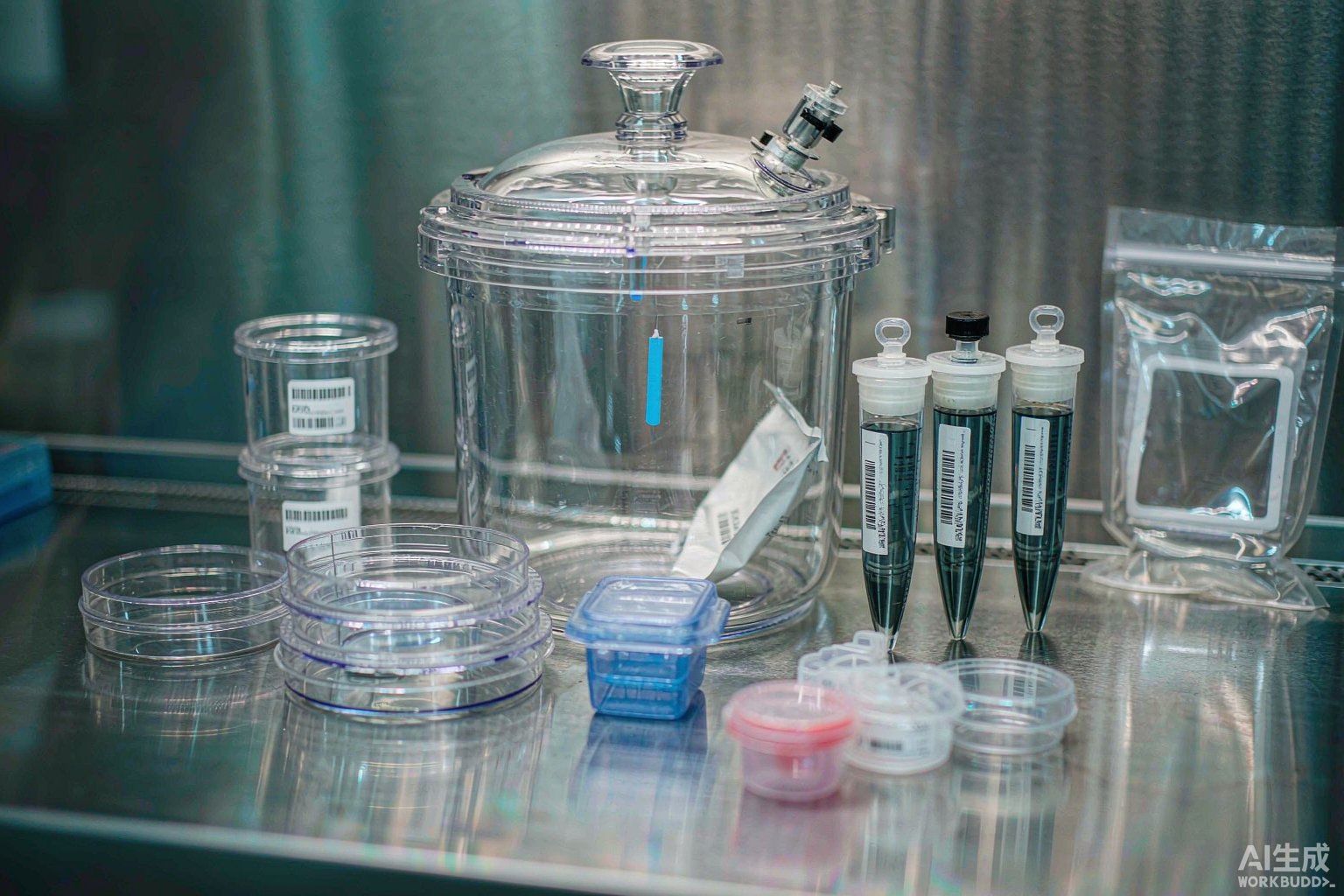
I. Conclusion First: Three Main Criteria for Labels on Anaerobic Culture Vessels
Label failure in anaerobic culture scenarios is, in the vast majority of cases, not simply "the adhesive doesn't stick," but the consequence of three main criteria overlapping and being overlooked. The order of judgment should be fixed as "interpretation interference → temperature chain → geometry and replacement frequency," which is clearly different from the "low-temperature first" selection logic of biological sample banks.
The first main criterion is interpretation interference. Whether anaerobic conditions are established depends not on visual observation of the medium, but on the redox indicator system: resazurin is blue-purple in the oxidized state and, after reduction, passes through pink resorufin and ultimately becomes colorless dihydroresorufin; methylene blue is reduced from blue to colorless. The indicator strip must remain within the visible window; any label coverage will invalidate the judgment of "whether anaerobiosis has been achieved." This is the first constraint that distinguishes anaerobic scenarios from ordinary culture.
The second main criterion is the temperature chain. Anaerobic culture is not a single-point condition at a constant 37 °C, but a complete chain extending from the exothermic temperature peak of the gas-generating sachet at 40-45 °C, through steady-state culture at 37 °C, and finally to -80 °C glycerol cryopreservation or -196 °C LN₂ archiving, spanning approximately 241 °C. Labels selected only for 37 °C will immediately fail at the archive end; labels selected only for -196 °C often neglect adhesive creep at the high-temperature, high-humidity end.
The third main criterion is geometry and replacement frequency. The bondable areas of Petri dish side walls, anaerobic tube outer walls, and pouch heat-sealed edges differ greatly; vessels turned over daily in workstations also require repeated label replacement, in which case "removable, no residue" is more important than "resistant to extreme low temperatures."
One compliance boundary should also be noted: gas-generating sachets and redox indicators are chemical products, and the chemical safety labels on their original packaging must comply with the element requirements of the regulations for the compilation of chemical safety labels and the specification for classification and labeling of chemicals; ordinary barcode labels must not cover or replace the manufacturer's hazard markings.
II. Operating Condition Profiles of Three Vessel Types: Anaerobic Jars, Pouches, and Workstations
Anaerobic jars, anaerobic pouches, and anaerobic workstations are the three mainstream anaerobic culture carriers, and their differences in temperature and humidity, material interface, geometry, and replacement frequency directly determine the baseline for label selection.
| Dimension | Anaerobic Jar | Anaerobic Pouch | Anaerobic Chamber |
|---|---|---|---|
| Typical specification | 2.5 L / 3.5 L rectangular jar body | 350 mm × 450 mm plastic bag | Working chamber width 1.2-1.8 m |
| Vessel material interface | Polycarbonate (PC) or stainless steel | Multilayer composite plastic film | Stainless steel inner wall / acrylic viewing window |
| Deoxygenation method | Gas-generating sachet + palladium catalyst | Disposable gas-generating sachet | Continuous gas exchange + catalyst circulation |
| Temperature range | Exothermic peak 40-45 °C → 37 °C steady state | Exothermic peak 40-45 °C → 37 °C steady state | Constant 37 °C (locally settable 30-42 °C) |
| Relative humidity | 95-100% RH, heavy condensation | 95-100% RH, condensation inside the film | 60-85% RH, fluctuating with operation |
| Labeling targets | Petri dishes, test tubes, indicator strips inside the jar | Plates inside the bag, labels outside the bag | Turnover vessels and racks inside the chamber |
| Replacement frequency | Per batch (1-3 days) | Single use, then discarded | High frequency (multiple times per day) |
As can be seen from the table: the core challenge for anaerobic jars and pouches is "high temperature and high humidity + one-time interpretation," while the core challenge for workstations is "high-frequency replacement + repeated application." The former requires face stock resistant to damp heat and an adhesive layer resistant to water film displacement; the latter requires removability, no residue, and no interference with glove operation.
III. Exothermic Temperature Peak of Gas-Generating Sachets: The Overlooked High-Temperature Constraint
The working mechanism of anaerobic gas-generating sachets is a two-step series of chemical gas generation and catalytic deoxygenation. The gas-generating components are typically sodium borohydride and a solid acid (citric acid/sodium bicarbonate system) that react with water to release hydrogen and carbon dioxide; subsequently, the palladium (Pd) catalyst in the jar catalyzes the combination of hydrogen with residual oxygen to form water: 2H₂ + O₂ → 2H₂O, an exothermic reaction. Within a sealed 2.5-3.5 L jar, heat is concentrated in the early stage of the reaction, and the local temperature can be several degrees Celsius above the incubator setpoint, with measured peaks commonly falling in the 40-45 °C range.
This imposes an easily overlooked constraint on labels: at the high-temperature end, the label withstands not "dry heat" but a damp-heat combination of "high temperature + near-saturated humidity." Under damp-heat conditions, the acrylic adhesive absorbs water and softens, cohesive strength decreases, and water vapor forms penetration channels at the label edges, causing edge lifting and blistering in the barcode area. Therefore, the high-temperature design margin for labels inside anaerobic jars cannot be directly based on the specifications of room-temperature labels.
Looking at the temperature tiers in the official material guide table, materials that cover the "hot water 100 °C" tier have a high-temperature margin sufficient to cover the 40-45 °C peak of gas-generating sachets; whereas economy materials rated only to the -40 °C tier are designed for routine frozen storage, do not cover damp-heat cycling, and are not suitable for long-term retention inside jars.
IV. Interference with Redox Indicators: Resazurin Color Change and the Observation Window Exclusion Zone
The interpretation of anaerobic conditions relies on the indicator system, which is the source of the "exclusion zones" in label design. The midpoint potential of the resazurin indicator system is approximately -50 mV (pH 7.0), while normal growth of strict anaerobes generally requires an environmental redox potential below -100 mV, with some methanogens requiring below -300 mV. The color change of the indicator is precisely the visual expression of this potential decrease process.
From this, three hard exclusion zone rules can be derived:
- Exclusion zone 1: the indicator strip itself and a 10 mm clearance around it. No label, barcode, or handwritten text may enter this area, otherwise color-change interpretation will be obscured.
- Exclusion zone 2: the transparent observation window of the culture pouch. The observation window is used to interpret the internal indicator strip without opening the bag; labels must be applied to the inner side of the heat-sealed edge or to areas outside the observation window.
- Exclusion zone 3: the jar viewing window and sealing surface. No labels may be applied to the jar lid gasket or viewing surface, to avoid affecting airtightness and observation.
In actual application, the most reliable approach is to "move the labeling outward by one layer": apply batch information to the non-observation surface of the vessel body, and leave the indicator strip in an independent visible window, with the two completely separated in physical space. This approach is consistent with the handling logic in pathology scenarios where "labels are not applied to the film itself, and identity information is moved outward to the carrier."
V. Condensate and Interfacial Displacement: Adhesion Failure Mechanism at 95% RH
The high-humidity environment inside anaerobic jars has two sources: first, the catalytic deoxygenation reaction itself generates corresponding water vapor for every 1% volume fraction of oxygen removed; second, the continuous evaporation from the medium and plate agar. At 37 °C, the relative humidity inside the jar quickly reaches 95-100% RH and forms a condensate film on the jar walls and vessel surfaces.
The mechanism of adhesion failure is "interfacial displacement": the interface between the adhesive layer and the adherend surface is originally direct adhesive-substrate contact; once condensate penetrates the interface, it gradually displaces the adhesive layer, reducing the effective bonding area. This process is faster on low-surface-energy substrates because the adhesive itself wets low-surface-energy surfaces poorly, and water molecules more easily occupy the interface.
The reference ranges of critical surface tension for common laboratory vessel substrates are as follows; the lower the value, the harder it is to bond:
| Substrate | Critical surface tension (mN/m) | Typical vessels in anaerobic scenarios | Bonding difficulty |
|---|---|---|---|
| Borosilicate glass | 45-50 | Glass Petri dishes, anaerobic tubes, serum bottles | Low |
| Stainless steel | 40-45 | Anaerobic jar shelves, workstation inner walls | Low-medium |
| Polystyrene (PS) | 34-38 | Disposable plastic Petri dishes | Medium |
| Polypropylene (PP) | 29-31 | Microcentrifuge tubes, cryovials, reagent bottles | High |
| Polycarbonate (PC) | 42-46 | Anaerobic jar body | Low-medium |
Countermeasures are in three layers: the first layer is to thoroughly clean with 75% ethanol or a lint-free cloth and completely dry before labeling, removing release agents and fingerprints; the second layer is to select cloth-based or vinyl face stocks with better conformability for low-surface-energy substrates such as PP, and allow 24 hours of curing before placing into the jar; the third layer is to avoid labeling directly above the vessel or at locations where condensate accumulates, and to prefer vertical side wall surfaces. If quantitative verification of bonding reliability is required, refer to the test paths given in the two national standards for the peel strength test method for adhesive tapes and the holding tack test method for adhesive tapes, measuring once after labeling and once after damp-heat cycling, and comparing the magnitude of decay.
VI. Material Selection Matrix: Official Temperature Tiers vs. Vessel Forms
The material selection for BradyLAB (BRD) Lab series laboratory labels must be checked item by item against the official material guide table. For anaerobic culture scenarios, the directly actionable selection conclusions are as follows:
(1) For general-purpose labels for long-term retention inside anaerobic jars, the first choice is T629 nylon cloth label. The official description is "nylon cloth label, easy to apply, resistant to high and low temperatures, good conformability, for all laboratory locations requiring identification," with temperature tiers covering liquid nitrogen -196 °C, freezer -80 °C, hot water 100 °C, and autoclaving 121 °C, and application scope covering room temperature, microscope slides, cryovials/test tubes, and conical tubes. This is the only material in the official table with all checks for "room temperature + microscope slides + cryovials + conical tubes," suitable for unified labeling of plates, test tubes, and conical tubes inside jars.
(2) For applications requiring protection of printed content while retaining observation function, choose T459 ultra-thin polyester self-laminating label. The official description is "ultra-thin polyester label, self-laminating label with transparent tail, protects printed content and leaves a transparent window for observing liquid levels," with temperature tiers likewise covering -196 °C / -80 °C / 100 °C / 121 °C. Its transparent tail structure is particularly valuable in anaerobic pouches: it protects the barcode from condensate erosion while not obstructing observation of the internal indicator strip through the window.
(3) For applications requiring rapid differentiation by strain or group, choose T439 six-color pre-printed cryogenic label. The official description is "6-color cryogenic label, with pre-printed color at the top of the label for rapid identification and differentiation of laboratory vessel types," with temperature tiers covering -196 °C / -80 °C / 100 °C (excluding the autoclaving tier). When multiple groups are cultured in parallel, color coding can significantly reduce the operational risk of picking the wrong plate.
(4) For samples that must follow the strain into LN₂ or ultra-low temperature archiving, choose T429 wrap-around label. The official description is "ideal choice for labeling frozen surfaces, with at least 3 mm overlap at the ends when applied to the surface of cryogenic tubes," with temperature tiers covering -196 °C / -80 °C / 100 °C / 121 °C. The key here is the overlap process: at ultra-low temperatures, the shrinkage coefficients of the label and the tube wall differ, and insufficient overlap will directly cause the label to detach.
(5) For thick tubes or bag openings requiring wrapping and conformability, choose T509 vinyl wrap-around label. The official description is "durable vinyl label, suitable for wrapping, good conformability, requires overlap when used in LN₂ environments," with temperature tiers covering -196 °C / -80 °C / 100 °C.
The following table is the complete comparison of the official material guide table for this scenario; "√" indicates that the official table marks it as applicable:
| Material No. | Key points of official description | -196 °C | -80 °C | 100 °C | 121 °C | Anaerobic scenario suitability |
|---|---|---|---|---|---|---|
| T629 | Nylon cloth label, resistant to high and low temperatures, good conformability | √ | √ | √ | √ | General-purpose workhorse inside jars |
| T459 | Ultra-thin polyester self-laminating with transparent tail, leaves window for observing liquid level | √ | √ | √ | √ | Pouches / scenarios requiring observation |
| T429 | Labels frozen surfaces, at least 3 mm overlap at the ends | √ | √ | √ | √ | LN₂ / ultra-low temperature archiving |
| T439 | 6-color pre-printed color, rapid differentiation of vessel types | √ | √ | √ | — | Multi-group color-coded management |
| T509 | Durable vinyl, suitable for wrapping, requires overlap in LN₂ | √ | √ | √ | — | Thick tubes / bag opening wrapping |
| T409 | Excellent chemical resistance and abrasion resistance | √ | √ | √ | — | When chemical cleaning resistance is required |
| T424 | Resistant to xylene and H&E staining processes, used with BRS series ribbons | √ | — | √ | — | Not a primary anaerobic scenario |
| T625 | Vinyl cloth label, repositionable, removable without residue | — | — | — | — | High-frequency turnover vessels |
| T419 | Bright white PET, cryovials / microcentrifuge tubes | Routine frozen storage tiers | See low-temperature tier notes below | |||
| T329 | Matte white / PP adhesive | Routine frozen storage tiers | See low-temperature tier notes below | |||
VII. Geometric Calculation for Three Vessel Types: Wrap-Around Arc Length and Barcode Format
The vessel diameters involved in anaerobic culture vary greatly, and label dimensions must be calculated based on the wrap-around arc length rather than simply choosing what "looks wide enough." The developable arc length is calculated as the circumference of a cylinder: L = π × D.
| Vessel | Typical outer diameter D (mm) | Developable arc length L=πD (mm) | Safe labeling window (mm) | Recommended label width |
|---|---|---|---|---|
| Anaerobic tube (Hungate / Balch) | 16-18 | 50.3-56.5 | 30-35 | ≤25 mm |
| Glass Petri dish (90 mm) | 90 | 282.7 | 120-160 | 50-66 mm |
| Disposable PS Petri dish (90 mm) | 90 | 282.7 | 120-160 | 50-66 mm |
| Serum bottle / anaerobic bottle (100 mL) | 52-56 | 163.4-175.9 | 70-90 | 35-40 mm |
| Cryovial (2.0 mL) | 12.5 | 39.3 | 20-24 | ≤15 mm |
The "safe labeling window" is taken as 45%-55% of the developable arc length because the label needs to leave an overlap between the ends (at least 3 mm in ultra-low temperature scenarios), while both sides must retain unobstructed visible areas for interpretation and scanning. For a 90 mm Petri dish, a 120-160 mm window is sufficient to accommodate a Code 128 barcode and text without wrapping fully around and obstructing observation.
VIII. Encoding Field Set: Strain, Passage Number, Gas Mix, and Culture Duration
The traceability field set for anaerobic culture differs from that of ordinary samples and must include gas mix and passage number information; otherwise, the information cannot be reconstructed once separated from the culture environment. A five-segment encoding is recommended, with segments separated by hyphens:
| Segment | Field | Recommended format | Example | Necessity |
|---|---|---|---|---|
| Segment 1 | Strain/sample number | ORG-#### | ORG-0427 | Required |
| Segment 2 | Passage number | P# | P3 | Required |
| Segment 3 | Culture gas mix | N##H##C## | N80H10C10 | Required |
| Segment 4 | Inoculation date | YYYYMMDD | 20261016 | Required |
| Segment 5 | Operator / biosafety level | OP##-BSL# | OP07-BSL2 | Recommended |
Complete example: ORG-0427-P3-N80H10C10-20261016-OP07-BSL2. This encoding length is between 35-40 characters, which can be fully accommodated by Code 128 at a 0.25 mm module width; if DataMatrix is used, a 24×24 specification can carry it, with a symbol size of approximately 6×6 mm, suitable for application to anaerobic tubes with a 16 mm outer diameter.
It should be emphasized that the pre-examination process and sample identification in medical laboratories are subject to the relevant clauses of ISO 15189:2022, and their data integrity and traceability requirements also apply to the label fields of anaerobic culture vessels; if the culture ultimately enters a biobank for long-term preservation, it should also meet the requirements of ISO 20387:2018 for sample traceability and storage condition records. Therefore, when designing the encoding field set, it is recommended to align directly with the traceability clauses of these two standards to avoid rework later. If testing and calibration laboratories involve equipment-related identification, the equipment and sample handling clauses of ISO 17025:2017 may be followed.
IX. DataMatrix and Code 128 Dimension Calculation
Whether a barcode can be reliably read depends on the module size and symbol format, not simply on "printing it clearly." The calculation results for the two symbologies in anaerobic scenarios are as follows:
| Symbology | Data capacity | Format at 0.25 mm module width | Quiet zone requirement | Applicable vessels |
|---|---|---|---|---|
| DataMatrix 16×16 | Approx. 20 numeric characters | 4.0 × 4.0 mm | ≥1 module on all sides | Anaerobic tubes, cryovials |
| DataMatrix 24×24 | Approx. 50 numeric characters | 6.0 × 6.0 mm | ≥1 module on all sides | Petri dish side walls, serum bottles |
| Code 128 (30 characters) | Approx. 30 characters | Width approx. 33 mm, bar height 6-8 mm | ≥10 modules on both sides | Petri dish side walls, pouches |
| Code 128 (16 characters) | Approx. 16 characters | Width approx. 19 mm, bar height 6-8 mm | ≥10 modules on both sides | Anaerobic tubes (when space is limited) |
Calculation principle: DataMatrix format = number of modules × module width; Code 128 width ≈ (number of data characters × 11 + 35) × module width. Taking 30 characters as an example: (30 × 11 + 35) × 0.25 = 94.25 × 0.25 ≈ 23.6 mm, plus quiet zones on both sides, approximately 33 mm. This width can be fully laid out within the 120-160 mm safe window of a 90 mm Petri dish, but on a 16 mm outer diameter anaerobic tube it can only be achieved with DataMatrix.
Regarding print quality, the print quality grading of one-dimensional barcodes is assessed according to ISO/IEC 15416, and the print quality grading of two-dimensional matrix codes is assessed according to ISO/IEC 15415; these correspond respectively to the grading methods for linear symbols and matrix symbols and must not be mixed. It is recommended that barcode grades in anaerobic scenarios be no lower than Grade C (1.5), and that readability be re-verified after the culture cycle ends. If the laboratory uses RFID for batch inventory, the air interface between RFID tags and readers can be selected according to the parameter families specified in ISO 15693 and ISO 18000-3, and attention should be paid to the influence of metal jar bodies and high-humidity environments on read distance.
X. Cross-Temperature Transition: Glycerol Cryopreservation of Cultures and LN₂ Archiving
The endpoint of anaerobic culture is often not interpretation but archiving. After treatment with glycerol protectant, cultures enter a -80 °C freezer, and some strict anaerobes also need to be transferred to -196 °C LN₂ for long-term preservation. This cross-temperature process imposes requirements on labels that are completely different from those of the culture stage.
Key criterion: during cross-temperature transitions, labels withstand "thermal shrinkage mismatch." The linear expansion coefficients of the label face stock and the vessel substrate differ; during the process of cooling from 37 °C to -196 °C, shear stress is generated at the interface; if the overlap is insufficient or the adhesive layer becomes brittle at low temperature, the label will directly detach. Therefore, cross-temperature scenarios must satisfy two conditions: first, the material temperature tier covers -196 °C; second, the wrap-around application has at least 3 mm overlap at the ends.
In this step, wrap-around labels are more reliable than flat labels: the wrap-around structure allows the label to form a closed loop itself, so that even if adhesive performance decays, the mechanical wrapping can still maintain attachment. This is also the reason why "overlap at the ends" is marked in multiple places in the official material guide table.
XI. Resin-Based Ribbons and Thermal Transfer Parameter Window
The high-humidity environment of anaerobic scenarios places high demands on print durability; wax-based ribbons easily detach under the combined action of condensate and friction, so resin-based ribbons are recommended uniformly. BradyLAB BRL series cryogenic ribbons are designed for laboratory scenarios, with common specifications of 80 mm × 300 m and 110 mm × 300 m.
Recommended thermal transfer parameters: printing resolution starting at 300 dpi (a 0.25 mm barcode module corresponds to approximately 3 printed dots), with 600 dpi for small-size DataMatrix; printing temperature at the mid-to-upper limit per the ribbon specification sheet, printing speed controlled at 50-100 mm/s to avoid insufficient energy and blurred barcode edges caused by excessive speed. After printing, it is recommended to use a barcode verifier to perform a grade assessment according to the symbol print quality standard, forming a traceable record.
It should be noted that if the label needs to be used with a specific chemical process (such as xylene clearing and H&E staining), the ribbon matching relationship is clearly marked in the official material guide table and must be followed as marked, without arbitrary substitution.
XII. Twelve-Step Labeling SOP and Three-Level Acceptance
Solidify the above criteria into an executable process: first apply the judgment to the specific vessel and operating condition, then proceed to application, and finally perform tiered acceptance.
- Determine the vessel type: retention inside anaerobic jars / inside pouches / turnover inside workstations; the three types enter different branches respectively.
- Calculate the geometric window: calculate the developable arc length according to L = π × D, and take 45%-55% as the safe labeling window.
- Confirm both ends of the temperature chain: record the exothermic peak end (40-45 °C) and the archive end (-80 °C or -196 °C).
- Select the material: select the material according to the matrix in Section VI; cross-temperature scenarios must use the wrap-around type covering the -196 °C tier.
- Determine the symbology and module width: use DataMatrix when space is limited, Code 128 when space is sufficient.
- Generate the encoding: generate according to the five-segment format in Section VIII, with length controlled within 40 characters.
- Clean the substrate surface: wipe with 75% ethanol or a lint-free cloth to remove release agents and fingerprints, and dry completely.
- Apply the label: for flat labeling, roll from one end to the other to expel air; for wrap-around labeling, overlap the ends by at least 3 mm.
- Avoid exclusion zones: confirm that the indicator strip observation area and observation window are not covered, and retain a 10 mm clearance around them.
- Allow curing: leave at room temperature for 24 hours to allow the adhesive layer to fully wet out before entering the anaerobic environment.
- Re-verify before placing into the jar: scan to confirm readability and record the barcode grade.
- Re-verify after removing from the jar: scan again after the culture cycle ends, compare grade changes, and form a traceability record.
Three-level acceptance: the first level is before placing into the jar (barcode grade ≥ C, no lifting, no bubbles); the second level is during culture (indicator strip color change normal, label not detached, interpretation window unobstructed); the third level is at the archive end (still scannable after cross-temperature transition, no openings at the overlap). Only when all three levels pass is the labeling of that batch considered qualified.
XIII. Six Types of On-Site Failures and Troubleshooting Paths
| Failure phenomenon | Main cause | Troubleshooting order | Corrective action |
|---|---|---|---|
| Label edge lifting | Adhesive softening under damp heat + interfacial water film displacement | Check curing time → check labeling position → check cleaning | Extend curing to 24 h, avoid surfaces where condensate accumulates |
| Barcode blistering | Residual bubbles during labeling + expansion on temperature rise | Check rolling technique → check substrate curvature | Roll from the center toward both sides to expel air |
| Indicator strip interpretation failure | Label covers the observation window | Check label position → check clearance distance | Move the label outward, retain 10 mm clearance |
| Label detachment after low temperature | Insufficient material tier or insufficient overlap | Check material tier → check overlap amount | Switch to -196 °C-rated wrap-around type, overlap ≥3 mm |
| Printed content abrasion | Ribbon type mismatch | Check ribbon base type → check printing parameters | Switch to resin-based ribbon, increase printing energy |
| Residual adhesive difficult to clean | Non-removable material used for turnover | Check usage scenario frequency | Switch high-frequency turnover to removable cloth labels |
During troubleshooting, follow the order of "operating condition first, material second": first confirm whether the actual temperature, humidity, and geometric conditions are consistent with the selection assumptions, then check back on the material tier. Most on-site failures stem from deviations in operating condition assumptions rather than defects in the material itself. In addition, vessel labeling involving infectious materials must meet the provisions of GB 19489-2008 and WS 233-2002 on biosafety signs and information integrity; for automated equipment and microplate consumables, the footprint and dimensional tolerance requirements of ANSI/SLAS 1-2004 may be referenced, and the biohazard graphical symbol shall uniformly adopt ISO 7010 W009.
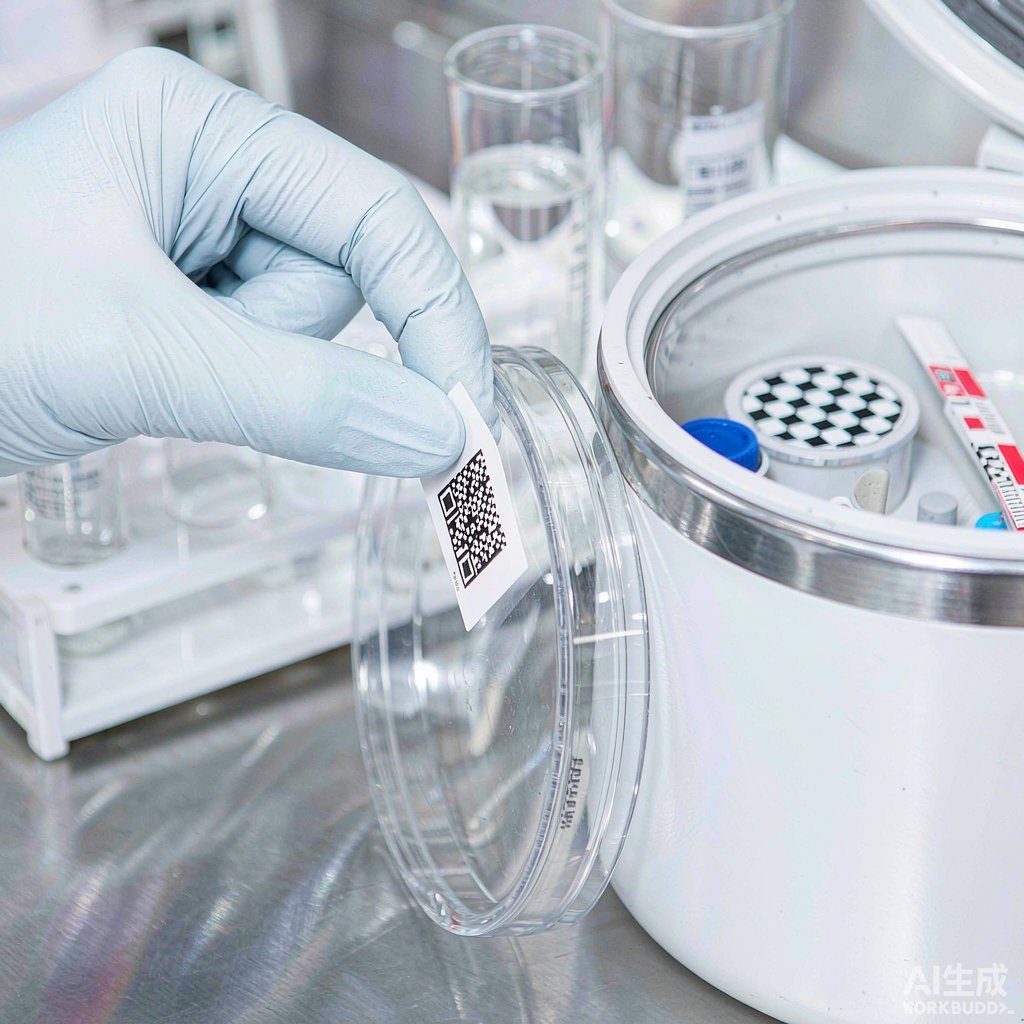
Recommended Products
For the label materials and application scenarios covered in this article, the following BradyLAB (BRD) products are available for selection reference (click to view specifications