
Bottom line up front: The selection sequence for chromatography column labeling is the opposite of that for biobank labels. For biobanks, temperature comes first—decide whether it is liquid nitrogen or an ultra-low temperature freezer before anything else; for chromatography columns, chemical exposure comes first—the primary constraint is the corrosiveness of clean-in-place (CIP) and storage solutions, the second is that the column's viewing area and bed height mark line must not be occupied, and only the third is the temperature rating. The reason is that the temperature range across the entire chromatography workflow is extremely narrow (storage at 2–8 °C, operation at ambient, and only certain media permit moist heat sterilization), so it hardly constitutes a material selection threshold; what actually causes label failure is the 0.5–1.0 M sodium hydroxide and 30% isopropanol contacted every cycle, plus long-term immersion in 20% ethanol. The implementation sequence should be: define chemical exposure → define labeling position (avoid the viewing area and bed mark line) → define the field set → define face stock and ribbon → define the symbology. What BRD 博锐迪 provides in chromatography scenarios is the physical-world carrier for this traceability system.
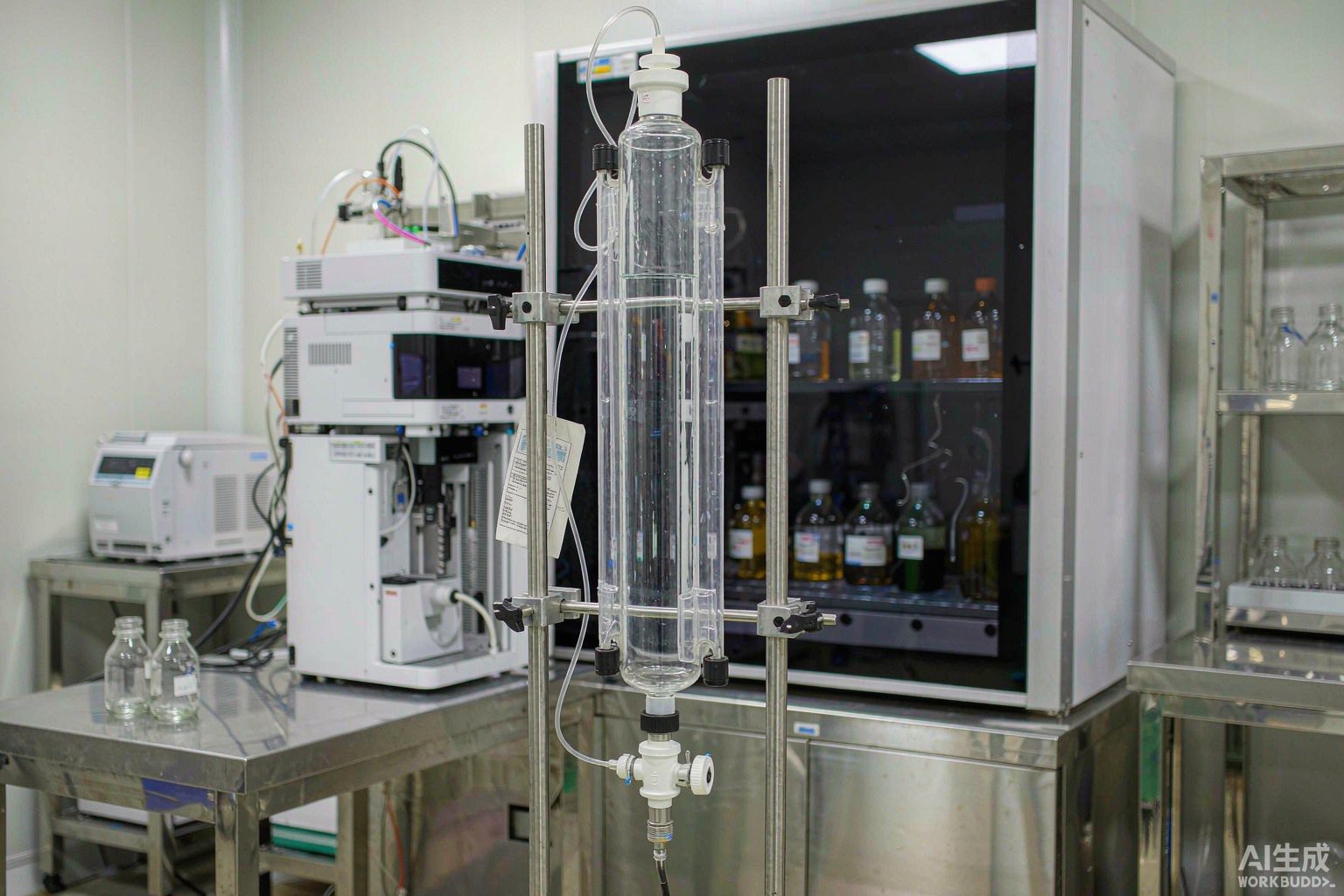
1. Why the first constraint is chemical exposure, not temperature
The biggest difference between a chromatography column and a cryovial is that the column is a vessel that must be cleaned repeatedly. Once a cryovial label is applied, the environment is essentially static: one temperature, one humidity, one or a few freeze–thaw cycles. A chromatography column is different—an affinity column often runs dozens to hundreds of cycles over its lifetime, each cycle comprising at least six steps: equilibration, loading, washing, elution, CIP, and storage solution exchange, three of which directly attack the label chemically. Selecting by temperature would lead to the careless conclusion that "ambient rating is enough," and the label often begins to curl and lose print by the third CIP round—at which point, once the column ID is lost, the entire usage history of the column is broken.
The parameters given in public technical documents are explicit. The CIP protocol in the Cytiva Chelating Sepharose Fast Flow instructions is: 1 M sodium hydroxide solution, linear flow rate approximately 40 cm/h, 1–2 hours contact, reverse flow; for removing strongly hydrophobically bound proteins, up to 4 column volumes of 70% ethanol or 30% isopropanol, with emphasis on using an increasing gradient when applying high-concentration organic solvents to avoid air bubbles; the sanitization protocol is 0.5–1 M sodium hydroxide, approximately 40 cm/h, 30–60 minutes contact, reverse flow, followed by re-equilibration with 3–5 column volumes of sterile starting buffer; long-term storage is in 20% ethanol or 0.01 M sodium hydroxide at 4 °C. The CIP protocol in another gel filtration media instruction is 0.5 M sodium hydroxide, 15–25 cm/h, 1–2 hours, or 2 column volumes of 30% isopropanol, or 2 column volumes of 0.1%–0.5% detergent (alkaline or acidic solution), with 5 column volumes of 70% ethanol required after washing to remove residual detergent. These are publicly verifiable technical document specifications, not empirical inferences.
From this, the three thresholds for chromatography column labels can be listed: first, resistance to repeated contact with 0.5–1.0 M sodium hydroxide (corresponding to a strongly alkaline environment of approximately pH 13–14), while keeping printed content legible after contact; second, resistance to long-term immersion in 20% ethanol and intermittent exposure to 30% isopropanol and 70% ethanol; third, no adhesive failure when cycling between high-humidity condensation in a 2–8 °C refrigerator and the dry conditions of an ambient laboratory bench. Temperature ranks only fourth.
2. Checklist of six chemical exposure categories across the lifecycle
Breaking down the complete lifecycle of a chromatography column from packing to disposal, the label encounters six categories of chemical media. They differ not merely in "corrosiveness" but in the mode of contact: some are long-term immersion, some are instantaneous flushing, some are high-concentration but short contact. For labels, long-term immersion tests the adhesive layer's resistance to plasticization and the face stock's resistance to swelling, while instantaneous high-concentration flushing tests the print layer's (ribbon's) resistance to dissolution. Therefore, selection must evaluate these separately and cannot simply say "chemical-resistant."
| Step | Typical medium | Concentration / parameters | Contact mode | Main effect on label |
|---|---|---|---|---|
| Equilibration and loading | Phosphate, Tris and other buffers | Ionic strength ≥0.15 | Continuous flow, label not directly immersed | Salt crystallization abrades the printed surface |
| Elution | High-salt or low-pH elution buffer | 0.5–1.0 M sodium chloride or 0.5–1.0 M acetic acid | Short flushing | Acidic components attack the ribbon layer |
| CIP | Sodium hydroxide | 0.5–1.0 M, 15–40 cm/h, 1–2 h | Continuous reverse-flow contact | Strong alkali saponifies adhesive layer, embrittles face stock |
| Intensified cleaning | Sodium hydroxide plus sodium chloride | 0.5 M sodium hydroxide + 0.5–1.0 M sodium chloride | Reverse flow, used for severe contamination | High-salt crystallization combined with strong alkali |
| Organic solvent cleaning | Isopropanol or ethanol | 30% isopropanol / 70% ethanol | 2–4 column volumes in a gradient | Solvent extracts the ribbon resin layer |
| Storage | Ethanol or sodium hydroxide | 20% ethanol or 0.01 M sodium hydroxide, 2–8 °C | Long-term immersion for months to years | Long-term swelling causes edge lifting |
This table can be used directly as selection input: read horizontally for concentration and contact mode, vertically for mechanism of action. If your process uses only the first two categories of media above and the column runs only at ambient temperature, the material selection pressure is not great; as soon as the third category—strong alkali CIP—is involved, chemical resistance must be the primary criterion. It should be stated honestly that the official BRD material guide table does not provide specific data on sodium hydroxide resistance, and this article does not draw conclusions on its behalf; for the above strongly alkaline conditions, please refer to the product specification sheet and compatibility testing, and contact the product manager for selection.
3. Geometric constraints: the bed height mark line and viewing area must not be occupied
The second constraint on chromatography columns comes from geometry, and it is overlooked by on-site personnel even earlier than chemical exposure. Taking the Cytiva XK series empty columns as an example, the column tube is made of borosilicate glass, one of whose design purposes is precisely "to facilitate visual inspection of the bed"; the packing procedure explicitly requires that after the bed reaches a constant height, the packing flow rate be maintained for at least 3 column volumes, then the bed height marked on the column, the packing reservoir removed, the adapter installed and pressed down to that mark line.
These two points impose hard constraints on labeling position: first, the middle of the column is the viewing area, where the bed interface, air bubbles, channeling, and color changes are judged—the label must not wrap around and obscure it; second, the bed height mark line is the reference for every packing and re-verification—the label must not cover it. Only three feasible labeling positions remain—the band below the top adapter, the band below the bottom frit, and a tag on the column rack. The rack tag carries the full field set, while the narrow column strip carries only the column ID and the 2D code.
| Column model | Inner diameter | Tube length | Estimated circumference by outer diameter | Recommended max flat-label width | Recommended symbology |
|---|---|---|---|---|---|
| XK 16 series | 16 mm | 200–1000 mm | approx. 63 mm | approx. 15.7 mm | DataMatrix 24×24 |
| XK 26 series | 26 mm | 200–1000 mm | approx. 88 mm | approx. 22.0 mm | DataMatrix or short 1D |
| XK 50 series | 50 mm | 200–1000 mm | approx. 166 mm | approx. 41.5 mm | 1D or 2D both acceptable |
| Stainless steel medium-pressure column | 100–450 mm | Per design | Greater than 314 mm | Per tag size | Tag-based |
The circumferences in the table are estimated from a column outer diameter slightly larger than the inner diameter; the max flat-label width is taken as the arc length corresponding to a 90° central angle (one quarter of the circumference), an empirical value that avoids edge lifting. For a thin column with 16 mm inner diameter, the 15.7 mm usable width cannot fit a full 20-digit 1D symbol, but is sufficient for a DataMatrix with 0.30 mm module size, 24×24 modules, and side length of approximately 7.2 mm. This is the fundamental reason this article recommends 2D codes for thin columns and 1D codes for thick columns and tags.
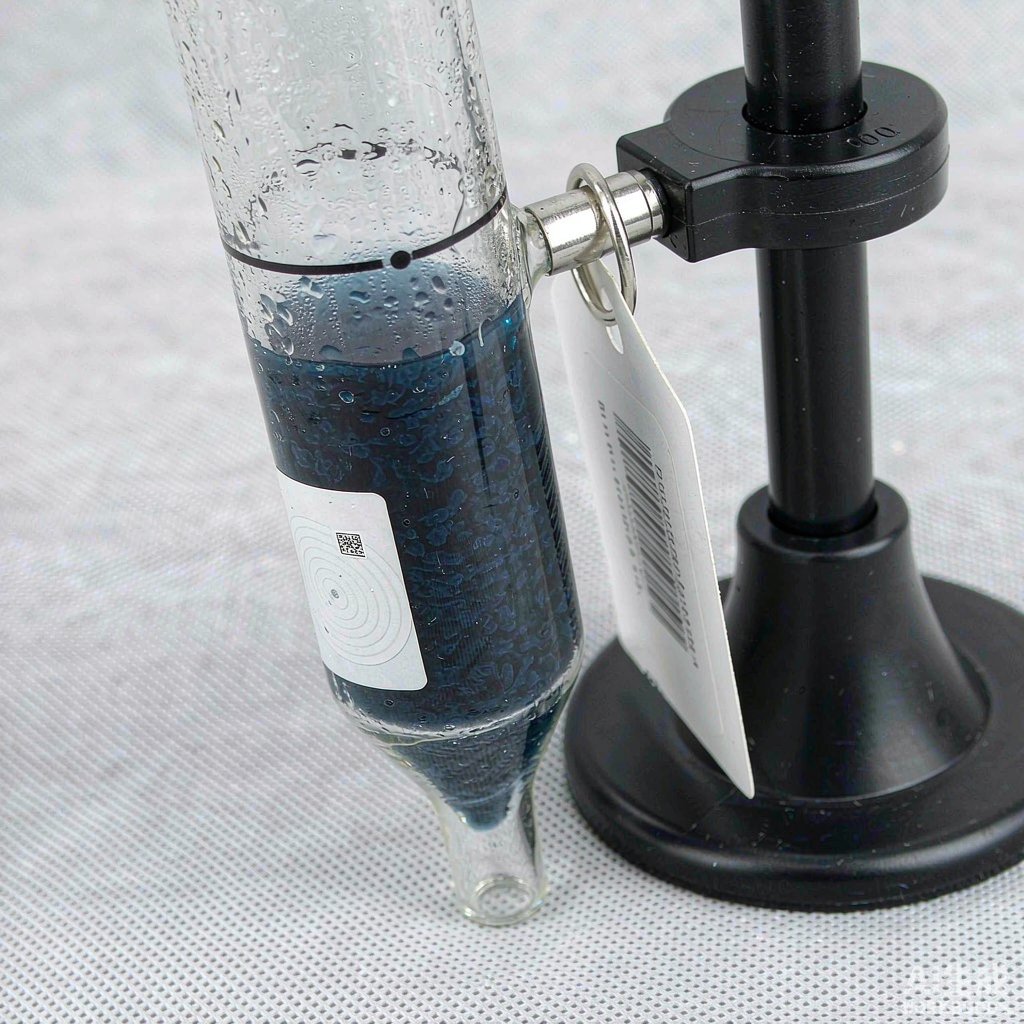
4. Temperature rating: why chromatography columns almost never need ultra-low temperature materials
Temperature ranks fourth because it is genuinely not a threshold in chromatography scenarios. Public instructions give storage conditions mostly as "4–30 °C, 20% ethanol" or "2–8 °C, 20% ethanol, do not freeze"; operating conditions are ambient or 2–8 °C in a refrigerator; CIP and regeneration are performed at ambient temperature; only some highly cross-linked agarose media and some detachable parts of stainless steel columns permit moist heat sterilization. In other words, over its lifecycle, a chromatography column typically sees a minimum temperature of only 2–8 °C and a maximum of only ambient.
This leads to an important reminder: liquid nitrogen-rated materials should not be directly applied to chromatography columns. The only interface that truly requires an ultra-low temperature rating is one point—if the eluted fractions are to be transferred to a -80 °C freezer or liquid nitrogen vapor storage, only those sample containers need the corresponding temperature rating per biobank standards. The column body itself and the rack tag need only materials covering ambient temperature, high-humidity refrigeration, and occasional high temperature. Transplanting biobank selection habits here is neither economical nor does it preserve the discriminating power of the matrix table.
5. Field set: what should actually be written on a chromatography column label
The field set determines whether the label can truly participate in traceability. The difference between a chromatography column and a cryovial is: the core field of a cryovial label is "specimen identity," which is fixed for life once determined; the core field of a chromatography column label is "column status," a considerable portion of which must be updated every cycle. If a field must change every cycle, it should not be printed on the narrow column strip but should go on a replaceable layer of the tag.
| Field | Required | Value rule | Recommended carrier |
|---|---|---|---|
| Column ID | Required | Lifetime unique, not mixed with equipment asset numbers | Column strip + tag |
| Media model and lot number | Required | Consistent with procurement acceptance records | Tag |
| Packing date and packer | Required | Must be updated after repacking or media replacement | Tag |
| Bed height and column volume | Required | On-site verification against the column mark line | Tag |
| Measured column efficiency | Recommended | Height equivalent to a theoretical plate and asymmetry factor, updated after each test | Tag or electronic record |
| Cumulative CIP count | Required | Triggers alert before approaching validated lifetime cycle count | Tag dynamic layer |
| Storage solution and replacement date | Required | 20% ethanol, inspect and top up after 6 months | Tag dynamic layer |
| Maximum allowable pressure and flow rate | Recommended | Consistent with media instructions, operation not exceeding 75% of packing flow rate | Tag |
| Cleanliness status | Required | Three states: cleaned / to be cleaned / sterilized | Tag replaceable layer |
The column efficiency field deserves separate explanation. Public technical documents typically give the column efficiency criterion as: the height equivalent to a theoretical plate should be less than three times the average media particle size; the detection peak must be symmetrical with an asymmetry factor between 0.8 and 1.5, closer to 1 being better; if not met, repacking is required; some prepacked columns are labeled with a theoretical plate count of 13000 m-1. Writing these two numbers into the column efficiency field of the tag turns "whether column efficiency has declined" from a subjective judgment into a comparable number. Similarly, once the CIP count approaches the supplier's validated cycle count (public data show lifetime validation data of 150 cycles or more), the tag should give an alert rather than waiting for column pressure to rise before reacting.
6. Material selection matrix: select by operating conditions, not by temperature
The table below is transcribed item by item from the official BRD material guide table; checkmarks and blanks are consistent with the official table, with no extrapolation. When selecting, first look at the operating condition row, then the container type column.
| Material | Official positioning | LN₂ | Refrigerator | Hot water | Moist heat sterilization | Ambient | Recommended use in this article |
|---|---|---|---|---|---|---|---|
| T629 | Nylon cloth label, easy to apply, high/low temperature resistance, good conformability | Applicable | Applicable | Applicable | Applicable | Applicable | Primary material for column strips and tags |
| T409 | Excellent chemical resistance and abrasion resistance | Applicable | Applicable | Applicable | Not checked | Not checked | Priority evaluation for strong alkali and organic solvent cleaning conditions |
| T424 | Excellent chemical resistance, withstands xylene and staining processes, used with ribbon | Applicable | Not checked | Applicable | Not checked | Applicable | Chemical-resistant scenarios, requires matching ribbon |
| T625 | Vinyl cloth label, repositionable, removable, no adhesive residue, reusable | Not checked | Not checked | Not checked | Not checked | Applicable | Cleanliness status layer and temporary labeling |
Three sentences to clarify how to use this table. First, the primary material for column strips and rack tags is T629—the official table positions it as "for all places in the laboratory requiring labeling," and it is the only product checked in all four columns of ambient, microscope slide, cryovial, and conical tube; its good conformability allows it to conform to the curved surface of glass columns. Second, if your process involves 0.5–1.0 M sodium hydroxide CIP every cycle, prioritize evaluation of T409 and T424; both are positioned in the official table as chemical-resistant, with T424 explicitly requiring use with the corresponding series of ribbon. Third, for information that changes every cycle, such as cleanliness status, use T625 as a removable layer—it peels off without adhesive residue and will not leave hard-to-clean adhesive marks on the rack.
It must be emphasized again that the official guide table does not provide resistance parameters for specific reagents such as sodium hydroxide and isopropanol; the table above presents only official positioning and temperature checkmarks and does not replace compatibility testing. After selecting a specific model, it is recommended to take small samples for immersion and rub testing in the actual CIP solution before full-scale rollout.
7. Printing and ribbon: why thermal transfer with resin-based ribbon is essential
The vast majority of chromatography column label failures are not face stock problems but the print layer being dissolved first. Strong alkali and ethanol attack thermal paper and wax-based ribbons very directly: the wax carrier of wax-based ribbons is extracted by organic solvents, and the print may fade or even disappear after one round of 30% isopropanol flow. Therefore, this scenario must use thermal transfer with a resin-based ribbon—the carrier resin of resin-based ribbons forms a cross-linked adhesion layer after curing, with significantly higher solvent and alkali resistance than wax-based and mixed-based ribbons.
Three things are recommended for print parameters: first, set print darkness near the upper limit where label edges are sharp with no voids, ensuring sufficient ribbon transfer; second, reduce print speed to extend thermal head contact time and improve adhesion; third, allow the label to cool after printing before applying, avoiding displacement caused by adhesive flow under residual heat. Ribbon width should be slightly wider than label width, generally with 2–3 mm margin, to prevent edge print gaps.
8. Symbology and readability: 2D for thin columns, 1D for tags
Symbology selection is directly determined by the geometry table in Section 3. For a thin column with 16 mm inner diameter, the usable column width is approximately 15.7 mm; a 1D symbol at this width either compresses narrow modules to the point of being unreadable, or lengthens to nearly half the column circumference and is interrupted by hand-held operation—neither path works. Switching to DataMatrix with 24×24 modules and 0.30 mm module size gives a side length of approximately 7.2 mm, comfortably within the usable width, with error correction support. Thick columns with inner diameter of 50 mm or more and rack tags have no such limitation; either 1D or 2D is acceptable, selected according to scanner configuration.
For quality criteria, 1D symbols are graded per ISO/IEC 15416, 2D symbols per ISO/IEC 15415, and DataMatrix itself follows ISO/IEC 16022. The recommended on-site practice is: perform a grading test and retain a sample after printing new labels, then spot-check each batch; use the same code for column strips and tags to ensure that readability at any location can trace back to the same column.
9. Compliance anchors: which items site inspections will check
Chromatography columns fall under "equipment and instruments used in drug production or testing," and their labeling requirements can be directly benchmarked against current regulations. Article 86 of the Good Manufacturing Practice for Drugs (2010 Revision) (Ministry of Health Order No. 79) requires such equipment to have usage logs recording use, cleaning, maintenance, and repair, as well as date, time, and the name, specification, and lot number of the drug produced and tested; Article 87 requires production equipment to have clear status labels indicating equipment number and contents (e.g., name, specification, lot number), and where there are no contents, the cleanliness status should be indicated; Article 88 requires that non-conforming equipment, if possible, be moved out of the production and quality control areas, and before removal, have a conspicuous status label; Article 89 requires main fixed piping to be labeled with content name and flow direction. Together, these four articles correspond exactly to the field set in Section 5 of this article: column ID corresponds to equipment number, media and storage solution correspond to contents, the three-state cleanliness status corresponds to the latter half of Article 87, and the buffer, sample, elution, CIP, and waste lines of the chromatography system correspond to Article 89.
At the system level, there are three additional anchors. Clause 7.1.5.2 of ISO 9001:2015 requires measuring equipment to be "identified in order to determine its status," which is precisely the basis for the column ID tag and status layer; Clauses 6.4 and 6.5 of ISO/IEC 17025:2017 regulate equipment and metrological traceability respectively, applicable to laboratories using chromatography as a test method; ISO 13485:2016 applies to medical device and IVD companies using chromatography as a production step. If chromatography products ultimately enter a biobank, the sample container-side labeling should also align with the specimen traceability requirements of ISO 20387:2018. In addition, Article 139 on validation and qualification and Article 143 on cleaning validation determine that the "cumulative CIP count" field must be auditable and traceable, not filled in from memory.
10. Six-step implementation process
Step one, list the chemical conditions for a single column. List the CIP solution, intensified cleaning solution, organic solvent cleaning solution, and storage solution from the process procedure item by item, noting concentration, contact time, and temperature, forming one table per layer. The output of this step is the process version of the table in Section 2.
Step two, determine the labeling position. On site, confirm the viewing area range of the column and the position of the bed height mark line; set the narrow column strip below the adapter or below the frit, and the tag at a height on the rack convenient for scanning. Photograph and archive to prevent position drift after personnel changes.
Step three, define fields and coding rules. Use a lifetime unique number for the column ID, not mixed with asset numbers; assign dynamic fields (CIP count, storage solution replacement date, cleanliness status) to the replaceable layer of the tag; print static fields (column ID, media lot number, packing date) on the fixed layer of the column strip and tag.
Step four, select face stock and ribbon. Select per the matrix in Section 6: T629 for the column and tag body, priority evaluation of T409 and T424 for strong alkali conditions, T625 for the cleanliness status layer; use thermal transfer with resin-based ribbon for all printing, and set print parameters per Section 7.
Step five, define symbology and perform grading tests. Use DataMatrix for thin columns; for thick columns and tags, select 1D or 2D per equipment configuration; after printing, grade per ISO/IEC 15416 or ISO/IEC 15415, retain samples, and keep spot-check records.
Step six, integrate with usage logs and review. After each cycle, record use, cleaning, and maintenance with date and time in the usage log, and update the tag dynamic layer accordingly; check the measured column efficiency and cumulative CIP count monthly, and give advance warning when approaching the validated lifetime.
11. Six failure modes and troubleshooting
| Symptom | Most likely cause | Troubleshooting action | Corrective measure |
|---|---|---|---|
| Print fades or disappears | Ribbon is wax-based or mixed-based, extracted by organic solvent | Verify ribbon model and lot number | Switch to resin-based ribbon and increase print darkness |
| Label edge lifting | Long-term immersion in 20% ethanol causes face stock swelling | Check storage solution concentration and immersion duration | Switch to face stock with better conformability and perform immersion validation |
| Entire column label detaches | Condensation or ethanol residue on column surface at application | Review surface preparation steps before application | Wipe dry and degrease before reapplying, press firmly with even pressure |
| Barcode unreadable | Narrow modules too small or symbol obscured by hand-held position | Check symbol grade and labeling position | Switch to 2D symbol and move the narrow strip outside the hand-held area |
| Column efficiency data inconsistent with history | Column ID and tag mismatched, or multiple columns sharing one tag set | Verify consistency of column strip and tag codes | Rebind codes, add anti-error clips to tags |
| Cleanliness status information lagging | Dynamic layer not updated with cycles | Check usage log and tag update frequency | Add update action to each cycle's closing checklist |
One principle for troubleshooting: first check carrier position, then material, and finally printing. If the position is wrong, no material change can fix it; if the position is correct but the material is not resistant, it manifests as edge lifting or complete detachment; print layer problems manifest only as faded content with intact edges. Following this sequence, root causes can usually be identified on site within two rounds.
Recommended Products
For the label materials and application scenarios covered in this article, the following BRD products are available for selection reference (click to view specifications and request a quote):
- Lab096-690 (T629 nylon cloth, 80 × 60 mm, covers all four ratings of LN₂, refrigerator, hot water, and moist heat sterilization, ¥999)
- Lab005-694 (T629 nylon cloth, 25 × 15 mm, suitable for narrow column strips, ¥999)
- TRUF-32916 (UHF low-temperature, solvent-resistant, liquid-resistant label, for batch rack inventory scenarios, price on request)
- BRL-110-13 (laboratory-specific cryogenic ribbon, 110 mm × 300 m, price on request)
For wider rack tags, refer to T629样本库-97. For more materials and specific applications, please contact the product manager for selection.
FAQ
Q1: Do chromatography columns really not need cryogenic labels?
The column body itself basically does not. Public instructions give storage conditions mostly at 2–8 °C or 4–30 °C, with operation at ambient temperature, and the minimum temperature is far above the applicable boundary of the ultra-low temperature rating. What truly needs an ultra-low temperature rating is the sample container transferred to a freezer or liquid nitrogen storage after elution—that is a biobank scenario, not a column body scenario. Applying liquid nitrogen-rated material directly to the column body is over-specification, significantly raising cost without additional reliability.
Q2: Can the column body be wrapped with a full-circle label?
Not recommended. One purpose of the glass column tube is visual inspection of the bed—the bed interface, air bubbles, channeling, and color changes are all judged from this section; a wrap-around label would obscure the entire viewing area. In addition, the packing procedure requires marking the bed height on the column, and a wrap-around label would cover this reference line. The correct approach is to apply only a narrow strip on the column, positioned below the adapter or below the frit.
Q3: After 0.5 M sodium hydroxide CIP, how long before the label fails?
This number cannot be given from impression. The official BRD material guide table does not list specific parameters for sodium hydroxide resistance, and this article makes no inference. A feasible approach is to take small samples of candidate materials, immerse them in sodium hydroxide at the selected concentration and perform accelerated validation per the process contact time, along with rub testing of the print layer, to determine the replacement cycle from measured results. Contact the product manager for compatibility test data on the corresponding materials.
Q4: Why use 20% ethanol for storage solution instead of pure water?
Public technical documents are very consistent: long-term storage in pure water or buffer salt solutions readily promotes microbial growth and biofilm formation that clog the column; 20% ethanol combines bacteriostatic action with moderate volatility, preventing the media from drying and cracking. Some gel filtration media also require a bacteriostatic agent in the storage solution—traditionally 0.02% sodium azide, now more commonly 0.05% benzalkonium chloride or 0.1% commercial preservative. Whichever is used, it is essential to ensure the column is filled with liquid and free of air bubbles.
Q5: Why are 1D barcodes not recommended for thin columns?
Geometry. For a column with 16 mm inner diameter, the circumference estimated from its outer diameter is approximately 63 mm; taking a 90° central angle as the no-lifting limit, the usable flat-label width is only approximately 15.7 mm; a 20-digit 1D symbol at 0.19 mm narrow module already exceeds 50 mm in width, necessarily wrapping most of the way around the column and crossing the hand-held position, so the scan window would be interrupted. Switching to a 2D symbol with 24×24 modules and 0.30 mm module size gives a side length of approximately 7.2 mm, which fits comfortably.
Q6: Why should the CIP count be written on the tag?
Because it determines the endpoint of media lifetime. Supplier lifetime validation is usually given in cycle counts, with public data showing lifetime validation data of 150 cycles or more. Writing the count on the tag allows on-site personnel to update it conveniently at the end of each cycle, giving advance warning when approaching the validated lifetime; if it is only recorded in a spreadsheet, disconnection between the site and records is the norm, and by the time column pressure rises, the column is often already operating beyond its lifetime.
Q7: Can the cleanliness status layer and the column ID layer be on the same label?
Layering is recommended. The column ID is lifetime-unique static information that should not be changed once determined; cleanliness status changes every cycle and is dynamic information. Putting them on the same label means replacing the entire label every cycle, requiring the column ID to be transcribed each time—and transcription is the main source of ID mix-ups. The correct approach is to print the column ID on a fixed layer and use removable material for an independent dynamic cleanliness status layer.
Q8: How should piping labeling for a chromatography system be done?
Current regulations require main fixed piping to be labeled with content name and flow direction; the buffer, sample, elution, CIP, and waste lines in a chromatography system all fall within this scope. The practice is to apply wrap-around labels at both ends of the piping and at direction changes, indicating content name and flow direction arrows, and to replace them when media or process changes. Note: do not cover the statutory identification layer on the piping; the self-applied layer carries only the dynamic content and flow direction information.
The BRD 博锐迪 laboratory and medical label series covers operating conditions including LN₂, ultra-low temperature freezers, hot water, and moist heat sterilization. The materials and specifications referred to in this article are subject to the official material guide table; for more materials and specific applications, please contact the product manager for selection.