
I. Conclusion First: No Labels on the Endoscope Body Itself; Traceability Information Goes on Four Carriers
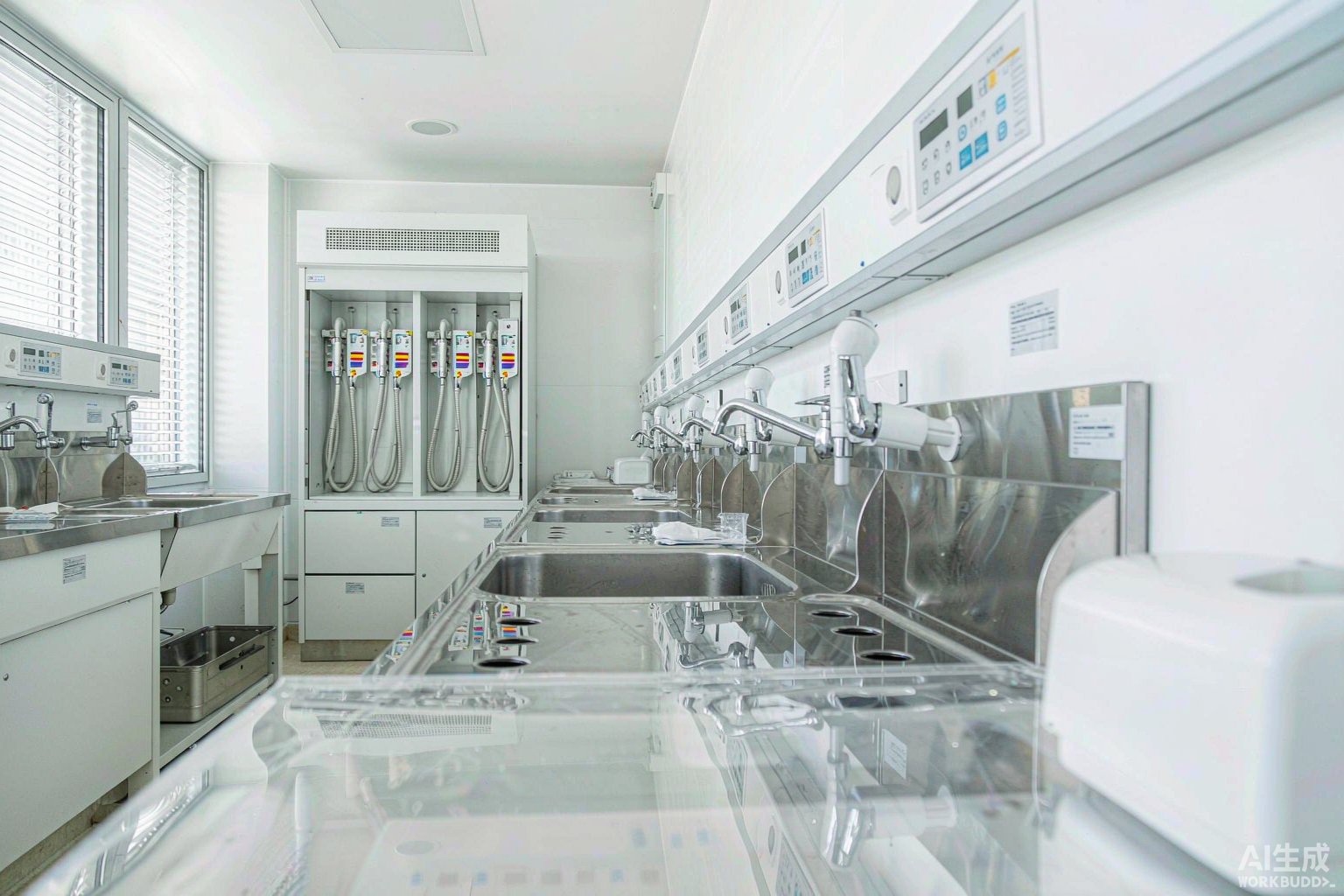
For the reprocessing traceability of flexible endoscopes, the first statement must be: do not apply any industrial label to the endoscope body itself. WS 507—2016 "Technical Specification for Cleaning and Disinfection of Flexible Endoscopes" stipulates that all flexible endoscopes shall be thoroughly cleaned and subjected to high-level disinfection or sterilization after each use (6.1.1); the drying step requires perfusion of all channels with 75%–95% ethanol or isopropanol, followed by purging all channels with clean compressed air for at least 30 s (6.2.7); even for endoscopes that have already been disinfected and passed, before daily diagnostic and therapeutic work begins, disinfected endoscopes to be used that day shall again be disinfected, finally rinsed, and dried before use for patient care (6.1.4 f). For a device that undergoes "immersion—brushing—perfusion—purging—hanging" every day, no pressure-sensitive adhesive label can survive a single shift; after detachment, adhesive residue will also violate the mandatory requirement in Clause 5.4 for storage cabinets (rooms) that "inner surfaces shall be smooth, seamless, and easy to clean and disinfect."
Therefore, the selection conclusion from BradyLAB BRD is: move traceability information from the endoscope body to four carriers that can be affixed, replaced, and managed by barcode—①storage cabinet positions (four-level positioning: cabinet—column—tier—hanging rod); ②transport containers (status layers for to-be-cleaned, disinfected, and finally rinsed); ③self-adhesive dynamic layers for disinfectants and containers (without covering the original manufacturer's statutory labels); ④association records between endoscope numbers and patients (retained per Clause 7.6). The four-step selection sequence is: first determine face stock and adhesive system by substrate material, then determine printing method and ribbon by resistance to daily chemical wiping, and finally determine coding fields by record retention requirements.
II. Why the Endoscope Body Must Not Be Labeled: A Chain That Undergoes Immersion, Perfusion, and Purging Every Day
To understand why the endoscope body cannot be labeled, one only needs to walk through a day of regulatory requirements. After diagnosis and treatment, pre-cleaning is performed first: immediately wipe away surface contaminants before detaching from the light source, repeatedly apply air and water for at least 10 s, and then place into a transport container (6.2.1). Leak testing follows, requiring the endoscope to be fully immersed in water and the distal end bent in all directions to observe bubbles; the specification explicitly states "leak testing should be performed before each cleaning; where conditions do not permit, leak testing should be performed at least once daily" (6.1.4 a). The cleaning stage requires that the cleaning solution be replaced after each endoscope is cleaned (6.2.3 f); after rinsing, purge each channel with a pressure water gun or pressure air gun for at least 30 s (6.2.4 d); final rinsing with purified water or sterile water for at least 2 min (6.2.6 b); finally, perfuse all channels with 75%–95% ethanol or isopropanol, then purge with air for at least 30 s until completely dry (6.2.7). The drying step also requires a dedicated drying table laid with sterile drapes, with sterile drapes replaced every 4 h.
Stacking these procedures together, a label must simultaneously withstand prolonged immersion in enzyme-containing cleaning solution, purified water rinsing, alcohol perfusion, compressed air purging, and repeated handling friction multiple times per day. The high-level disinfectant parameters given in Appendix B of the specification are equally stringent: ortho-phthalaldehyde at 0.55% (0.5%–0.6%), disinfection time no less than 5 min; glutaraldehyde at no less than 2% (alkaline), bronchoscopes immersed no less than 20 min, other endoscopes no less than 10 min, no less than 10 h for sterilization; peracetic acid at a volume fraction of 0.2%–0.35%, disinfection no less than 5 min, sterilization no less than 10 min; chlorine dioxide at 100 mg/L to 500 mg/L, disinfection 3 min to 5 min. For endoscopes and accessories used on patients with confirmed or suspected mycobacterial infection, the specification requires that disinfection time follow the product's instructions for use (6.1.4 c). Under such conditions, no face stock can succeed by "sticking firmly"; the correct approach is to move identification to positions that are not immersed.
III. Carrier One: Four-Level Positioning of Storage Cabinets (Rooms)—Cabinet, Column, Tier, Hanging Rod
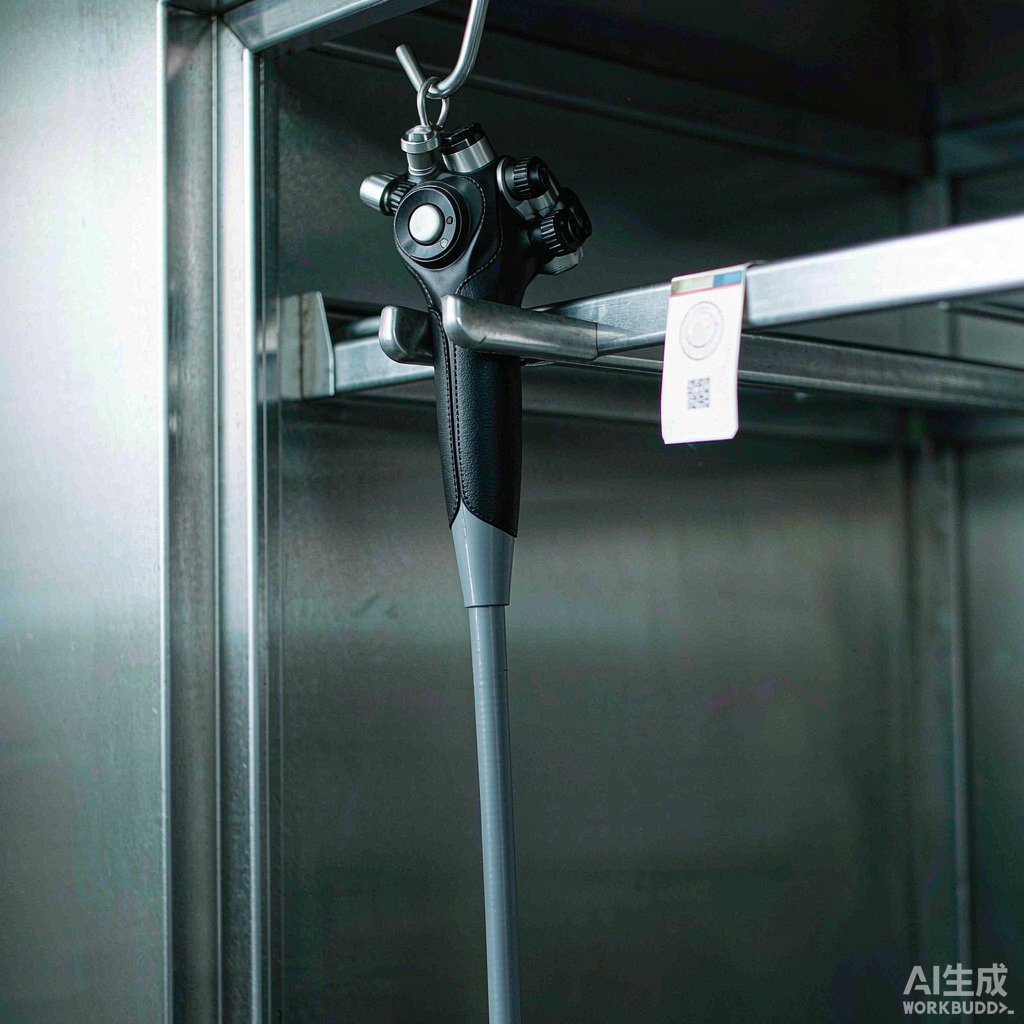
The requirements of Clause 5.4 for endoscope and accessory storage cabinets (rooms) focus on three points: inner surfaces shall be smooth, seamless, and easy to clean and disinfect; good ventilation shall be maintained; and dryness shall be maintained. Common industry practice further requires storage cabinets to be cleaned and disinfected once weekly, and cleaned and disinfected immediately upon contamination. Dried endoscopes shall be stored in the storage cabinet (room) with the body hanging, the angulation lock knob in the free position, and removed buttons and valves stored separately. These requirements determine that cabinet position signs must be affixed to smooth surfaces that are easy to clean and must withstand weekly disinfectant wiping.
It is recommended to code by four levels: "cabinet—column—tier—hanging rod": the first level is the cabinet number, typically 2 to 6 storage cabinets per reprocessing room; the second level is the vertical divider column within the cabinet; the third level is the horizontal shelf tier; the fourth level is each hanging rod on that tier. The coding format may adopt segmented notation such as "Cabinet 2—Column B—Tier 3—Position 7"; after conversion to system characters, the total length shall not exceed 14 digits, which can be directly mapped to a QR code and read with industrial-grade scanning equipment within 30 cm in front of the cabinet.
| Level | Object Affixed | Substrate Interface | Recommended Size | Recommended Symbology |
|---|---|---|---|---|
| Level 1 Cabinet | Outer surface of cabinet door | Brushed stainless steel | 80 mm×60 mm | 1D barcode |
| Level 2 Column | Upper edge of vertical divider | Stainless steel or coated steel plate | 60 mm×30 mm | 1D barcode |
| Level 3 Tier | Shelf beam | Stainless steel | 50 mm×25 mm | 1D barcode |
| Level 4 Hanging rod | Label holder at rod base | Stainless steel or engineering plastic holder | 25 mm×15 mm | QR code |
The key trade-off here is: cabinet position signs pursue "position uniqueness" rather than "large information capacity." The reason QR codes are recommended for Level 4 hanging rods is that the usable area at the rod base is typically only about 25 mm×15 mm; a 1D barcode plus left and right quiet zones can hardly fit complete level information within such a short horizontal length; a QR code can carry an equivalent character count within a 6 mm×6 mm area and has error correction capability.
IV. Carrier Two: Status Layers on Transport Containers, Switched Daily with the Process
Clause 5.3.6 lists "endoscope and accessory transport containers" as mandatory facilities for the cleaning and disinfection room, and 6.2.1 stipulates that after pre-cleaning, the waterproof cap shall be closed and the endoscope placed in a transport container for delivery to the cleaning and disinfection room. Throughout the process, transport containers assume at least three mutually exclusive states: contaminated (post-procedure, awaiting cleaning), clean (drying complete, awaiting storage), and temporary storage (awaiting re-disinfection before daily procedures, corresponding to 6.1.4 f). The same container must repeatedly switch among three states every day.
This scenario of "same object affixed, frequently changing information" is a typical dynamic layer; the selection principle is to prioritize face stocks that can be removed as a whole sheet without leaving adhesive residue, and to use paper logs or system records for status verification, rather than hard-coding status onto permanent labels. BradyLAB BRD's nylon cloth material (material code T629) is easy to apply, conforms well, bonds stably at room temperature, and is easy to replace later, making it suitable as a carrier for transport containers; the color-coding system for container bodies is established by the hospital itself, and BradyLAB only provides the repeatedly replaceable self-adhesive layer.
V. Carrier Three: The Non-Coverage Boundary for Disinfectants and Containers
Multiple chemicals inevitably coexist in the cleaning and disinfection room. The optional disinfectants listed in Clause 5.3.11 e include ortho-phthalaldehyde, glutaraldehyde, peracetic acid, chlorine dioxide, acidic electrolyzed oxidizing water, and compound chlorine-containing disinfectants; other disinfectants may also be used; 5.3.11 h also requires drying agents 75%–95% ethanol or isopropanol. These chemicals are regulated objects, and their factory safety labels are the statutory layer; per GB 15258, pictograms, signal words, and precautionary statements must be fully retained. The self-adhesive layer may only supplement three types of dynamic information: opening date, next verification date of the current concentration monitoring result, and expiration date; covering any statutory element on the original container is strictly prohibited.
The specification also sets quantitative requirements for water quality: purified water shall comply with GB 5749 and the total bacterial count shall not exceed 10 CFU/100 mL; the filter membrane used for producing purified water shall have a pore size no greater than 0.2 μm and be replaced regularly; water in the water bottle shall be sterile water, replaced daily. These date-bearing data are suitable for a circulating record card at the sink edge, rather than being affixed to bottles to cover the original labels.
VI. Carrier Four: Association Records Between Endoscope Numbers and Patients, Retained per Clause 7.6
Clause 7.6 of the specification is the anchor of the entire traceability system, and the original text is very specific: the use and cleaning/disinfection status of each endoscope shall be recorded, including date of diagnosis and treatment, patient identifier and endoscope number (both shall be unique), start and end times of cleaning and disinfection, and names of operators; monitoring results of disinfectant concentration in use and bacterial load, as well as biological monitoring results of endoscopes, shall also be recorded; printouts of operating parameters of endoscope washer-disinfectors should be retained; monitoring results of hand hygiene and environmental disinfection quality shall be recorded. Records shall be traceable; disinfectant concentration monitoring records shall be retained for no less than 6 months, and other monitoring data for no less than 3 years.
This set of fields determines the division of labor between the electronic side and the paper side. The electronic side is carried by the department's information system and forms; the paper side is carried by record cards that travel with the endoscope. On either side, the expression of the endoscope number is key—it must be both unique and machine-readable. The identification requirements for pre-examination procedures in ISO 15189:2022 and the identification and traceability requirements in Clause 7.10 of ISO 20387:2018 point to the same rule: identification must remain unique and traceable throughout the entire chain of collection, reception, processing, and storage.
It is recommended to create two independent record chains for "patient identifier" and "endoscope number," linked by a single scanning action: at procedure registration, the operator first scans the QR code on the storage cabinet hanging rod to obtain the endoscope number, then scans the patient wristband barcode, and the system automatically writes an association record containing a timestamp and operator account. In this way, even if paper labels wear over time, electronic records still meet the 3-year retention requirement.
VII. Material and Temperature Grade Matrix: Select by Scenario, Not by Maximum Temperature Resistance
Many buyers habitually ask "which product is most low-temperature resistant" during selection, but in this scenario three things truly determine success: flat-surface bonding stability at room temperature, weekly disinfectant wiping, and occasional alcohol splashing. Selecting by the grading method in BradyLAB BRD's official material guide table allows more accurate matching.
| Application Scenario | Material Code | Key Points of Official Description | Room Temp. | Hot Water 100 °C | Autoclave 121 °C |
|---|---|---|---|---|---|
| Storage cabinet position signs, transport containers (large-area flat application, requiring later replacement) | T629 | Nylon cloth label, easy to apply, high/low temperature resistance, good conformability | Applicable | Applicable | Applicable |
| Small-diameter areas requiring overlap wrapping and accessory packaging | T429 | When applied to tube surfaces, overlap at least 3 mm at head and tail | Not applicable | Applicable | Applicable |
| Color differentiation for specimen containers and test tube carriers | T439 | Pre-printed color at top for quick identification and classification | Not applicable | Applicable | Not applicable |
It should be emphasized that the "Room Temp." column in the table reflects the original checkboxes of the official guide table; T629 is the only material checked simultaneously in all four columns: room temperature, microscope slides, cryovials and test tubes, and conical tubes. This is why, in the endoscope reprocessing scenario where low-temperature conditions are almost nonexistent, it is still placed in the first-choice position—not because it is low-temperature resistant, but because on room-temperature flat surfaces it simultaneously balances application convenience and later replaceability. The materials and temperature ranges listed in the table are taken from the original text of the official guide table; for more specific application recommendations, please contact the product manager for selection.
VIII. Substrate Preparation: Stainless Steel, Coated Steel Plate, and Curved Holders
The common substrates on endoscope storage cabinets and transport containers fall into three categories: 304 stainless steel, powder-coated steel plate, and engineering plastic holders, with greatly differing surface conditions. Brushed stainless steel has higher surface energy, but the brushed texture lifts the adhesive layer, so the actual contact area is often only 60%–70% of the apparent area; powder-coated steel plate has a flat surface, but the coating's own adhesion strength is the weak link, and removal can easily peel off the coating; engineering plastics and polypropylene parts are low-surface-energy materials, and conventional acrylic adhesive systems can hardly form effective wetting.
| Substrate | Surface Condition | Preparation Requirements | Application Notes |
|---|---|---|---|
| 304 brushed stainless steel | High surface energy, directional texture | Degrease with 75% ethanol or isopropanol, allow to volatilize for at least 60 s | Press firmly along the texture direction; put into use after 24 h |
| Powder-coated steel plate | Flat but uneven coating strength | Strong solvents prohibited; wipe with alcohol only | Apply to flat areas outside coating transition zones |
| Engineering plastic holder | Low surface energy | Requires high-tack or specialty adhesive system | Perform a 48 h hanging sample trial before bulk use |
| Curved hanging rod base | Small radius of curvature | Use thin face stock | Use overlap wrapping where necessary |
Special note: because cloth-based face stocks are inherently flexible, their conformability to curved and slightly uneven surfaces is significantly better than that of rigid film face stocks, which is one reason this article places nylon cloth among the first choices.
IX. Chemical Exposure: Face Stock and Ribbon Combinations for Weekly Wiping and Occasional Alcohol Splashing
Appendix A of the specification explicitly distinguishes the personnel protection levels for the procedure room and the cleaning and disinfection room, indirectly indicating different chemical exposure intensities in the two areas: the cleaning and disinfection room requires full equipment of work clothes, surgical cap, mask, gloves, goggles or face shield, waterproof apron or waterproof isolation gown, and dedicated shoes, while the procedure room only "should use" goggles and waterproof isolation gown. The implication for selection is: all self-adhesive signs in the cleaning and disinfection room must be selected for daily contact with alcohol and disinfectants, not for ordinary indoor signage.
The printing method must be thermal transfer rather than direct thermal. Direct thermal printing forms characters by heat-induced color development of a coating, which smears immediately when wiped with alcohol or chlorine-containing disinfectants; thermal transfer transfers the ink layer from a resin-based ribbon onto the face stock, and with a suitable face stock, characters remain legible after wiping. Clause 5.3.3 also requires that if mechanical ventilation is used in the cleaning and disinfection room, the air change rate should be no less than 10 times per hour and the minimum fresh air volume should reach 2 times per hour—meaning the room remains in a high air-exchange state for long periods, and labels must withstand the risk of edge lifting caused by continuous airflow; therefore, it is recommended to use rounded corners for larger cabinet position signs to reduce the probability of lifting.
X. Barcode Readability: Sampling Inspection per Print Quality Evaluation Standards
Print quality evaluation for 1D barcodes follows ISO/IEC 15416, and for QR codes ISO/IEC 15415. For users, the simplest implementation is to fix three things: print resolution no less than 300 dpi, uniform use of resin-based ribbons, and quarterly sampling inspection with a barcode verifier. During sampling, focus on contrast and modulation; if these decline significantly, suspect the ribbon batch rather than the printing equipment first, because in this scenario ribbons are consumables and batch differences are most likely to manifest in print quality.
Scanning distance must also be considered during selection. With people coming and going in front of storage cabinets, operators want to complete scanning at around 30 cm, where wide 1D barcodes are actually easier to read; on the small 25 mm×15 mm area at the hanging rod base, QR codes are the only realistic choice. Coexistence of the two is normal and does not need to be forcibly unified.
XI. System-Specific Color Coding: Translating Regulatory Room Separation Requirements into Visible Colors
Clauses 5.1.3 and 5.3.5 set out two easily overlooked but very specific zoning requirements: diagnostic and therapeutic work with flexible endoscopes of different systems (e.g., respiratory system, digestive system) shall be performed in separate rooms; cleaning sinks and endoscope washer-disinfectors for flexible endoscopes of different systems shall be set up and used separately. The difficulty in implementing these two requirements lies not in purchasing several pieces of equipment, but in how to enable every staff member to instantly identify "which system this endoscope belongs to and which sink it should enter."
Color is the lowest-cost answer. The BradyLAB BRD T439 series is pre-printed with six colors at the top of the label, and its official use is stated as facilitating quick identification and classification of container types; its applicable scenario is test tube containers—therefore the most reasonable attachment point is test tubes and specimen bottles holding biopsy specimens: use six colors to mark the two major categories of respiratory system and digestive system, then subdivide to specific endoscope types, so that specimens carry system-affiliation color information as soon as they leave the endoscope body. As for visual zoning management at sink openings, beside washer-disinfectors, and on storage cabinet columns, these are fixed signs with large substrates that do not travel with specimens; other material solutions matching the respective substrates should be selected, and it is not recommended to directly reuse pre-printed color labels designed for low-temperature test tubes. How colors correspond to endoscope types falls within the hospital's institutional scope; the specific mapping shall be governed by the operating procedures established by the endoscopy center itself.
XII. Dual-Track Routing of Biopsy Specimens: Material Differences Between Routine Pathology and Research Cohorts
Endoscopic procedures often yield two types of specimens simultaneously: one sent to the pathology department for routine examination, transported at room temperature in neutral buffered formalin fixative, with focus on container sealing and not covering the fixative's original label; the other is fresh tissue entering research cohorts, commonly seen in multicenter clinical trials and hospital research projects, usually requiring immediate placement in a low-temperature environment, with specimen tubes placed in low-temperature freezers or even gas-phase liquid nitrogen tanks—this is where genuine low-temperature conditions apply.
For the second track, material grades must be re-selected. According to the official guide table, T629 nylon cloth labels are applicable across all four categories: liquid nitrogen, low-temperature freezer, hot water, and autoclaving, making it the only material in this scenario that can follow samples all the way from room temperature into a low-temperature environment; at the same time, be sure to follow the overlap application requirement—when applied to small-diameter areas, overlap at least 3 mm at head and tail. This step is also the only part of this article involving low temperature; all other scenarios are room-temperature flat surfaces.
XIII. Six-Step Implementation Process
| Step | Action | Key Parameters | Common Errors |
|---|---|---|---|
| 1 | Inventory and classify objects to be affixed | Five categories: cabinet, column, tier, hanging rod, transport container | Using the same coding set for transport containers and storage cabinets |
| 2 | Determine coding rules | No more than 4 levels, total length no more than 14 digits | Writing dates and operators into position codes |
| 3 | Select face stock by substrate | Treat stainless steel, coated, and engineering plastic separately | Using ordinary adhesive systems directly on low-surface-energy surfaces |
| 4 | Select printing method by chemical exposure | Thermal transfer with resin-based ribbon, resolution no less than 300 dpi | Using direct thermal labels beside disinfectant sinks |
| 5 | Establish scan-based association between patients and endoscope numbers | Scanning writes timestamp and operator account simultaneously | Manual copying of numbers causing secondary entry errors |
| 6 | Archive per Clause 7.6 | Concentration monitoring records no less than 6 months; others no less than 3 years | No electronic backup after paper-based recording |
XIV. Failure Modes and Troubleshooting
| Phenomenon | Most Likely Cause | Action |
|---|---|---|
| Edge lifting of cabinet position signs | Square-corner design combined with continuous mechanical ventilation | Switch to rounded corners, increase pressure, recheck after 24 h |
| Characters blurred after wiping | Direct thermal printing or wax-based ribbon used by mistake | Switch to thermal transfer with resin-based ribbon |
| Coating peeled off during removal | Applied to powder coating with overly strong adhesive | Apply to flat stainless steel or use removable face stock |
| Complete detachment from plastic holder | Low surface energy not adapted | Switch to high-tack adhesive system and perform 48 h hanging sample test |
| Declining scan recognition rate | Ribbon batch variation or printhead contamination | Perform sampling inspection per print quality evaluation standards and clean printhead |
Recommended Products
For the label materials and application scenarios covered in this article, the following BradyLAB (BRD) products are available for selection reference (click to view specifications and request a quote):
- Lab096-629/80x60mm nylon cloth labels for biobank cryovials, microcentrifuge tubes, microscope slides, and liquid nitrogen(¥999/roll)
- Lab084-439/30x15mm top pre-printed color cryogenic classification labels(Price on request)
- Lab038-429/25.4X9.53 matte white self-laminating labels(Price on request)
- BRL-110-BK laboratory cryogenic ribbon(Price on request)
FAQ
Q1: Can the number be directly engraved on the housing of the endoscope control section?
It is not recommended to add any attachments yourself. The specification requires full immersion of the endoscope in water during leak testing to observe bubbles; any additional mounting may interfere with distal end bending and bubble observation. If identification is truly needed, contact the equipment manufacturer to confirm whether original factory identification services are available.
Q2: How long can endoscopes be stored after storage?
The specification itself does not give a unified value for specific storage time limits after treatment with different disinfectants, and recommendations from relevant professional organizations are not fully consistent. What the specification explicitly requires is that before daily diagnostic and therapeutic work begins, disinfected endoscopes to be used that day shall again be disinfected, finally rinsed, and dried before use for patient care. Departments should establish their own provisions on this basis and write them into operating procedures.
Q3: Will weekly cleaning and disinfection of storage cabinets damage the labels?
It depends on the combination of face stock and printing method. Direct thermal labels basically smear upon wiping; thermal transfer with resin-based ribbon and a suitable face stock can withstand weekly wiping over the long term. Before going live, it is recommended to perform a 50-wipe test before bulk use.
Q4: Must patient identifiers and endoscope numbers be made into QR codes?
Not necessarily; it depends on available area. Large areas such as cabinet bodies, columns, and tiers are better served by wide 1D barcodes for long-distance reading; small areas such as hanging rod bases can only use QR codes. Coexistence of the two is normal; the key is to keep coding rules consistent.
Q5: Can I print a record on ordinary printer paper and stick it on a disinfectant bottle?
No. Disinfectants are chemicals, and factory safety labels are governed by GB 15258; the self-adhesive layer must not cover pictograms, signal words, or precautionary statements. It is recommended to write the opening date, concentration verification date, and expiration date on a separate record card hung at the sink edge or on a log board.
Q6: What material container identification is needed for fresh biopsy tissue used in research?
If specimens are to enter low-temperature freezers or gas-phase liquid nitrogen tanks, select by low-temperature conditions, using a material applicable across all four categories: liquid nitrogen, low-temperature freezer, hot water, and autoclaving, and pay attention to head-to-tail overlap on small-diameter areas. For specific materials and applications, please contact the product manager for selection.
Q7: How often should transport container status labels be replaced?
It is recommended to replace each time the status changes, rather than on a fixed cycle. During selection, prioritize face stocks that can be removed as a whole sheet without leaving adhesive residue, to avoid misjudgment caused by accumulation of old statuses.
Q8: How is the starting point for the three-year record retention period determined?
Clause 7.6.6 of the specification only stipulates that disinfectant concentration monitoring records be retained for no less than 6 months and other monitoring data for no less than 3 years. It is recommended to use the record generation date as the starting point and specify this in institutional documents to avoid inconsistent practices during hospital archiving.