
Blood Transfusion Department Blood Component Label Selection: Define the Temperature Zone First, Then the Material
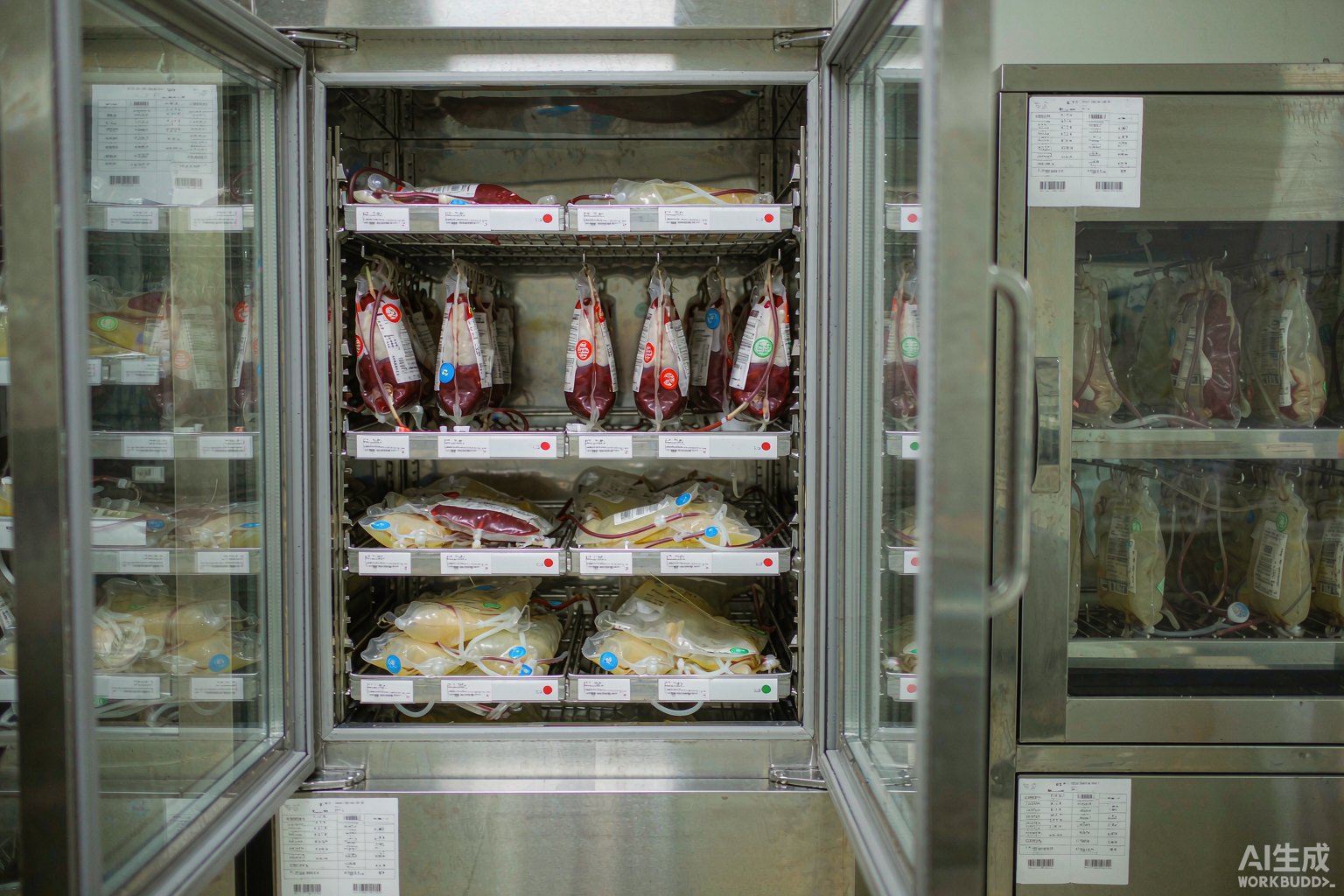
The blood transfusion department (blood bank) is the only department in a hospital that places four distinctly different storage temperature zones in the same room: red blood cells and whole blood are refrigerated at 2 °C to 6 °C, platelets are held at a constant 20 °C to 24 °C with continuous gentle agitation, plasma and cryoprecipitate are frozen below -20 °C, and frozen red blood cells are stored at deep-low temperatures of -65 °C or even -120 °C. This determines that the selection logic for blood component labels is completely different from that of a biobank: in a biobank, "the colder, the harder"; in a transfusion department, "each of the four temperature zones has its own failure mechanism". This article presents an actionable selection path in four steps: "temperature zone and storage period combination → blood bag substrate and plasticizer → bag geometry → symbology and fields".
Conclusion Up Front: The First Constraint Is Not the Lowest Temperature, but the Combination of "Component × Temperature Zone × Storage Period"
If you only ask "how low can it go", it is easy to equip the entire department with a -196 °C LN₂-grade label, which is over-specification and a waste of cost. What really determines the material is the combination of three things: first, which tier the storage temperature of that component falls into; second, how long the label needs to serve—platelets last only 24 hours or 5 days, plasma 1 year or 4 years, and frozen red blood cells as long as 10 years; third, how many temperature transitions the label must undergo during this period. For example, fresh frozen plasma is taken out from below -20 °C and thawed, then held at 2 °C to 6 °C for no more than 24 hours, so the label must withstand both operating conditions at once.
List these three items in a table, and the material tier emerges automatically: for ambient and refrigerated tiers (2 °C to 6 °C, 20 °C to 24 °C), use materials marked as suitable for "ambient" in the official material guide; for the -20 °C tier (below -18 °C), use materials rated "resistant to -40 °C and above"; for frozen red blood cells at -65 °C and -120 °C, LN₂-grade materials must be used. The transfusion departments of the vast majority of hospitals only need the first two tiers; only units that carry out cryopreservation of rare blood types or long-term cryopreservation for autologous transfusion need the third tier.
Compliance Boundary: The Blood Bag Manufacturer's Original Label Is the Statutory Layer, and the Self-Adhesive Layer Must Not Cover Its 1D or 2D Barcode
This is the biggest difference between transfusion department identification and laboratory identification. The primary label on a blood bag is printed by the blood bag manufacturer when the container leaves the factory (ISBT 128 standard base label, size 100 ± 2 mm × 106 ± 2 mm, carrying two barcodes: the container manufacturer and catalog number, and the container lot number). The component label is applied by the blood station or blood center upon completion of preparation (100 ± 2 mm × 100 ± 2 mm, divided into four 50 ± 1 mm quadrants, respectively carrying six types of data structures: donation number, ABO/Rh blood type, collection and preparation dates, product code, expiration date and time, and special tests). These two layers are the statutory layer. Article 16 of the Measures for the Administration of Clinical Blood Use in Medical Institutions (Ministry of Health Order No. 85) explicitly stipulates that the blood bag label shall include six items: donation number or barcode, blood type, blood variety, blood collection date and time or preparation date and time, validity period and time, and storage conditions, and provides that blood with non-compliant blood bag labels is prohibited from being stocked.
BradyLAB (BRD) does not provide this statutory layer. What we can provide is the self-adhesive dynamic layer outside the statutory layer. It does only four things, and none of them may obscure the barcode or human-readable fields on the statutory layer:
- Zone location identification for blood storage refrigerators and platelet agitators—Article 21 of the Technical Specifications for Clinical Blood Transfusion requires that whole blood and blood components be stored separately in different layers of a dedicated blood bank refrigerator or in different dedicated refrigerators according to blood types A, B, O, and AB, with clear identification;
- Status identification—pending testing, released, returned, discarded, near-expiry warning, used for visual management during blood stocking acceptance and before issue;
- Post-thaw time-limit identification—fresh frozen plasma should be transfused within 24 hours after thawing when stored at 2 °C to 6 °C, and cryoprecipitate should be transfused within 6 hours after thawing when stored at 20 °C to 24 °C. These two windows must be explicitly marked with the thawing time on the label;
- Post-transfusion empty blood bag recovery identification—after transfusion is completed, empty blood bags must be retained at low temperature of 2 °C to 8 °C for at least 24 hours for verification, and then sealed and subjected to harmless disposal in accordance with medical waste management requirements.
These four constraints, put into practice, come down to one sentence: self-adhesive labels are applied to the edge area of the blood bag, the free surface of satellite bags, or the outer packaging, and must never cover the statutory layer barcode or the ABO lettering.
Step 1: Determine the Material Tier by Storage Temperature Zone and Storage Period
The table below lists the storage temperatures and storage periods from Article 22 of the Technical Specifications for Clinical Blood Transfusion (Wei Yi Fa [2000] No. 184) alongside GB 18469-2012 Quality Requirements for Whole Blood and Blood Components and the current practices of local blood stations, with the corresponding tier from the official material guide on the right.
| Blood component | Storage temperature | Storage period | Temperature tier determination |
|---|---|---|---|
| Whole blood / concentrated red blood cells | 4 ± 2 °C (current practice 2 °C to 6 °C) | ACD 21 days, CPD 28 days, CPDA 35 days | Refrigerated tier |
| Washed red blood cells | 4 ± 2 °C | Transfuse within 24 hours | Refrigerated tier |
| Frozen-thawed deglycerolized red blood cells | 4 ± 2 °C | Transfuse within 24 hours | Refrigerated tier |
| Concentrated platelets (manual / apheresis) | 22 ± 2 °C (current practice 20 °C to 24 °C) with continuous gentle agitation | 24 hours in ordinary bags, 5 days in dedicated bags | Ambient tier |
| Fresh frozen plasma | Below -20 °C (current practice ≤ -18 °C) | 1 year from the date of collection | Standard frozen tier |
| Ordinary frozen plasma / virus-inactivated frozen plasma | Below -20 °C (current practice ≤ -18 °C) | 4 years from the date of collection | Standard frozen tier |
| Cryoprecipitated antihemophilic factor | Below -20 °C (current practice ≤ -18 °C) | 1 year from the date of collection | Standard frozen tier |
| Frozen red blood cells (40% glycerol) | Below -65 °C | 10 years from the date of blood collection | LN₂ tier |
| Frozen red blood cells (20% glycerol) | Below -120 °C | 10 years from the date of blood collection | LN₂ tier |
Once the tier is determined, material selection is very straightforward:
- Ambient and refrigerated tiers (2 °C to 6 °C, 20 °C to 24 °C): all materials marked as suitable for "ambient" in the official material guide can be used. If plasma at -20 °C must also be covered, give priority to T629 nylon cloth label. It is suitable across all four tiers: LN₂ -196 °C, freezer -80 °C, hot water 100 °C, and autoclaving 121 °C. It is the only material checked for all four items—ambient, microscope slides, cryovials, and conical tubes—so a single material in the transfusion department can cover all components, making inventory management the simplest.
- Standard frozen tier (≤ -18 °C or below -20 °C): this temperature is higher than -40 °C, so T329 matte white PP self-adhesive, resistant to -40 °C low-temperature freezing, is sufficient; if a stiffer face stock and higher print contrast are desired, T419 in gloss white PET (rated for -40 °C and above) can be selected. This is often misjudged—frozen plasma does not require LN₂-grade material; the -40 °C tier is fully adequate and more cost-effective.
- LN₂ tier (-65 °C and -120 °C): these two temperatures are clearly below -40 °C, so LN₂-grade materials must be used, namely T429 self-laminating label or T509 wrap-around vinyl label. Note that when T429 is applied to the surface of a cryovial, the ends must overlap by at least 3 mm; T509 likewise requires overlap when used in LN₂ environments—for flat, wrappable bag surfaces, the wrap-around type is more secure.
- Color-code differentiation: for ABO blood type and component category, T439 six-color cryogenic label is recommended. The top of the label is pre-printed with color for quick identification and differentiation of container varieties; it is suitable for LN₂, freezer, and hot water tiers.
It should be noted that frozen red blood cells are stored at -65 °C or -120 °C for as long as 10 years, and the label's service life equals the storage period; any "temporary label" approach does not work here. Conversely, platelets are stored for only 24 hours or 5 days, so using a removable, residue-free material is actually more conducive to reusing turnover boxes and agitator trays.
Step 2: Determine the Adhesive System and Face Stock by Blood Bag Substrate and Plasticizer
The blood bag substrate itself is the second constraint for transfusion department labels, and this is often overlooked. Mainstream single-use plastic blood bags are made of polyvinyl chloride (PVC) resin plus plasticizer, the most commonly used plasticizer being di(2-ethylhexyl) phthalate (DEHP); non-PVC blood bags for special populations such as neonates and pregnant women use multilayer co-extruded polyethylene, polypropylene, and elastomers, with no risk of plasticizer migration. The industry's general practice is: blood bag primary labels use non-PVC face stock to avoid unpredictable effects of plasticizers in the bag on secondary labels (i.e., the subsequently applied self-adhesive layer); professional blood bag label materials explicitly state the resistance of their adhesive systems to DEHP, DEHT, BTHC, TEHTM, DINCH, and TOTM plasticizers, as well as their "anti-plasticizer migration" capability.
For the transfusion department, the actionable guidelines are three:
- First find out whether the department uses PVC or non-PVC blood bags and which plasticizer is used, and give this information to the supplier for adhesive system matching; do not substitute general office labels;
- Choose an adhesive system resistant to plasticizer migration for the self-adhesive layer; otherwise the plasticizer will migrate into the adhesive layer, resulting in acceptable initial adhesion but edge lifting or even complete detachment after 48 hours—platelet bags are continuously agitated at 20 °C to 24 °C, and this type of failure is accelerated and amplified by agitation;
- The BradyLAB official material guide does not include blood bag plasticizer compatibility data, so the matching results between specific adhesive systems and plasticizers are subject to the product specification sheet and actual compatibility testing. Contact the product manager for selection; this article does not provide specific values that have not been officially confirmed.
In addition, blood bag surfaces may also undergo disinfection wiping. Article 23 of the Technical Specifications for Clinical Blood Transfusion requires blood storage refrigerators to be disinfected once a week; platelet agitators and blood issue work surfaces are likewise periodically wiped with disinfectants. In any scenario involving wiping with chlorine-containing disinfectants or 75% ethanol, the printing method must be thermal transfer rather than direct thermal—direct thermal print fades entirely in ethanol and chlorine-containing environments, whereas thermal transfer with a resin-based ribbon (such as BRL-110-BK laboratory-specific cryogenic ribbon) keeps symbol edges from bleeding or fading.
Step 3: Determine Size and Shape by Bag Geometry and Labeling Position
The geometry of blood bags is completely different from that of cryovials. The main bag of a conventional blood bag is a flat structure, with standardized capacity specifications of 200 mL, 300 mL, and 400 mL, with an error not exceeding ± 5%; component bags (satellite bags) are connected to the main bag via tubing, numbering 1 to 4. The advantage of a flat bag is the presence of a large flat area; the disadvantage is that the bag is soft and deforms with its contents, so the label must bend along with the bag without lifting.
This yields the following size rules:
| Labeling position | Available width | Recommended format | Notes |
|---|---|---|---|
| Edge area of the blood bag main bag (avoiding the statutory layer) | Depends on bag type; recommended not to exceed 50 mm × 50 mm | Flat, rounded corners | The statutory layer component label is 100 ± 2 mm × 100 ± 2 mm in four quadrants; the self-adhesive layer must not occupy any quadrant |
| Free surface of satellite / transfer bags | 30 mm to 60 mm | Flat or self-laminating | Self-laminating construction protects printed content and provides a viewing window |
| Blood bag tubing and catheters | Narrow and long | Wrap-around | Wrap-around conforms better to cylindrical surfaces; overlap no less than 3 mm |
| Outer packaging bag / transport insulated box | 80 mm and above | Large flat | Suitable for 80 mm × 60 mm format, carrying complete fields and barcode |
| Blood storage refrigerator shelves / agitator trays | Unlimited | Large flat | Used for ABO blood type zoning and location coding |
Note the risk of edge lifting caused by bag curvature: the wider the label, the more concentrated the edge stress during bending. The empirical approach is to keep the self-adhesive layer width within 50 mm and use rounded corners; where large-size information is truly needed (such as post-transfusion empty blood bag recovery registration), apply it to the outer packaging or turnover box instead of directly on the blood bag itself.
Step 4: Determine Printing and Symbology by Blood Issue Verification and Transfusion Closed Loop
The fourth constraint on transfusion department identification comes from the process itself. Article 25 of the Technical Specifications for Clinical Blood Transfusion requires that both parties—the blood collector and the blood issuer—must jointly check the patient's name, sex, medical record number, outpatient/emergency or ward, bed number, blood type, validity period and cross-matching test results, as well as the appearance of the stored blood; only after accuracy is confirmed and both parties sign together may the blood be issued. Article 26 provides that blood bags with label damage, blood leakage, or any other such condition shall not be issued under any circumstances. Article 20 also requires that blood in/out stocking, verification, and requisition/issue registration records be kept for ten years.
This means the fields on the self-adhesive layer must support the "two-person verification" action, and the barcode must be reliably readable by the blood issue terminal. ISBT 128 is the common identification standard in the international transfusion and transplantation field, maintained by the International Council for Commonality in Blood Banking Automation (ICCBBA); its encoding is based on two symbologies, Code 128 (ISO/IEC 15417) and Data Matrix (ISO/IEC 16022), and no modification to the symbols themselves is required. The lengths of key data structures are fixed: the donation identification number (DIN) is 13 characters (including country and collection facility code, collection year, serial number, and check character), the product code is 8 characters, the blood type code is 4 characters, the expiration date and time is 10 characters, and special tests are 5 characters; the unique identification period of ISBT 128 for medical products is designed to be 100 years. For the small number of dynamic fields carried on the self-adhesive layer (such as "thawed 08-15 14:30, transfuse within 24 hours"), the following rules are recommended for symbology selection:
- Applied to the blood bag body, available width less than 40 mm: give priority to Data Matrix. The official ISBT 128 documentation explicitly states that a single 2D symbol can contain all the information carried by five 1D Code 128 symbols, completing the read in a single scan, though an image-based scanner is required.
- Applied to outer packaging, turnover boxes, and refrigerator shelves, with ample width: Code 128 can be used, with barcode print quality graded per ISO/IEC 15416; 2D symbols are graded per ISO/IEC 15415.
- Printing method: always thermal transfer + resin-based ribbon; 600 dpi ensures that the 4-character blood type code has clear edges at small sizes; after printing, spot-check the symbol grade and reprint if non-compliant—never apply a label with a substandard grade to a blood bag.
Post-Thaw Time-Limit Identification: Two Hard Windows of 24 Hours and 6 Hours
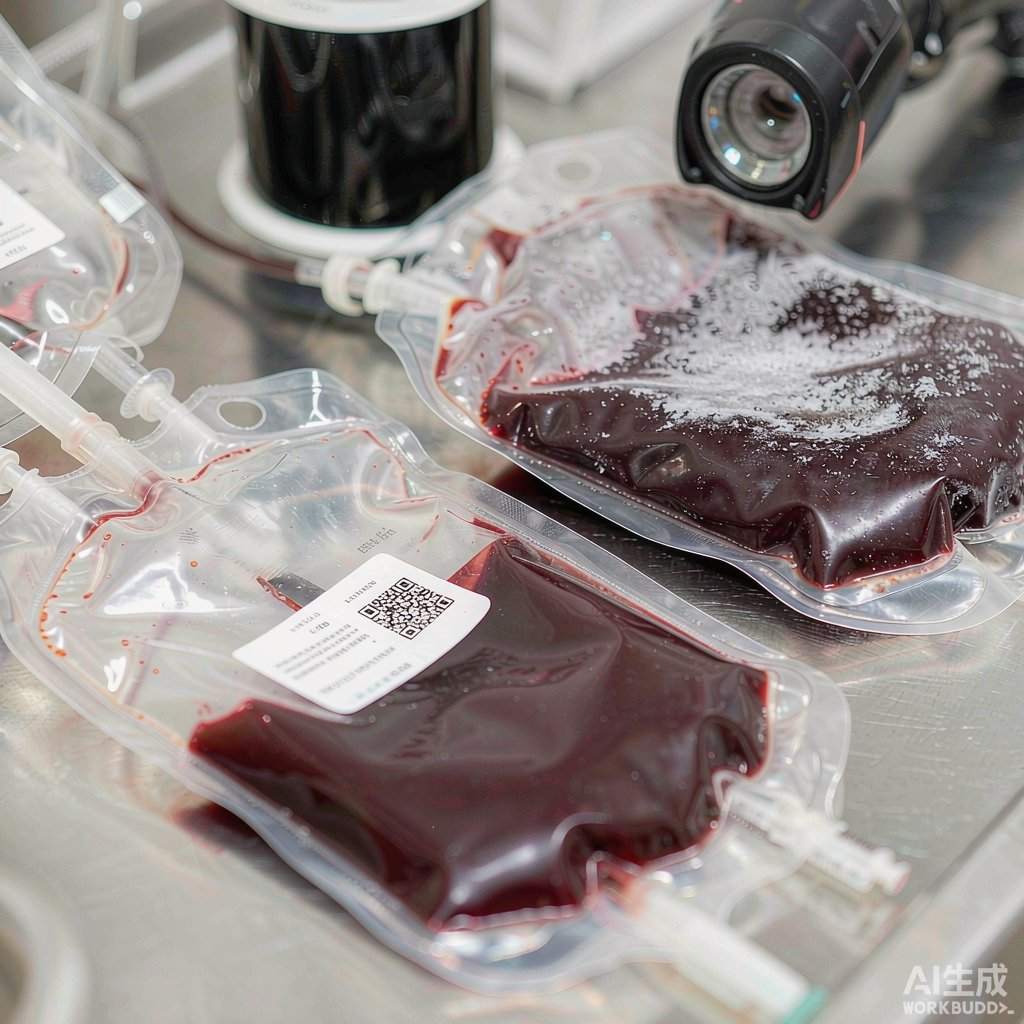
This is a scenario unique to the transfusion department that laboratories almost never encounter. Fresh frozen plasma and virus-inactivated fresh frozen plasma, after thawing, are stored at 2 °C to 6 °C and should be transfused within 24 hours; for emergency massive transfusion, they may be stored at 2 °C to 6 °C for up to 5 days after thawing, without exceeding the original storage period, and must not be repeatedly frozen and thawed. Cryoprecipitated antihemophilic factor, after thawing, is stored at 20 °C to 24 °C and should be transfused within 6 hours. The two windows differ by a factor of 4; relying on memory is unreliable, so they must be put on the label.
The recommended field set for the self-adhesive layer is: component name + blood type + thawing date and time + expiration date and time + responsible person. The thawing time is filled in on the spot by the operator on the label or output on-site by the printer, and the expiration time is automatically calculated according to component rules (24 hours or 6 hours). Since this label must follow the blood bag from below -20 °C into 2 °C to 6 °C or 20 °C to 24 °C, the face stock must withstand both the preceding and following temperature segments and also withstand condensation water generated during thawing—this is precisely the reason for choosing nylon cloth material suitable across all four temperature tiers, or at least material covering the freezer tier.
Post-Transfusion Empty Blood Bag Recovery Identification: Retain at 2 °C to 8 °C for 24 Hours
After transfusion is completed, medical staff attach the transfusion record sheet and cross-matching report sheet to the medical record, and return the empty blood bag to the transfusion department (blood bank) for low-temperature storage for at least 24 hours, so as to allow verification in the event of a transfusion adverse reaction. The storage temperature is 2 °C to 8 °C (also expressed as 2 °C to 6 °C), during which repeated freezing and thawing must be avoided; after 24 hours, it is sealed and subjected to harmless disposal in accordance with medical waste management requirements.
The identification requirement in the recovery step is often missed: the empty blood bag must show three items—recipient name and department, transfusion end time, and disposal-eligible time—otherwise the refrigerator will be filled with blood bags whose ownership cannot be distinguished. The approach is to prepare dedicated recovery labels with pre-printed fields, fill in only three items on site, and apply them to blank areas outside the original statutory layer. Such labels are kept for only one day, so a removable, residue-free material is more convenient for subsequent sealing and disposal.
Zoning Identification for Blood Storage Refrigerators and Platelet Agitators
Article 18 of the Measures for the Administration of Clinical Blood Use in Medical Institutions (Ministry of Health Order No. 85) requires that the blood storage facilities of medical institutions be guaranteed to operate effectively, with the storage temperature of whole blood and red blood cells controlled at 2 °C to 6 °C and the storage temperature of platelets controlled at 20 °C to 24 °C, and that blood storage custodians keep 24-hour monitoring records of blood storage temperature. Article 23 of the same specification requires that no other items be stored in blood storage refrigerators, that they be disinfected once a week, and that air culture in the refrigerator be performed once a month, with the criterion for passing being no mold growth or a bacterial colony count on a culture dish (90 mm) of less than 8 CFU/10 minutes or less than 200 CFU/m³.
The specific requirements these three articles impose on identification are: first, identification inside the refrigerator must withstand the high-humidity condensation environment of 2 °C to 6 °C over the long term, and the weekly disinfection wipe must not cause it to fade; second, the identification itself must not become a contamination source—choose materials with low outgassing and edges that do not easily accumulate dust or lift; third, the platelet agitator operates at 20 °C to 24 °C with continuous agitation, so shelf identification must withstand long-term vibration and friction. The zoning code is recommended to use a four-segment format of "equipment number - layer number - blood type - component", for example "BX01-L2-A-RBC", which, combined with the blood station donation number, enables bidirectional traceability from refrigerator shelf position to recipient.
Six-Step Implementation SOP: From Stocking Acceptance to Post-Transfusion Recovery
Step 1, stocking acceptance: per Article 19 of the Technical Specifications for Clinical Blood Transfusion, check whether the transport conditions, physical appearance, blood bag closure and packaging are compliant, and whether the label is clearly and completely filled in; blood with non-compliant labels is prohibited from being stocked.
Step 2, zoning and shelving: store separately according to blood types A, B, O, and AB in different layers of dedicated refrigerators or in different dedicated refrigerators, and apply zone location identification; place platelets into the agitator and record the position.
Step 3, status marking: distinguish the four states of pending testing, released, returned, and discarded with color codes, and separately hang warning tags for near-expiry items (such as platelets less than 24 hours from expiration).
Step 4, thawing and time limits: when plasma and cryoprecipitate are thawed, immediately print a time-limit label stating the thawing time and expiration time (24 hours or 6 hours), and noting that repeated freezing and thawing are not permitted.
Step 5, two-person verification at blood issue: the blood collector and blood issuer jointly check patient information and blood information, scan the ISBT 128 donation number and the self-adhesive layer barcode, and issue after both parties sign; any label with damage or unreadable barcode shall not be issued under any circumstances.
Step 6, post-transfusion recovery: apply a recovery label to the empty blood bag, noting the recipient, department, transfusion end time, and disposal-eligible time; retain at 2 °C to 8 °C for 24 hours, then seal and subject to harmless disposal per medical waste requirements; keep in/out stocking and verification/requisition/issue registration records for ten years.
Six Types of Failure Symptoms and Troubleshooting
| Symptom | Most likely cause | Action |
|---|---|---|
| Edge lifting within 48 hours after application | Adhesive system not resistant to blood bag plasticizer migration | Switch to a plasticizer-migration-resistant adhesive system; first conduct a 72-hour adhesion test |
| Label on platelet bag detaches after agitation | Face stock too stiff, does not conform to bag deformation | Switch to conformable nylon cloth material, reduce size, and use rounded corners |
| Printing fades after disinfection wiping | Direct thermal printing used | Switch to thermal transfer + resin-based ribbon; re-check symbol grade after wiping |
| Label curls after removal from -20 °C | Wrong tier selected; material does not cover the frozen tier | For the plasma tier, use at least material rated for -40 °C and above; do not use ordinary paper |
| Barcode scan failure | Print grade substandard or symbol size too small | Re-check per ISO/IEC 15416 or ISO/IEC 15415; switch to a 2D symbol at small sizes |
| Identification in refrigerator molds or accumulates dirt | Material outgassing or edge lifting accumulating dust | Switch to low-outgassing face stock; include in weekly disinfection and monthly air culture checks |
Recommended Products
For the label materials and application scenarios covered in this article, the following BradyLAB (BRD) products are available for selection reference (click to view specifications and request a quote):
- Lab096-629/80x60mm biobank cryovial EP tube microscope slide LN₂ nylon cloth label (¥999/roll)
- Lab038-429/25.4×9.53+Φ9.53mm biobank EP cryovial matte white PET label (price on request)
- Lab084-439/30x15mm biobank cryovial cryogenic biological sample bank classification label (price on request)
- Lab096-329/80x60mm cryogenic matte synthetic paper label (price on request)
FAQ
Q1: Plasma is frozen at -18 °C or -20 °C; do I need LN₂-grade labels?
No. Both -18 °C and -20 °C are higher than -40 °C, so materials rated "resistant to -40 °C and above" in the official material guide are sufficient; using the LN₂ tier is over-specification. What truly requires the LN₂ tier is frozen red blood cells stored at -65 °C and -120 °C. The selection criterion is the lowest temperature throughout the entire storage of that component, not "it looks very cold".
Q2: Can I print a label myself to cover the original barcode on the blood bag?
No. The base label and component label on the blood bag belong to the statutory layer and contain statutory fields such as the donation number, ABO/Rh blood type, product code, and expiration date and time. The Measures for the Administration of Clinical Blood Use in Medical Institutions explicitly prohibits stocking blood with non-compliant blood bag labels; covering the statutory layer is equivalent to creating a non-compliant label. The self-adhesive layer can only be added outside the statutory layer, providing four types of dynamic information: zoning, status, time limits, and recovery.
Q3: Why do platelet labels come off so easily?
Because platelets are the only component that must be stored at 20 °C to 24 °C with continuous gentle agitation, and agitation continuously applies shear force to the label edges; at the same time, dedicated platelet bags are mostly multilayer co-extruded non-PVC materials with low surface energy. The countermeasures are to reduce label size, use rounded corners, choose conformable nylon cloth material, and move zoning identification to the agitator tray rather than the bag body.
Q4: How long are empty blood bags retained after transfusion, and what should the label say?
After transfusion is completed, empty blood bags should be retained at low temperature of 2 °C to 8 °C for at least 24 hours for verification in the event of a transfusion adverse reaction, and then sealed and subjected to harmless disposal in accordance with medical waste management requirements. The recovery label should at least clearly state three items: recipient name and department, transfusion end time, and disposal-eligible time, to avoid blood bags with unidentifiable ownership appearing in the refrigerator.
Q5: Can one material cover all components in the transfusion department?
Yes, but it depends on whether the department carries out frozen red blood cell storage. If only refrigerated red blood cells, ambient platelets, and frozen plasma are involved, nylon cloth material suitable across all four temperature tiers can cover everything at once; if the department stores frozen red blood cells at -65 °C or -120 °C, that portion must separately use LN₂-grade material and be applied per the requirement of "overlap at least 3 mm at the ends when applied to the cryovial surface".
Q6: Why can't ordinary office self-adhesive labels be substituted for blood bag labels?
For two reasons. First, compliance: blood bag labels need to withstand -20 °C freezing, 2 °C to 6 °C refrigerated condensation, 20 °C to 24 °C agitation, and disinfection wiping; ordinary paper self-adhesive labels will detach entirely in a condensation environment. Second, chemistry: plasticizers in PVC blood bags migrate into the adhesive layer, and ordinary adhesive systems may fail after 48 hours; professional blood bag label materials specifically state their resistance to DEHP, DEHT, BTHC, TEHTM, DINCH, TOTM, and other plasticizers. Specific compatibility is subject to the product specification sheet and actual testing.
Q7: What should I do if the barcode cannot be printed or scanned?
First re-check per print quality grade standards: 1D symbols per ISO/IEC 15416, 2D symbols per ISO/IEC 15415; reprint if the grade is substandard. If the size truly cannot accommodate a 1D symbol, switch to Data Matrix—according to the official ISBT 128 documentation, a single 2D symbol can contain all the information of five 1D symbols. Note that 2D symbols require an image-based scanner; confirm the hardware capability of the blood issue terminal before configuring.
Q8: What does BradyLAB provide and not provide in this scenario?
BradyLAB (BRD) provides self-adhesive dynamic layer identification outside the statutory layer: zone location identification for blood storage refrigerators and agitators, blood status identification, post-thaw time-limit identification, post-transfusion empty blood bag recovery identification, as well as matching thermal-transfer ribbons and printing solutions. The primary label applied at the blood bag factory and the ISBT 128 component label applied by the blood station are completed by the blood bag manufacturer and the blood station; BradyLAB does not provide or cover this statutory layer.
Related Compliance and Standards Index
This article cites: Technical Specifications for Clinical Blood Transfusion (Wei Yi Fa [2000] No. 184), Articles 19, 20, 21, 22, 23, 25, and 26; Measures for the Administration of Clinical Blood Use in Medical Institutions (Ministry of Health Order No. 85), Articles 16, 18, and 25