
The label selection sequence for culture collection tubes is the reverse of that for ordinary biological specimens. Most people, when handed a 2 mL cryovial, first ask whether the label can withstand -80 °C; but in culture preservation scenarios, temperature is only the second-priority threshold. What truly determines whether a label can accompany a strain through its complete preservation cycle (commonly 1 to 15 years) is the time span determined by the preservation method, and the multiple temperature differentials the same strain must cross throughout preparation, freezing, retrieval, and rewarming. This article provides a directly actionable four-step sequence: first determine the material grade by preservation method and preservation period; second determine dimensions and application method by tube geometry; third determine face stock and printing method by the chemical impact of glycerol and rewarming; finally determine fields and coding by pathogenic microorganism management and biosafety requirements.
I. Conclusion First: Label Selection Sequence for Culture Collection Tubes
The verdict first: the label selection sequence for culture preservation is "preservation method → tube geometry → chemical exposure → traceability fields", not the common "temperature → dimensions." The reason is that the same culture can exist simultaneously in multiple preservation forms—working slant at 4 °C, glycerol stock at -80 °C, freeze-dried ampoule at ambient or 2–8 °C—and their label requirements are completely different. Only by first locking down the preservation method can you know at what temperature, on what material surface, and for how long this label must serve.
Geometry comes second: standard screw-cap cryovials from 1 mL to 5 mL share a uniform outer diameter of 12.5 mm. Converted by circumference, the flat-label width limit is only about 9.8 mm (arc length corresponding to a 90° central angle), and this figure directly rules out the vast majority of 1D barcode solutions. Third is chemistry: glycerol as a permeating cryoprotectant is typically used at a final concentration of 15%–30% in cryopreservation solutions, and tube retrieval also involves a sudden transition from deep cryogenic temperatures to room temperature or even a 37 °C water bath. Fourth are the fields: beyond the strain number, what truly cannot be omitted is passage number (generation) and passage date—this determines whether the tube can continue to serve as working seed.
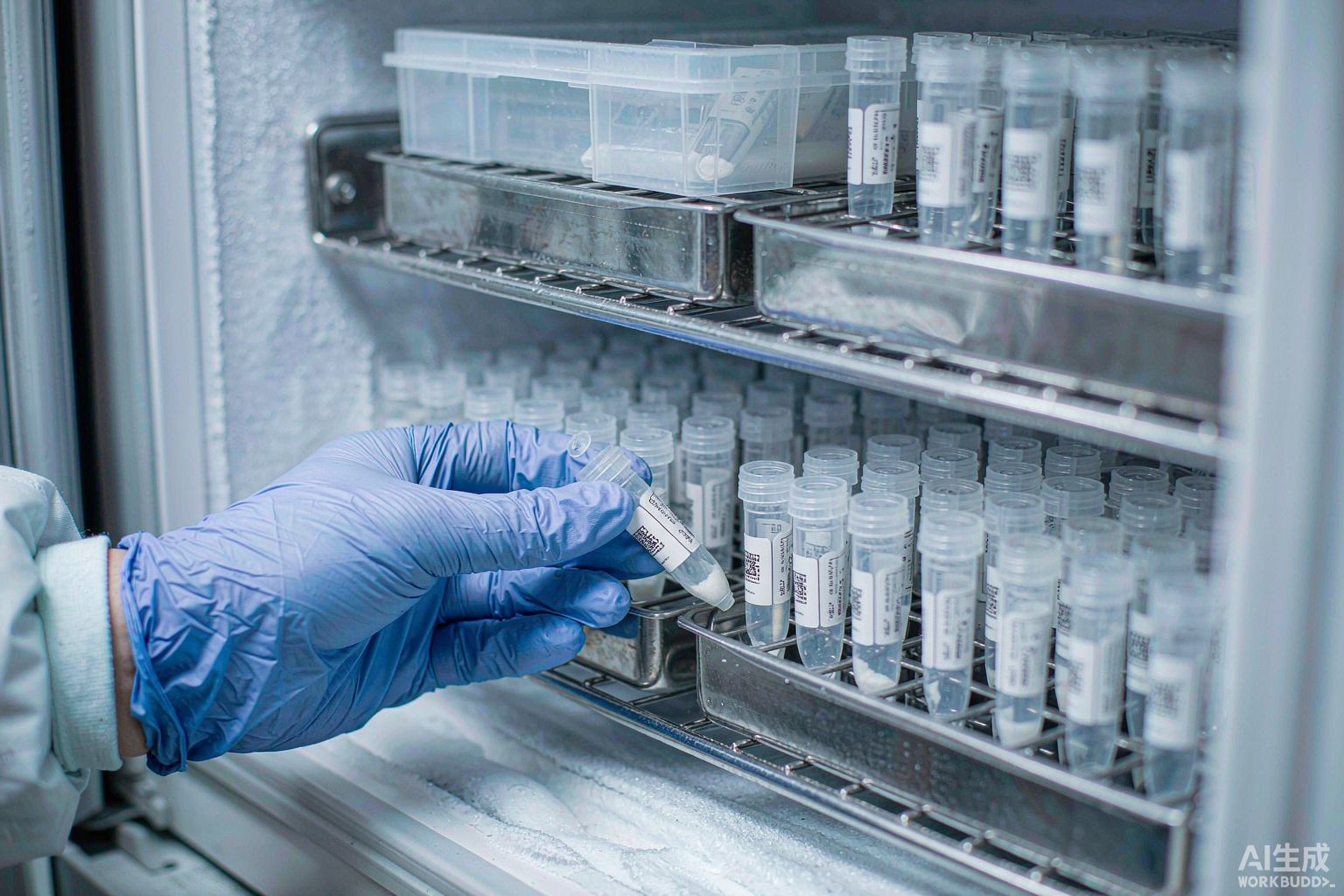
II. The First Constraint Is Preservation Method and Time Span, Not the Low-Temperature Limit
There are six or seven publicly documented methods for microbial culture preservation, and common descriptions can be cross-verified against microbiology textbooks and publicly available materials from preservation institutions. The table below is arranged in ascending order of preservation period; note that the preservation period and the label service life must be co-terminal—if the label fails before the strain, all identity information for that tube is lost.
| Preservation Method | Main Conditions | Typical Preservation Period | Primary Stress on Label |
|---|---|---|---|
| Low-temperature slant preservation | 4 °C refrigerator, periodic subculture | 1–6 months | High humidity and condensation, medium desiccation and cracking, frequent replacement |
| Semi-solid stab preservation | 4 °C, oxygen-excluded | 6–12 months | Same as above, plus localized contamination from stab sampling |
| Liquid paraffin overlay | 4 °C, oxygen-blocked | 1–2 years | Long-term paraffin oil immersion, oil film attacking adhesive layer and print surface |
| Glycerol suspension preservation | Glycerol final concentration typically 15%–30%, -20 °C to -80 °C | Approx. 1–2 years at -20 °C, approx. 10 years at -70 °C to -80 °C | Adhesive embrittlement at cryogenic temperatures, residual liquid film from glycerol overflow, repeated freeze–thaw during retrieval |
| Freeze-drying preservation | Vacuum sublimation after adding protectant, flame-sealed ampoule | Typically 5–15 years; public sources state longer possible | Low temperature and vacuum during lyophilization, localized heating during flame sealing, narrow ampoule diameter |
| Liquid nitrogen cryopreservation | With protectant, gas-phase LN₂ environment (some literature: -150 °C to -196 °C) | Typically over 15 years | Extreme low-temperature contraction, severe condensation from storage to benchtop |
This table can directly determine whether "luxury redundancy" is warranted: a working slant stored for only 1–6 months prioritizes information expandability and ease of replacement on the label; a glycerol stock tube planned for 10 years of storage must have its print structure, distortion tolerance, and adhesive hydrolysis resistance fully addressed in one go—because you will not have the opportunity to peel it off and reapply in year five.
III. The Same Strain Must Cross Multiple Temperature Walls
The operational chain of glycerol preservation is itself a temperature curve: standard sterilization conditions for aqueous glycerol solution are 121 °C, 20 min; after sterilization it is mixed with log-phase culture broth, then immediately placed at -20 °C or lower at -80 °C for storage; at use, it is removed, thawed, and subcultured, with rapid rewarming in a 37 °C water bath if necessary. Public sources also mention the importance of controlled cooling rate—cell mortality is lower when controlled within 1 °C to 10 °C per minute, while too rapid cooling causes intracellular ice crystal formation. That is, this label simultaneously faces three stages of stress: moist heat potentially encountered during high-temperature sterilization, cryogenic storage, and sudden heat and condensate during rewarming. Failure at any stage will be exposed during subsequent ledger reconciliation.
The cryogenic container itself also provides boundary conditions. Most polypropylene (PP) cryovial manufacturers specify a working temperature range of -196 °C to +121 °C, while simultaneously noting "gas-phase LN₂ only, do not immerse in liquid phase." This statement has two implications: first, the minimum grade of label material must match -196 °C; second, liquid-phase immersion is itself a non-standard operation, and label selection should not assume compatibility by default.
IV. The Second Constraint Is Tube Geometry: A 2 mL Cryovial Has Only About 9.8 mm of Flat-Label Window
Checking publicly available commercial cryovial specification tables reveals a key fact: standard cryovials from 1 mL to 5 mL universally share an outer diameter of 12.5 mm, differing only in height. From this, pure geometric derivation follows:
- Outer diameter 12.5 mm → circumference = π × 12.5 = 39.27 mm
- Labels should not wrap the full circumference; the commonly used engineering rule of thumb is a central angle not exceeding 90°, corresponding to arc length = 39.27 ÷ 4 ≈ 9.82 mm—this is the width limit for flat-label format
- If wrap-around format is used, label length = circumference + overlap. Per official application requirements, head-to-tail overlap shall be no less than 3 mm, so minimum length = 39.27 + 3 = 42.27 mm
- For the narrow tube specification with 10.5 mm outer diameter, circumference is 32.99 mm, 90° arc length ≈ 8.25 mm, minimum wrap length 35.99 mm; flat-label options are further narrowed
| Container Specification | Outer Diameter | Circumference | 90° Flat-Label Width Limit | Minimum Wrap Length (incl. 3 mm overlap) | Total Tube Height (reference) |
|---|---|---|---|---|---|
| 0.5 mL narrow tube | 10.5 mm | 32.99 mm | 8.25 mm | 35.99 mm | 46 mm |
| 1 mL cryovial | 12.5 mm | 39.27 mm | 9.82 mm | 42.27 mm | 40–43 mm |
| 2 mL cryovial | 12.5 mm | 39.27 mm | 9.82 mm | 42.27 mm | 47.3–49 mm |
| 4 mL cryovial | 12.5 mm | 39.27 mm | 9.82 mm | 42.27 mm | 70–71 mm |
| 5 mL cryovial | 12.5 mm | 39.27 mm | 9.82 mm | 42.27 mm | 87–90.7 mm |
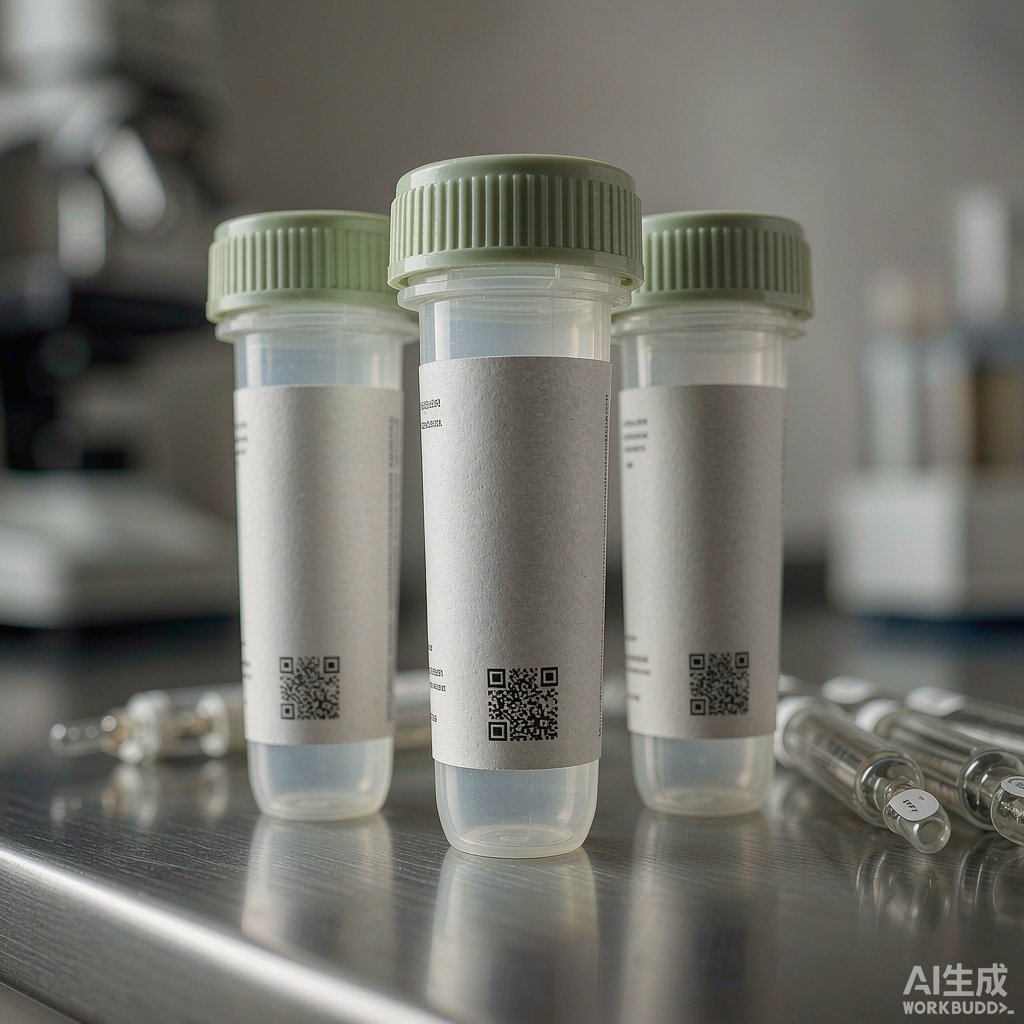
V. The Third Constraint Is Chemical Exposure and Liquid-Level Observation
Glycerol is a permeating cryoprotectant, added at a final concentration of 15%–30% during preparation (some protocols use 10%–15%), while other published protocols use dimethyl sulfoxide (DMSO), skim milk, trehalose, or serum albumin and other macromolecular substances as protectants. Their common risk is residual liquid film on the tube wall during sampling, repeatedly wetting the label edges. If the label must also allow liquid-level observation—for example, rapidly checking the remaining volume in the cryovial after removal from the freezer—a self-laminating type with a transparent window structure should be selected: T429 is described in the official material guide as suitable for labeling frozen surfaces, and explicitly requires a minimum 3 mm head-to-tail overlap when applied to frozen tube surfaces. The transparent tail of this structure serves both to protect the printed content and to provide an observation window, placing higher demands on face stock thickness and adhesive transparency.
VI. Mapping Operating Conditions to Specific Materials: Prioritize Grades Covering the Full Temperature Range
The official material guide table divides the applicable temperatures of the Lab&HC series into four grades: liquid nitrogen -196 °C, freezer -80 °C, hot water 100 °C, autoclaving 121 °C. Culture preservation often involves three to four of these grades simultaneously, so prioritize materials applicable to all four grades to avoid switching material numbers between different preservation forms and causing ledger-to-physical mismatches.
| Material No. | Official Description | Applicable Temperature Grades | Applicable Containers | Application Notes |
|---|---|---|---|---|
| T629 | Nylon cloth label, easy to apply, high/low temperature resistant, good conformability, for all laboratory labeling needs | All four grades: LN₂ -196 °C / freezer -80 °C / hot water 100 °C / autoclaving 121 °C | Ambient, microscope slides, cryovials and test tubes, conical tubes | Strong curvature adaptability, universal for cryovials and ampoules |
| T429 | Ideal choice for labeling frozen surfaces | All four grades: LN₂ -196 °C / freezer -80 °C / hot water 100 °C / autoclaving 121 °C | Cryovials and test tubes, packaging labels | Minimum 3 mm head-to-tail overlap when applied to frozen tube surfaces |
| T439 | Pre-printed color on top for quick visual identification and classification of container types | Three grades: LN₂ -196 °C / freezer -80 °C / hot water 100 °C | Cryovials and test tubes, general purpose | Six-color code suitable for passage batch differentiation |
| T509 | Durable vinyl label, suitable for wrapping, good conformability | Three grades: LN₂ -196 °C / freezer -80 °C / hot water 100 °C | General purpose | Requires overlap when used in LN₂ environments |
The temperatures, materials, and application requirements in the table above are taken verbatim from the official material guide, without extended interpretation. If a project requires other numbers not included in the guide, please refer to the product specification sheet or contact the product manager for selection; do not apply parameters from approximate numbers in tender documents.
VII. Multi-Layer Identification Responsibilities: Tube Body, Cap, Cryobox, and Storage Room
The most error-prone aspect of culture preservation is compressing all information onto a single sticker. Referring to ISO 20387:2018 requirements for biological specimen traceability, it is recommended to split into four layers:
| Layer | Information Carried | Replacement Frequency | Selection Points |
|---|---|---|---|
| Tube body | Strain number, 2D barcode | Lifetime of the strain | Must use face stock resistant to all temperature grades; T629 recommended |
| Tube cap top | Color code, passage number | Changed per passage | Pre-printed color code T439 can be used, no reprinting needed |
| Cryobox / test tube box | Box number, row/column coordinates | Every 6–12 months | Compatible with packaging label materials; use larger labels for box number and coordinates |
| Storage room / equipment | Equipment number, biosafety level, responsible person and emergency contact | Per document review cycle | Falls under GB 19489-2008 identification system scope |
The fourth layer is a mandatory requirement, not a recommendation. Clause 7.4.7.6 of GB 19489-2008 requires signage at laboratory entrances clearly stating the biosafety protection level, pathogenic biological agents handled, laboratory director's name, emergency contact information, and the internationally recognized biohazard symbol (corresponding to W009 biohazard symbol in the ISO 7010 series); Clause 7.4.7.10 further requires laboratory management to review the identification system at least every 12 months. WS 233-2002 is also a reference under the "General Biosafety Guidelines for Microbiology and Biomedical Laboratories" framework.
VIII. Fields and Symbology: Why Culture Tubes Must Use 2D Codes
Converting geometry to encoding capacity, the conclusion is very clear. Code 128 uses a fixed 11 modules per symbol character; start character, stop character, and check character total approximately 35 modules; quiet zones on both sides require 10 modules each. Therefore total module count ≈ 11n + 55 (n = number of data characters).
- Wrap-around: available length 42.27 mm, with X = 0.25 mm → 169 modules available → 11n + 55 ≤ 169 → n ≤ 10, i.e., approximately 10 characters maximum
- If Code C numeric compaction mode is enabled, two digits occupy one symbol character, allowing approximately 20–30 digits at the same length, sufficient for "number + passage + date"
- Flat-label: available width only 9.82 mm; at X = 0.25 mm only 39 modules, which cannot even fit the shortest Code 128 (n = 2 still requires 77 modules) → flat-label solutions must abandon 1D barcodes
- 2D solution: a 24×24 module DataMatrix including quiet zones on both sides totals 26 modules; at X = 0.37 mm the symbol side length is 9.62 mm, falling within the 9.82 mm width limit with approximately 0.2 mm margin
| Field | Suggested Value | Purpose |
|---|---|---|
| Strain number | Collection center number or internal number, unique and immutable for life | Primary key |
| Passage number (subculture count) | P1, P2… paired with passage date | Controls working seed usable limit |
| Preservation form code | Slant / glycerol / freeze-dried / LN₂ | Determines retrieval SOP |
| Location coordinates | Freezer No. - shelf No. - box No. - well position | Reduces door-open search time |
Print quality can be implemented per ISO/IEC 15416 (linear barcodes) and ISO/IEC 15415 (2D symbols) inspection specifications; it is recommended to include symbol grade in incoming inspection acceptance criteria to avoid "applies but won't scan." Testing laboratories should also note ISO/IEC 17025:2017 requirements for consumable conformity checks; safety verification before label warehousing must be documented.
IX. Compliance Boundaries and Retention Periods: Identification Is Only the Entry Point of the Evidence Chain
Domestic management of pathogenic microorganisms affecting humans is relatively strict. Per former Ministry of Health Order No. 68, "Administrative Measures for Preservation Institutions of Human Pathogenic Microorganism Strains (Viruses)" (effective October 1, 2009): preservation institutions shall establish dedicated storage and designate no fewer than 2 formal employees as custodians, maintain strict original records and archives for all in/out operations, and all archives shall be retained for no less than 20 years; highly pathogenic strains (viruses) or specimens must be destroyed by safe and reliable methods, operated and strictly supervised by two persons jointly, and after destruction disposed of as medical waste by qualified units, with full destruction process records also retained for no less than 20 years. Article 20 further requires that non-preservation institution laboratories, after completing relevant experimental activities, shall destroy the strains (viruses) or specimens on-site or submit them to a preservation institution for preservation within 6 months.
The "Regulations on Biosafety Management of Pathogenic Microorganism Laboratories" (State Council Order No. 424, some provisions amended by State Council Order No. 797 effective January 20, 2025) further provides that if highly pathogenic pathogenic microorganism strains (viruses) or specimens are stolen, robbed, lost, or leaked during transport or storage, the carrier, escort, and preservation institution shall report within 2 hours to the competent authority and the health or veterinary authority of the county-level people's government where located.
The direct implication of these provisions for labeling work is: the label is the entry point of the handover evidence, not a substitute for it. Readable numbering = both parties can agree on "which specific preserved item"; the 20-year archive cycle requires that the coding rules on the label themselves have long-term stability and must not have their semantics rewritten when personnel change. Additionally, ISO 20387:2018, as the international standard for general requirements for biobanking, can serve as a reference when strains enter sharing and exchange as biological resources.
X. Six-Step Selection SOP
- Determine the preservation method and target preservation period; identify the minimum temperature grade (LN₂ / cryogenic freezer / refrigerated / ambient);
- Select the corresponding material from the official table per the minimum temperature grade; prioritize T629, which covers all four grades;
- Measure the actual container outer diameter, calculate circumference and 90° arc length, determine flat-label vs. wrap-around, and allow at least 3 mm overlap per official requirements;
- Confirm whether liquid-level observation is needed; if so, switch to a self-laminating structure with a transparent window;
- Calculate symbology per available width; prioritize DataMatrix; reference ISO/IEC 15415 and ISO/IEC 15416 for acceptance;
- Write the four field groups—strain number, passage number, preservation form, and location coordinates—and synchronize coding rules in LIMS or the ledger.
XI. Common Failures and Troubleshooting
| Symptom | Possible Cause | Recommended Action |
|---|---|---|
| Label edge lifting during tube retrieval | Ambient temperature below the selected material grade; adhesive embrittlement | Verify actual minimum temperature; switch to a material covering that grade |
| Printed content fading after rewarming | Resin-type thermal-transfer ribbon not used, or insufficient print density | Switch to laboratory-specific cryogenic ribbon and re-verify print parameters |
| Scanner cannot read the code | Symbol size below scanner resolution window, or quiet zones encroached | Recalculate dimensions per 26 modules; ensure complete quiet zones on both sides |
| Residual glycerol on tube wall causing edge whitening | Insufficient chemical resistance of face stock, or edges repeatedly wetted | Switch to self-laminating structure, or change to wrap-around to reduce exposed edges |
| Duplicate numbers in same batch of cultures | Coding rules not updated after passage | Use "number + passage" as composite primary key in the ledger |
| Cryobox labels don't match the ledger | Box numbers changed without update, or adhesive system difficult to peel | Change storage-location layer to a repositionable solution with predictable changes |
XII. Conclusion: Manage Labels as Part of the Preserved Material
The essence of culture preservation is risk management along the time axis, and labels are the most underestimated link in this risk management. They don't have alarm thresholds like ultra-low temperature freezers, nor are they reviewed by anyone like ledgers, but once they fail, all downstream identity determinations lose their anchor. By following the four-step sequence in this article—first determining preservation method and material grade, then calculating capacity per geometry and coding, and finally writing biosafety and document retention requirements into field rules—a 2 mL cryovial can still be ledger-traceable and identity-verifiable 10 years later. For higher-risk strains (viruses), please defer to your institution's biosafety management system documents and the approval requirements of the competent health authority; the labeling solution only covers the traceability portion within its responsibility.
Recommended Products
For the culture collection tubes, glycerol stocks, freeze-dried ampoules, and related scenarios covered in this article, the following BradyLAB (BRD) products are available for selection reference (click to view specifications and request a quote):
- Lab096-690 | T629 Nylon Cloth Label 80 × 60 mm (¥999/roll) — Official four-grade temperature coverage; use as primary strain identity label.
- Lab038-442 | T429 Self-Laminating Label 25.4 × 9.53 mm + Φ9.53 mm (Price on request) — Combined tube body and cap structure, suitable for scenarios requiring both print protection and liquid-level observation.
- Lab084-454 | T439 Six-Color Pre-Printed Classification Label 30 × 15 mm (Price on request) — Pre-printed color code on top for rapid passage batch differentiation.
Related Articles
- Gut microbiota biobank label selection: fecal homogenization, aliquoting, and -80 °C cryopreservation
- 24-Hour Urine and Urine Sediment Specimen Labeling Selection: Preservatives and -80 °C Storage
- Biobank off-site backup labeling: dual-site consistency and dry ice transfer
- Cryobox Controlled-Rate Freezer Label Selection: Gradient Cooling, Isopropanol, and LN₂ Transfer