
Bottom line first: the selection sequence for hospital pharmacy medication labels is the reverse of that for laboratory biological specimen labels. Laboratory specimen labels are usually selected first by "minimum storage temperature," whereas medication labels must first be selected by the "storage temperature zone indicated on the drug packaging," then by the surface energy and geometry of the labeled container to determine adhesive system and dimensions, and only finally by the traceability fields to determine symbology and ribbon. The reason is that a drug's storage conditions are a legally defined quality attribute—Item *08302 of the on-site inspection guidelines for the Good Supply Practice for Pharmaceutical Products (GSP) explicitly requires "store drugs according to the temperature requirements indicated on the packaging; where no specific temperature is indicated on the packaging, store according to the storage requirements specified in the Pharmacopoeia of the People's Republic of China"; the general notices of the 2020 edition of the Pharmacopoeia of the People's Republic of China divide storage temperature into four tiers: room temperature 10–30 °C, cool place not exceeding 20 °C, cool and dark place protected from light and not exceeding 20 °C, and cold place 2–10 °C, and note that "unless otherwise specified, where no storage temperature is specified under the storage heading, room temperature is generally meant." If the wrong temperature tier is selected, the label will condense, lift, and fall off inside the refrigerator, causing the two most critical traceability fields—batch number and expiry date—to be lost together.
1. Why pharmacy labels cannot simply copy laboratory cryovial labels
Laboratory cryovial labels mainly face threefold constraints: "-196 °C liquid nitrogen or -80 °C freezer + small-diameter curved surface + cryobox slot coding," and selection almost always starts from the highest tolerance tier and works downward. The pharmacy scenario is the opposite: the vast majority of stocked drugs fall in the room temperature 10–30 °C or cool place ≤20 °C tier; only insulin, certain biological products, and microecological preparations enter the cold place 2–10 °C tier; those truly requiring -20 °C freezing are few; and only cell therapy products and biological specimens require -80 °C or liquid nitrogen. If, following laboratory habit, materials were uniformly upgraded to the -196 °C tier, both procurement cost and printing consumable cost would rise significantly, while room-temperature-tier face stocks often perform better in printability and initial tack on porous, rough surfaces such as drug cartons and corrugated outer boxes.
The more critical difference lies in the consequences of failure. Laboratory label detachment usually leads to specimen re-collection or re-identification; medication label detachment directly touches the definition of inferior drugs under the Drug Administration Law—drugs without a marked or with an altered expiry date, and drugs beyond their expiry date, are treated as inferior drugs. Therefore, the acceptance criterion for pharmacy labels is not "can it be scanned," but "are the batch number and expiry date always legible, non-detachable, and not dissolved by ethanol wiping throughout the drug's entire in-stock period."
2. Temperature zone is the first threshold: the four tiers in the Pharmacopoeia general notices and GSP "store as indicated"
The first step in selection is to read the storage conditions indicated on the drug packaging. Where the packaging indicates a specific temperature, that indication prevails; where none is indicated, classify according to the Pharmacopoeia general notices. Only after classification is complete should the material temperature-tolerance tier be matched; only after this step is completed is there any basis for discussing dimensions and symbology.
| Storage temperature zone | Legal/standard basis | Typical drugs | Material temperature-tolerance tier | Optional material codes |
|---|---|---|---|---|
| Liquid nitrogen -196 °C (gas phase/liquid phase) | Packaging indication; for biological sample banks see also ISO 20387:2018 | Cell therapy products, biological specimens | -196 °C tier | T629, T509, T459, T429, T439 |
| -80 °C ultra-low temperature freezer | Packaging indication | Certain biological products, long-term preserved specimens | -80 °C tier | T629, T509, T459, T429, T439 |
| -20 °C freezing | Packaging indication; not separately listed in the Pharmacopoeia general notices | Certain drugs requiring frozen storage | Above -40 °C tier | T419, T329, T625 |
| Cold place 2–10 °C (refrigerated commonly 2–8 °C) | 2020 edition Pharmacopoeia general notices "cold place"; GSP Appendix 1 refrigerated and frozen drugs | Insulin, biological products, microecological preparations | Above -40 °C tier | T419, T329, T625 |
| Cool place ≤20 °C / cool and dark place | 2020 edition Pharmacopoeia general notices | Certain oral liquids, suppositories, ointments | Above -40 °C tier | T419, T329, T625 |
| Room temperature 10–30 °C | 2020 edition Pharmacopoeia general notices; default when no temperature is indicated | Tablets, capsules, granules | Above -40 °C tier | T419, T329, T625 |
It should be emphasized that the four tiers—room temperature, cool place, cold place, and -20 °C freezing—all fall within the "above -40 °C" range according to the official material guide table. T419 gloss white PET material is applicable within this range, and its official application list includes packaging identification, making it suitable for drug cartons and outer boxes; T329 matte white PP adhesive is likewise positioned for low-temperature freezing; T625 vinyl cloth label is repositionable, removable without residue, and re-stickable, suitable for drug shelf turnover boxes and temporary zone identification. If the pharmacy also handles cell therapy products or biological products, their storage temperature is governed by the packaging indication; where a deeper cold position is required, T629 nylon cloth label should be used instead—the official table shows it covers four tiers: liquid nitrogen -196 °C, freezer -80 °C, hot water 100 °C, and autoclaving 121 °C, and all four application columns—room temperature, microscope slides, cryovials, and conical tubes—are checked, making it the only material that can be uniformly deployed across all temperature zones.
3. Container geometry and surface energy: four types of labeling surfaces—ampoules, drug bottles, infusion bags, and drug cartons
After the temperature zone tier is set, the second step is to look at what surface is being labeled. There are four common types of adherend surfaces in pharmacies, with greatly differing surface energy and geometry; using the same adhesive system and dimensions for all will inevitably cause problems for one type.
| Labeling object | Material and surface characteristics | Recommended labeling method | Dimension and geometry constraints |
|---|---|---|---|
| Glass ampoule (1–20 mL) | Silicate glass, high surface energy but prone to condensation after removal from cold | Wrap-around, head-to-tail overlap ≥3 mm | Developable arc length = π × outer diameter; the smaller the outer diameter, the narrower the selectable width |
| Oral liquid bottle (HDPE / amber glass) | HDPE surface energy approx. 29–31 mN/m, low surface energy | Flat application + high initial tack adhesive system | Apply to the cylindrical body, avoiding the neck taper and shoulder |
| Infusion bag (non-PVC multilayer co-extruded film / PP soft bag) | Flexible, low surface energy, deforms under compression | Flat application to the flat area opposite the additive port | Avoid heat-sealed seams, additive port, and hanging hole |
| Drug carton (white card / corrugated outer box) | Porous, water-absorbent, rough surface | Flat application | Side of the main display face, avoiding coverage of legally required printed content |
| Drug shelf / turnover box in refrigerator (PP / ABS) | Approx. 29–31 mN/m | Removable (T625), replaced periodically | Large-format zone signage, must withstand condensate |
Ampoules are the most easily underestimated type. Taking a common 2 mL ampoule as an example, if the outer diameter is about 11 mm, the developable arc length is about 34.6 mm (π × 11); the usable width of a flat-applied label usually must be kept within one-third of the arc length to avoid lifting; when wrap-around is used, the label length should be no less than "circumference + 3 mm overlap." This geometric constraint is consistent with the handling logic for laboratory thin tubes and microtubes, which is precisely why the wrap-around vinyl label T509 becomes the first choice for small-diameter containers—the official table notes it is a durable vinyl label suitable for wrapping with good conformability, and requires overlap when used in liquid nitrogen environments. Please use actual measurements for the actual outer diameter; ampoule specifications differ among manufacturers.
4. Chemical and disinfection exposure: 75% ethanol, chlorine-containing disinfectants, and drug solution spillage
The third challenge for pharmacy labels comes from cleaning and disinfection. Periodic cleaning of drug shelves, drug cartons, and refrigerator interior walls usually uses 75% ethanol, and environmental disinfection commonly uses chlorine-containing disinfectants (available chlorine concentration prepared according to the hospital's infection control policy); these two media have a far stronger dissolving effect on thermal print layers and certain adhesive systems than the dry wiping in laboratories. In addition, tinctures, external liniments, and iodophor themselves contain ethanol or iodine, and bottle-mouth residue will continuously attack label edges.
| Exposure type | Typical medium and frequency | Failure manifestation | Countermeasure |
|---|---|---|---|
| Hand and bench disinfection | 75% ethanol, multiple times daily | Thermal print layer dissolves, text fades | Switch to thermal transfer with laboratory-specific cryogenic ribbon |
| Environmental and refrigerator interior wall disinfection | Chlorine-containing disinfectant, frequency per hospital infection control policy | Adhesive hydrolyzes, edges whiten and lift | Self-laminating structure + resin-based ribbon; avoid surfaces with long-term liquid accumulation |
| Drug solution residue | Tinctures containing ethanol, iodophor, syrup | Label edges curl, barcode breaks | Avoid the area below the bottle neck threads and the shoulder drip zone |
| Refrigerator condensate | 2–8 °C refrigeration, high door-opening frequency | Interfacial water film displaces adhesive, entire label detaches | Wipe dry and press firmly before labeling; let stand before returning to storage |
| Light protection requirement | Pharmacopoeia general notices "light protection" "protect from light" | Photosensitive drugs degrade | Label does not cover the amber bottle's light-protection area; use a separate light-blocking sleeve |
5. Traceability fields and symbology: batch number and expiry date are the minimum mandatory set
The field design of pharmacy labels differs from laboratory specimen coding: specimen coding emphasizes "uniqueness + location," while medication labels emphasize "product specification + batch number + expiry date + destination." The minimum mandatory set is recommended to be fixed at five items—generic drug name (or hospital code), specification, production batch number, expiry date, and storage temperature zone marking; for inpatient or PIVAS finished infusion, add patient name, ward, and bed number.
| Field | Example | Character count | Notes |
|---|---|---|---|
| Generic drug name / hospital code | Insulin injection / YD-0412 | 4–10 | Consistent with the HIS dictionary; do not invent abbreviations |
| Specification | 300 IU/3 mL | 4–8 | Consistent with the packaging indication |
| Production batch number | 20260815-3 | 8–12 | Narcotic and psychotropic drugs must be recorded per transaction and kept for no less than 5 years after expiry |
| Expiry date | 2028-08 | 6–8 | Accurate to the month; to the day where necessary |
| Temperature zone marking | 2–8 °C / room temperature | 3–6 | Distinguish by background color or pre-printed color block to reduce misreading |
| Patient / bed number (inpatient and PIVAS) | Bed 3 / admission number | 4–10 | Mandatory for PIVAS finished infusion labels |
Regarding symbology selection, the side of a drug carton is flat with ample area, so a Code 128 linear barcode suffices, with acceptance graded per ISO/IEC 15416; small-diameter containers such as ampoules have limited arc length, so a DataMatrix 2D code should be used instead, with acceptance graded per ISO/IEC 15415. Taking a DataMatrix with 26×26 modules and a module size of 0.25 mm, the symbol side length is only about 6.5 mm, far smaller than the length required by Code 128 for the same character count, making it the only feasible solution for small-diameter containers. Once a barcode symbol is locally stretched due to label lifting, the grade will quickly fall below the acceptance line; therefore, the barcode area should avoid the label's curved portions and overlap zones.
6. Narcotic and psychotropic drugs: legal markings must not be covered; self-applied labels do only four things
Narcotic drugs and Class I psychotropic drugs are the category with the highest labeling requirements in pharmacies, but are also the most easily overstepped by writing a "pharmacy self-made labeling scheme." It must be made clear: Article 47 of the Regulations on the Administration of Narcotic Drugs and Psychotropic Substances (State Council Decree No. 442) provides that user entities shall establish dedicated storage rooms or cabinets, that dedicated cabinets shall use safes, and that dedicated rooms and cabinets shall implement two-person two-lock management; Article 48 provides for assigning dedicated personnel responsible and establishing dedicated account books, with two-person acceptance upon drug inbound and two-person verification upon outbound, and the retention period of dedicated account books shall be no less than 5 years from the date of expiry of the drug. The special markings for narcotic drugs and psychotropic substances on drug packaging are printed by the marketing authorization holder in accordance with law, and pharmacies must not cover, obscure, or remove them. Article 19 of the Provisions on the Administration of Narcotic Drugs and Psychotropic Substances in Medical Institutions (Guo Wei Yi Zheng Fa [2026] No. 21), issued on August 30, 2026, further requires that dedicated account books record each inbound and outbound transaction item by item, including date, voucher number, requisitioning department, product name, dosage form, specification, unit, quantity, batch number, expiry date, manufacturer, issuer, verifier, and requisitioner's signature, achieving daily clearing and balancing with accounts matching physical stock; Article 30 requires that pharmacies dispensing narcotic and psychotropic drugs shall have a dedicated window with conspicuous signage; Article 34 requires dedicated register recording by product and specification, with a retention period of 3 years.
In other words, the legal layer (packaging special markings, dedicated rooms/cabinets and two-person two-lock physical security, account books and dedicated registers, video surveillance) is not borne by pharmacy self-applied labels. Pharmacy self-applied labels do only four dynamic things: zone numbering of dedicated cabinets and turnover cabinets, dynamic updating of base quantities and batch/expiry dates, container identification for the handover and recovery of empty ampoules and waste patches, and advance warning signage for near-expiry narcotic and psychotropic drugs.
| Layer | Responsible party | Covered by pharmacy self-applied labels | Notes |
|---|---|---|---|
| Legal packaging special markings | Marketing authorization holder | Must not cover, must not obscure | Printed on original packaging; pharmacy has no authority to alter |
| Dedicated room/cabinet and two-person two-lock | Medical institution (hardware and security) | Not covered; may only be used for zone numbering | Safes, security doors, alarms, and surveillance |
| Dedicated account books and dedicated register | Pharmacy department | Not covered | Account books retained no less than 5 years; dedicated register 3 years |
| Zone numbering and base quantity | Pharmacy | Self-applied layer | Removable material; replaced when base quantity changes |
| Dynamic updating of batch number and expiry date | Pharmacy | Self-applied layer | Replaceable per batch to avoid batch mixing |
| Near-expiry warning signage | Pharmacy | Self-applied layer | Color blocks or pre-printed color codes for quick identification |
7. PIVAS: fields, retention, and cleanroom conditions for finished infusion labels
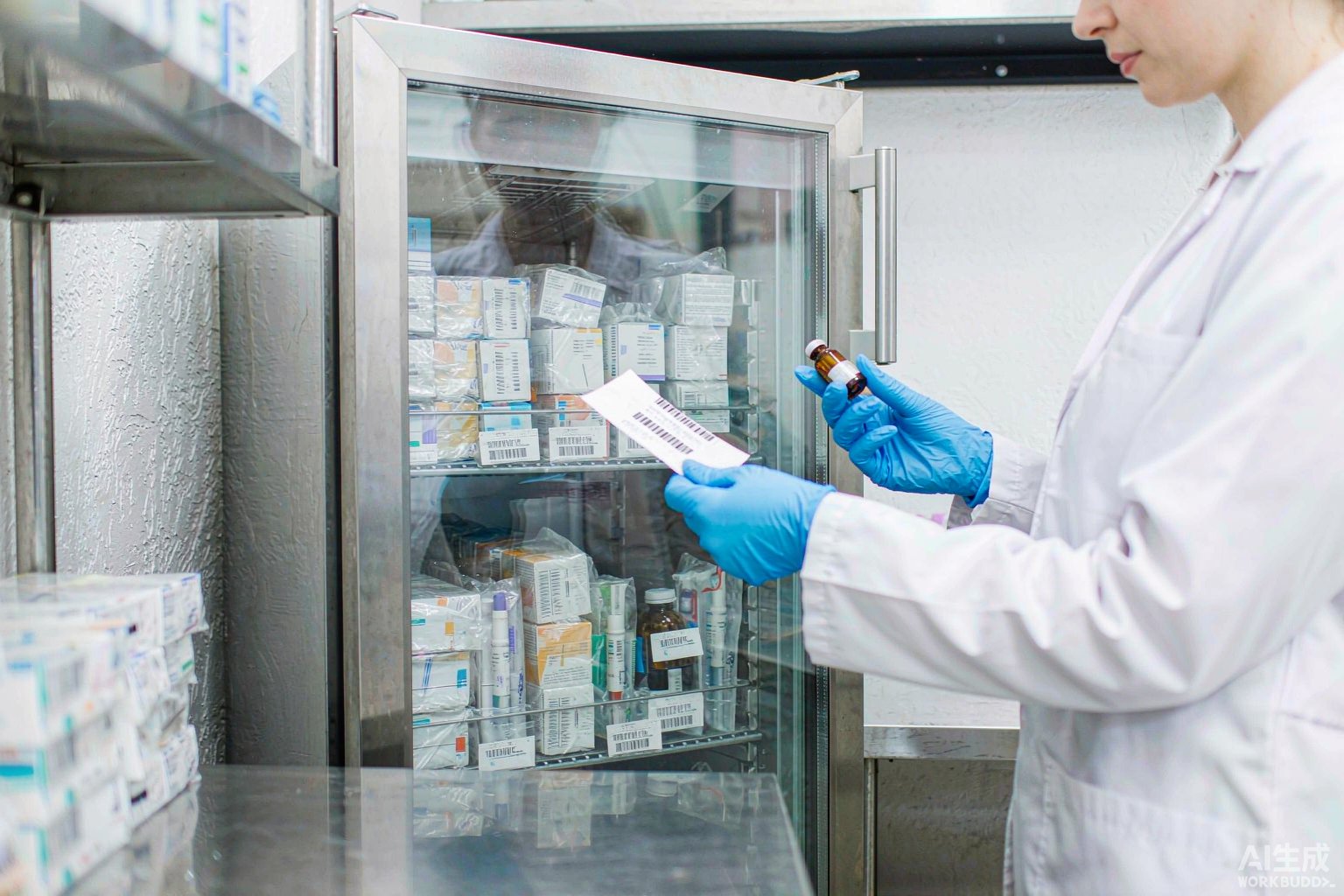
The Quality Management Practices for Centralized Intravenous Admixture have explicit requirements for infusion labels: after prescriptions or medication orders that have passed pharmacist suitability review are consolidated, infusion labels are printed by ward, requiring verification of patient name, ward, bed number, medical record number, date, admixture date, time, and expiry date; labels are automatically numbered by the computer system; infusion labels are affixed to infusion bags (bottles), and backup infusion labels are retained for 1 year for inspection after being signed or stamped by operators at each position throughout the admixture process. Labels must also note items requiring special attention, including conspicuous markings for drugs that require allergy testing or have special properties as required, medication concentration conversion and actual dosage for non-whole bottles (vials), and clinical precautions such as special drip rates and light-protected infusion.
Regarding operating conditions, the cleanroom purification system must be started approximately 30 minutes before admixture; the admixture area must reach Class 10,000 cleanliness with local workbenches at Class 100; room temperature must be controlled at 18–26 °C and relative humidity at 40%–65%. These conditions impose two specific requirements on labels: first, labels must withstand frequent alcohol and disinfectant wiping in the clean area; second, labels must not affect laminar flow or cleanliness due to shedding or edge curling. In addition, high-alert drugs such as potassium chloride injection require special markings and separate storage during the dispensing stage; empty ampoules of hazardous drugs must be placed separately and clearly marked; and finished packaging bags should also have a finished infusion count label printed, indicating the ward name, delivery time, and number of finished infusion bags.
8. Near-expiry and split dispensing: warning thresholds, first-in-first-out, and split-dispensing label fields
Near-expiry management is one of the scenarios with the largest label usage in pharmacies. Article 163 of the GSP requires enterprises to track and manage drug expiry dates to prevent expired use that may occur after near-expiry drugs are sold; Article 167 provides that when selling near-expiry drugs, customers shall be informed of the expiry date. The drug dispensing stage generally follows three principles: "first produced, first out," "near-expiry first out," and dispensing by batch number. Specific warning thresholds (for example, warning at 6 months of remaining shelf life, removal from shelf for handling at 3 months) are usually specified by hospital policy or configured in the information system, and should not be executed verbally based on experience—once the threshold is written into policy, the label color and signage actions have an auditable basis.
Split dispensing is another high-frequency scenario. When drugs are sold in split dispensing, the packaging shall indicate the drug name, specification, quantity, usage, dosage, batch number, expiry date, and pharmacy name, and the original packaging and package insert shall be retained; split-dispensing sales records shall include the split-dispensing start date, generic drug name, specification, batch number, manufacturer, expiry date, sales quantity, sales date, and the personnel who split and verified. The split-packaging requirements on the medical institution side are more detailed: packaging materials in direct contact with split-dispensed drugs shall indicate the generic drug name, specification, usage, dosage, expiry date, batch number, medical institution name, and split-dispensing date, and split-dispensed drugs must not be packaged with mixed batches. This means split-dispensing labels must support "one item, one label, one print" and cannot be pre-printed in batches with batch numbers filled in by hand—handwritten batch numbers and expiry dates neither meet traceability requirements nor withstand ethanol wiping.
9. Six-step implementation SOP
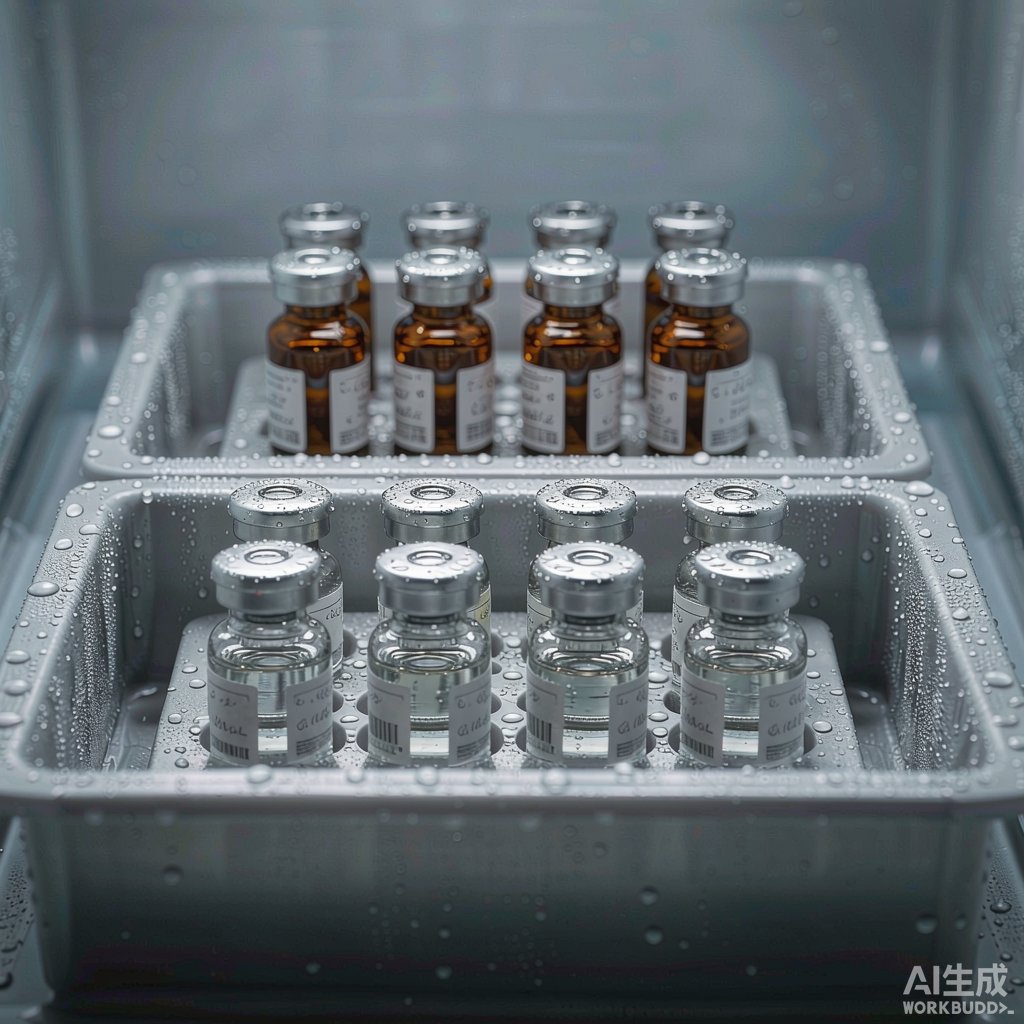
Step one: read the indication. Read the storage conditions indicated on the packaging for each product; where none is indicated, classify per the Pharmacopoeia general notices into one of four tiers: room temperature 10–30 °C, cool place ≤20 °C, cool and dark place, or cold place 2–10 °C. Step two: set the temperature zone tier. Map the temperature zone to the material temperature-tolerance tier per the table above; room temperature through -20 °C all fall in the above -40 °C tier, while -80 °C and liquid nitrogen require upgrading the tier. Step three: measure the container. Measure the actual outer diameter of the ampoule or drug bottle, calculate the developable arc length (π × outer diameter), and determine the upper limit of flat-application width or the lower limit of wrap-around length (circumference + 3 mm overlap). Step four: determine face stock and ribbon. For exposure to alcohol and chlorine-containing disinfectants, select chemical-resistant face stock with laboratory-specific cryogenic ribbon; for temporary zones and turnover boxes, select removable material. Step five: lay out fields and symbology. Use Code 128 for drug cartons with acceptance per ISO/IEC 15416; use DataMatrix for small-diameter containers with acceptance per ISO/IEC 15415. Step six: perform acceptance and verification. Before launching new labels, perform a four-step cycle test of apply—refrigerate—remove—wipe, record the barcode grade, and only replace in bulk after meeting standards.
10. Troubleshooting seven types of failure
| Phenomenon | Most likely cause | Action |
|---|---|---|
| Entire label detaches inside refrigerator | Interfacial condensation after removal from cold; not wiped dry and pressed firmly during labeling | Wipe dry, press firmly, let stand before returning to storage; switch to high initial tack adhesive system |
| Barcode scan fails but is visually legible | Label lifting causes local barcode stretching | Keep barcode area away from curves and overlaps; re-measure grade |
| Text fades after ethanol wiping | Thermal printing used instead of thermal transfer | Switch to laboratory-specific cryogenic ribbon and retest per ISO/IEC 15416 |
| Ampoule label edges curl | Flat-application width exceeds one-third of arc length | Switch to wrap-around with overlap ≥3 mm |
| Split-dispensing bag batch number unclear | Handwritten or pre-printed in batches | One item, one label, one print; print at the time of split dispensing |
| Drug carton label covers legal content | Labeling position does not avoid the packaging print area | Move to the blank area of the side display face |
| Near-expiry not warned in time | Threshold not written into policy or not configured in system | Fix thresholds in policy; system automatically locks expired batches |
Recommended Products
For the label materials and application scenarios covered in this article, the following BRD products are available for selection reference (click to view specifications and request a quote):
- Lab038-419 Sample bank cryovial label (25.4×9.53+Φ9.53mm) (Request a Quote)
- Lab112-629 Nylon cloth cryogenic label (35×25mm) (¥1490)
- Lab208-509 Wrap-around cryovial label (25.4×63.5mm) (Request a Quote)
- BRL-110-BK Laboratory-specific cryogenic ribbon (black, 110M) (Request a Quote)
FAQ
Q1: Do room-temperature and refrigerated drugs in pharmacies necessarily require -196 °C liquid nitrogen tier labels?
No, and it is not recommended. The four tiers—room temperature 10–30 °C, cool place ≤20 °C, cold place 2–10 °C, and -20 °C freezing—all fall within the above -40 °C range according to the official material guide table; T419 gloss white PET, T329 matte white PP, and T625 vinyl cloth label are all within the applicable range, among which the vinyl cloth label is repositionable, removable without residue, and re-stickable, suitable for temporary zones requiring frequent replacement. Only if a product's packaging indication requires a lower storage temperature—for example, cell therapy products and biological specimens requiring a deeper cold position—should T629 nylon cloth label be used to cover the corresponding temperature zone. Blindly upgrading the tier drives up procurement and printing costs, and room-temperature-tier face stocks generally perform better on porous surfaces such as drug cartons and corrugated paper.
Q2: Why do refrigerated drug labels fall off more easily than room-temperature drug labels?
Because of the additional failure path of the interfacial water film. After a drug is removed from a 2–8 °C refrigerator, condensation rapidly forms at the interface between the label and the bottle wall, and the condensate displaces the adhesive, causing the entire label to detach—this is unrelated to the material's temperature tolerance itself. The remedy is to wipe the adherend surface dry and press firmly before labeling, and let it stand before returning to storage; also avoid applying labels below the bottle neck threads and in the shoulder drip zone.
Q3: Ampoules are so thin—will a barcode fit?
Linear codes are not recommended for small-diameter containers. Taking a 2 mL ampoule with an outer diameter of about 11 mm, the developable arc length is about 34.6 mm (π × 11); the usable width of a flat-applied label usually must be kept within one-third of the arc length, and a linear code plus quiet zones often will not fit. Switch to a DataMatrix 2D code; with 26×26 modules and a module size of 0.25 mm, the symbol side length is only about 6.5 mm, which can readily accommodate the batch number and expiry date. Please use actual measurements for the actual outer diameter.
Q4: Can pharmacies print and affix the special markings for narcotic and psychotropic drugs themselves?
No. The special markings for narcotic drugs and psychotropic substances are printed on packaging by the marketing authorization holder in accordance with law, and pharmacies must not cover, obscure, or remove them. Pharmacy self-applied labels only handle dynamic-layer matters: zone numbering of dedicated cabinets and turnover cabinets, dynamic updating of base quantities and batch/expiry dates, container identification for the handover and recovery of empty ampoules and waste patches, and near-expiry warning signage. Dedicated rooms/cabinets, two-person two-lock, dedicated account books, and dedicated register recording are statutory management requirements borne by physical security and paper/electronic ledgers.
Q5: How long must PIVAS finished infusion labels be retained?
The Quality Management Practices for Centralized Intravenous Admixture provides that infusion labels are affixed to infusion bags (bottles), and backup infusion labels shall be retained for 1 year for inspection after being signed or stamped by operators at each position throughout the admixture process. Therefore, the printing medium for backup labels must also consider wipe resistance and long-term legibility, and thermal paper alone cannot be used.
Q6: Can split-dispensing labels be pre-printed in batches with batch numbers handwritten?
No. Split dispensing sales require the packaging to indicate the drug name, specification, quantity, usage, dosage, batch number, expiry date, and entity name; medical institution split packaging also requires indicating usage and dosage and the split-dispensing date, and split-dispensed drugs must not be packaged with mixed batches. Handwritten batch numbers and expiry dates neither meet traceability requirements nor withstand ethanol wiping. The correct approach is one item, one label, one print, printed at the time of split dispensing, and retained together with the split-dispensing/packaging records.
Q7: After 75% ethanol wiping, text fades—is it a label problem or a printer problem?
In most cases it is a printing method problem. The print layer of thermal printing dissolves upon contact with alcohols; switch to thermal transfer with laboratory-specific cryogenic ribbon. If thermal transfer is already used and fading still occurs, check whether the ribbon matches the face stock, and retest the barcode grade per ISO/IEC 15416 before bulk replacement.
Q8: How should near-expiry warning thresholds be set?
At the regulatory level, the GSP requires tracking and managing expiry dates, preventing expired use after near-expiry drugs are sold, and provides that customers shall be informed of the expiry date when selling near-expiry drugs; specific thresholds are determined by hospital policy or information system configuration, for example, using 6 months of remaining shelf life as the warning line and 3 months as the removal-from-shelf handling line. The key is not the number itself, but writing the threshold into policy, having the system automatically lock expired batches, and using color or pre-printed color codes for visual distinction on labels.