
Bottom line first: in electrophoresis and transfer workflows, labels should not be applied to the gel itself or the transfer membrane. Gels and PVDF/NC membranes are sequentially exposed to transfer buffer containing 20% methanol, TBST wash buffer containing 0.1% Tween-20, and loading buffer containing β-mercaptoethanol or DTT; the ink layer and adhesive layer of ordinary labels struggle to remain intact in these media. The correct approach is to place identity information on the carrier—gel-casting glass plates, gel frames, transfer cassettes, incubation boxes, antibody tubes, and film cassettes—then determine material and format using three steps: "storage temperature → contact media → container diameter."
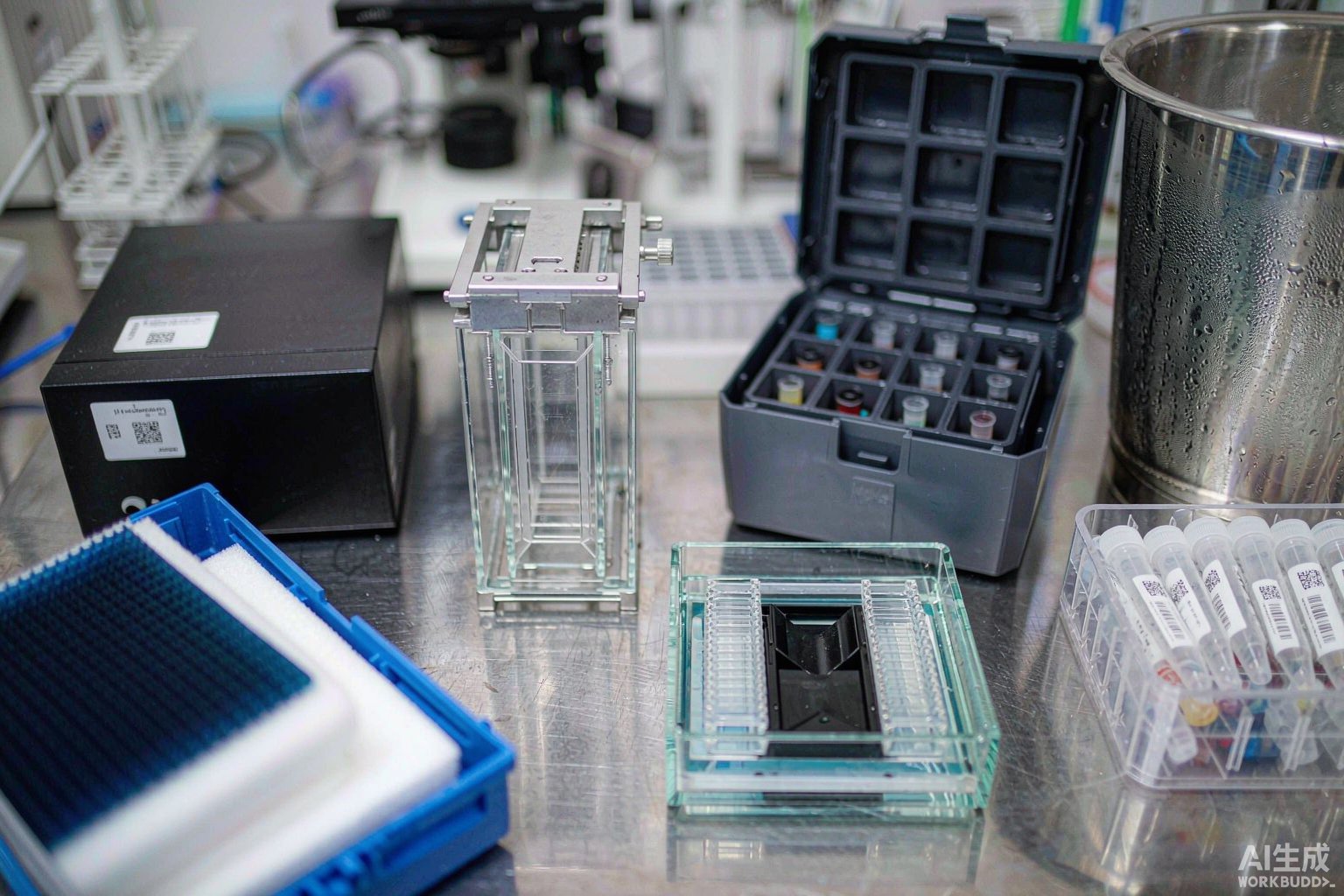
1. Conclusion first: what to label and what not to label in electrophoresis workflows
The most common root cause of a failed Western blot result is often not antibody titer but "samples not matching lanes"—the gel and membrane lack reliable identity information. Many labs are accustomed to writing on the corner of the PVDF membrane with a marker pen, but after the membrane is activated in 100% methanol for about 30 s and then washed 3 times with TBST (5 min each), the writing first smears and then disappears; conversely, if an ordinary pressure-sensitive label is applied directly to the membrane, the adhesive layer is eroded by methanol and SDS and peels off entirely, and the detached material can also contaminate the ECL exposure area, leaving shadows on the image.
Therefore, the answer given in this article is layered.
Layer one: labels are not recommended on the gel and membrane themselves. Transfer membranes are typically only 100–200 μm thick; any face stock will alter the local hydrophilicity of the membrane and the transfer electric field distribution, potentially causing missing bands or increased background. For identity information on the membrane, it is recommended to write lightly on the membrane corner with a soft pencil, or use corner clipping or punching for orientation marks, and then bind this marking scheme to the record sheet.
Layer two: what truly needs labeling is the carrier. Gel-casting glass plates, gel frames, transfer cassettes, incubation boxes, antibody tubes, and film cassette surfaces have high surface energy and stable dimensions, making them reasonable label locations; these carriers account for more than 90% of traceability needs.
Layer three: materials are graded by temperature. Primary antibody stock stored long-term at -80 °C or -20 °C uses the low-temperature grade; 4 °C working solutions and transfer cassettes use the mid-to-low temperature grade; room-temperature gel casting and film cassettes use the general-purpose grade. Misjudging the grade is the number one cause of label detachment.
2. Chemical exposure spectrum: methanol, SDS, Tween-20, and reducing agents
The challenge that electrophoresis and transfer pose to labels comes mainly from four types of media, each of which must be confirmed during selection.
1) Alcohols. Standard wet-transfer buffer contains 20% (v/v) methanol, and PVDF membrane activation requires soaking in 100% methanol for about 30 s. Methanol has a pronounced ability to dissolve the ink layer and is the number one cause of "smearing writing."
2) Surfactants. TBST wash buffer contains 0.1% Tween-20, and loading buffer contains 2% SDS; both reduce interfacial tension and accelerate penetration and peeling of the adhesive layer from the edges.
3) Reducing agents and preservatives. Loading buffer is often formulated with 5% β-mercaptoethanol or 100 mM DTT; primary antibody stock often contains 0.02%–0.1% sodium azide as a preservative, and these components have a long-term corrosive effect on some adhesives. Note that sodium azide should not be used with HRP-conjugated antibodies.
4) Temperature and humidity. Wet transfer is usually performed in a 4 °C cold room or ice bath for 1–2 h (common conditions: 100 V constant voltage or 300 mA constant current), and the surface rapidly forms condensation after removal from the tank; primary antibody incubation is mostly performed on a shaker at 4 °C for 12–16 h at 60–80 rpm. Labels must withstand both interfacial displacement by condensation water and continuous shear force.
This means that selection cannot rely solely on "low-temperature resistance"; alcohol resistance, surfactant resistance, and condensation resistance must all be included in the evaluation.
3. Temperature grade is the first threshold
The storage temperature of antibodies and reagents determines the lower limit of the label material:
Primary/secondary antibody stock is typically stored short-term at -20 °C and long-term at -80 °C; repeated freeze–thaw should not exceed 3 times, and aliquots of 10–50 μL should be protected from light; primary antibody working solution is stored at 4 °C for 3–5 days, and can be extended to about 7 days with 0.02%–0.1% sodium azide; transfer and washing are performed in a 4 °C cold room or ice bath; gel casting, blocking, and exposure are performed at 20–25 °C room temperature.
According to the official material guide for the BRD 博锐迪 Lab series, temperature grades are clearly divided into four levels: liquid nitrogen -196 °C, freezer -80 °C, hot water 100 °C, and autoclaving 121 °C, with -40 °C being a clear dividing line: some models are only suitable for environments above -40 °C and cannot be mixed with the -80 °C grade. For antibody stock stored in a -20 °C freezer, -40 °C grade material is sufficient; if the same tube needs to be transferred between a -80 °C freezer and the liquid nitrogen gas phase, the material must be upgraded to the -80 °C and -196 °C grades.
4. Official Lab series material matrix: comparison by temperature grade
The table below is transcribed item by item from the official material guide; the "Passed temperature grades" and "Official application scope" columns are not extrapolated in any way. Wherever the official table does not specify solvent resistance data, the product specification sheet and actual compatibility testing shall prevail.
| Official model | Official material and features | Passed temperature grades | Official application scope |
|---|---|---|---|
| T629 | Nylon cloth label, easy to apply, high and low temperature resistance, good conformability | Liquid nitrogen -196 °C, freezer -80 °C, hot water 100 °C, autoclaving 121 °C | Room temperature, microscope slides, cryovials · test tubes, conical tubes |
| T459 | Ultra-thin polyester label with self-laminating structure and clear tail, protecting printed content and providing a clear window for observing liquid levels | Liquid nitrogen -196 °C, freezer -80 °C, hot water 100 °C, autoclaving 121 °C | Cryovials · test tubes, cells |
| T429 | Ideal choice for labeling frozen surfaces; when applied to frozen tube surfaces, ends must overlap by at least 3 mm | Liquid nitrogen -196 °C, freezer -80 °C, hot water 100 °C, autoclaving 121 °C | Cryovials · test tubes, packaging labeling |
| T409 | Excellent chemical resistance and abrasion resistance; ends must overlap in frozen and low-temperature scenarios | Liquid nitrogen -196 °C, freezer -80 °C, hot water 100 °C | Cryovials · test tubes, cells |
| T439 | 6-color cryogenic label with pre-printed color at the top for quick identification and differentiation of container types | Liquid nitrogen -196 °C, freezer -80 °C, hot water 100 °C | Cryovials · test tubes |
| T509 | Durable vinyl label, suitable for wrapping, good conformability; overlap required for liquid nitrogen environments | Liquid nitrogen -196 °C, freezer -80 °C, hot water 100 °C | General purpose |
| T424 | Excellent chemical resistance, withstands xylene and H&E staining processes; must be used with BRS series ribbons | Liquid nitrogen -196 °C, hot water 100 °C | Microscope slides |
| T419 | Bright white PET substrate for cryovials and microcentrifuge tubes | Limited to environments above -40 °C | Room temperature, cryovials · test tubes, general purpose |
| T329 | Matte white PP pressure-sensitive cryogenic label | Limited to environments above -40 °C | Room temperature, cryovials · test tubes, general purpose |
| T625 | Vinyl cloth label, repositionable, removable, no adhesive residue, reusable | Room temperature | Cryovials · test tubes |
Selection key points: antibody tubes fall under the "cryovials · test tubes" category, so the application scope column in the table above can be used directly as the first-level screening; gel-casting glass plates and incubation boxes are room-temperature scenarios, where repositionable, residue-free cloth labels are easier to replace repeatedly after cleaning.
5. Tube diameter and format: why small-diameter antibody tubes require wrap-around overlap
A 1.5 mL microcentrifuge tube has an outer diameter of about 10.3 mm, a 2 mL tube about 10.8 mm, and a 0.5 mL tube about 8.0 mm. Estimated by arc length = π × outer diameter, the labelable arc lengths of the three are approximately 32.4 mm, 33.9 mm, and 25.1 mm respectively; the actual usable width must also deduct tube wall taper and cap interference, and can usually only be planned at 70%–80% of the arc length.
| Container | Outer diameter (approx.) | Labelable arc length (approx.) | Recommended format | Notes |
|---|---|---|---|---|
| 0.5 mL microcentrifuge tube | 8.0 mm | 25.1 mm | Wrap-around overlap | Usable flat-label width is less than 18 mm; barcode and text are difficult to fit on the same line |
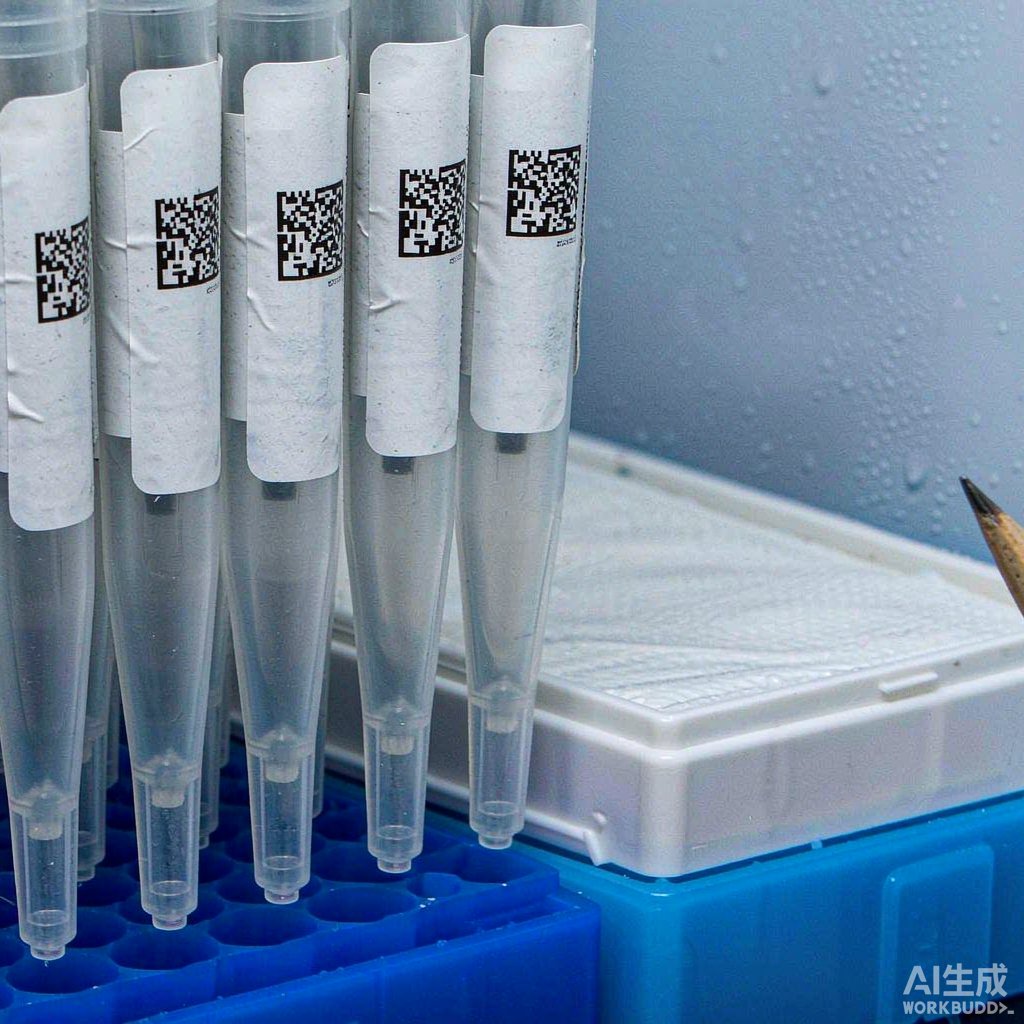
| 1.5 mL microcentrifuge tube | 10.3 mm | 32.4 mm | Wrap-around overlap | Ends must overlap by at least 3 mm to form a closed loop |
| 2 mL microcentrifuge tube | 10.8 mm | 33.9 mm | Wrap-around overlap or flat label | For flat labels, corners must be rounded to prevent edge lifting |
| 15 mL centrifuge tube | 16.8 mm | 52.8 mm | Flat label | Ample width; can accommodate 2D symbols and text |
| 50 mL centrifuge tube | 29.0 mm | 91.1 mm | Flat label | Vertical labeling recommended, avoiding the graduation window |
| mini gel plate | 86 mm × 68 mm | Not applicable | Edge flat label | Label only the gel frame edge; do not cover the separation area |
The situation on the gel and membrane side is the opposite: mini gels measure approximately 8.6 cm × 6.8 cm with a gel thickness of 0.75–1.5 mm, and transfer membranes are commonly 6 cm × 9 cm, so dimensions are ample. Here the focus of labeling is not width but whether the label can repeatedly contact methanol and buffer—therefore material selection is more important than format.
6. Labeling strategy for gel-casting glass plates, transfer cassettes, and incubation boxes
| Step | Labeling carrier | Main exposure | Recommended format | Replacement frequency |
|---|---|---|---|---|
| Gel casting | Glass plates, gel frames, comb storage boxes | Room temperature, acetone or ethanol wiping | Flat label, removable, no residue | Each gel casting |
| Sample loading | Sample tubes, loading order sheet | 2% SDS, 5% β-mercaptoethanol | Wrap-around overlap | Each batch |
| Electrophoresis | Electrophoresis tank, power supply record card | Room temperature, buffer splashes | Flat label | Weekly |
| Transfer | Transfer cassettes, cold room ice box | 20% methanol buffer, 4 °C condensation | Flat label, low-temperature grade material | Daily |
| Blocking and incubation | Incubation boxes, antibody working solution tubes | 0.1% Tween-20, 4 °C, shaker shear | Wrap-around or self-laminating structure | 3–5 days |
| Washing and exposure | Film cassettes, film clips | Room temperature, ECL reagent splashes | Flat label, general-purpose grade | Monthly |
| Antibody storage | Stock aliquot tubes | -20 °C or -80 °C, freeze–thaw cycles | Wrap-around overlap, low-temperature grade material | Single use |
Three easily overlooked details: first, the surface of the transfer cassette forms condensation after removal from the tank, so it must be wiped dry and allowed to return to temperature for 5–10 min before labeling; otherwise the interfacial water film will separate the adhesive layer from the metal surface. Second, the incubation box undergoes 60–80 reciprocations per minute on the shaker, so label edges must be rounded or pressed flat. Third, glass plates are commonly cleaned with acetone or ethanol, so labels must have corresponding rub resistance and preferably be removable with no adhesive residue, to avoid residue affecting the next gel casting.
7. Printing method and ribbon selection
Thermal transfer is the mainstream printing method for laboratory labels. Resin-based ribbons outperform mixed-based and wax-based ribbons in both solvent resistance and abrasion resistance; any location that will contact methanol, TBST, or reducing agents should prioritize resin-based ribbons; mixed-based ribbons can be used for film cassettes and shelf labels at room temperature with no solvent contact; wax-based ribbons are not recommended for any location that will contact alcohols or buffers.
For printing parameters, narrow-format labels are recommended to have the print darkness increased by 1–2 levels and the print speed reduced by one step to ensure sufficient resin transfer. After printing, a quick verification can be performed by gently wiping once with a 75% ethanol pad: if obvious ink smearing occurs, the ribbon type or darkness is mismatched and the configuration should be changed. Barcode quality should be assessed according to ISO/IEC 15416 for linear symbols and ISO/IEC 15415 for 2D symbols; a grade of no less than C is recommended, and first-article inspection records should be retained.
8. Barcodes and the data chain: making every lane traceable
The key to traceability in electrophoresis experiments is binding the four elements "lane—sample—antibody—exposure." The recommended coding structure is: project code-gel number-lane number-loading date, for example PRJ07-G03-L05-20260924. This code is written to both the antibody tube label and the gel record sheet; after transfer, the gel number and orientation are marked on the membrane corner in pencil, and finally the exposure image file name is aligned with the code.
The usable width of a linear barcode on a 0.5 mL tube is insufficient, so it is recommended to switch to a 2D symbol such as DataMatrix: within an 8 mm × 8 mm area, more than 20 characters of information can be encoded, and grade assessment can be performed according to ISO/IEC 15415. If samples come from a biobank, it is recommended to incorporate the biobank's unique identifier directly into this code, so that downstream analysis results can form a closed loop with the collection, processing, storage, and distribution records required by ISO 20387:2018.
9. Six-step selection SOP
| Step | Action | Criteria | Output |
|---|---|---|---|
| 1 | Determine labeling target | Do not label the gel and membrane themselves; label only the carrier | Carrier list |
| 2 | Determine lower temperature limit | -80 °C / -20 °C / 4 °C / room temperature, choose one | Temperature grade |
| 3 | List contact media | Methanol, SDS, Tween-20, reducing agents, preservatives | Exposure list |
| 4 | Check official material matrix | Screen by the two columns: passed grades and application scope | 2–3 candidate models |
| 5 | Determine format and dimensions | Arc length by π × outer diameter; ends overlap at least 3 mm | Label specifications |
| 6 | Sample proofing verification and archiving | 75% ethanol wipe + barcode grade + 3 freeze–thaw cycles | Verification record |
10. Common failure modes and troubleshooting
| Phenomenon | Possible root cause | Troubleshooting method | Action |
|---|---|---|---|
| Writing on membrane corner smears and disappears | Marker ink dissolved by methanol | Observe whether smearing occurs within 30 s after activation | Switch to soft pencil or corner clipping; move identity information to the carrier |
| Antibody tube label edge lifting | Ends do not form a closed loop | Check whether overlap is less than 3 mm | Switch to wrap-around labeling and increase overlap |
| Detachment after 3 freeze–thaw cycles | Material grade lower than actual temperature | Verify actual freezer temperature records | Upgrade to -80 °C grade material |
| Incubation box label curling | Continuous shaker shear + condensation | Check whether corners are rounded and whether labeling was done after drying | Reapply after drying and returning to temperature; round the edges |
| Barcode cannot be scanned | Symbol size too small or insufficient darkness | Retest grade according to ISO/IEC 15415 | Switch to 2D symbol and increase print darkness |
| Label edges darkening | Ribbon and face stock mismatch | 75% ethanol pad wipe test | Switch to resin-based ribbon |
| Adhesive residue on glass plates | Non-removable adhesive type used | Visual inspection after cleaning | Switch to removable, residue-free cloth label |
11. Biosafety and documentation compliance
Electrophoresis and transfer are not inherently high-risk live virus operations, but sample sources may involve clinical specimens or cell lines, and the identification system should still be incorporated into laboratory biosafety and quality system management. GB 19489-2008 "Laboratories—General Requirements for Biosafety" and WS 233-2002 "General Guidelines for Biosafety in Microbiological and Biomedical Laboratories" require clear labeling of sample containers involving potential biological hazards, and the biohazard symbol should comply with ISO 7010 W009.
At the documentation level, ISO 17025:2017 Clause 7.5 requires technical records to be traceable and original; ISO 15189:2022 has clear requirements for pre-examination, examination, and post-examination procedures in medical laboratories; if experimental outputs are used for validation data of in vitro diagnostic products, they should also be included in the document control scope of ISO 13485:2016. The physical properties of labels can be verified at incoming inspection or batch verification using GB/T 2792-2014 (180° peel strength) and GB/T 4851-2014 (holding tack).
Recommended Products
For the label materials and application scenarios covered in this article, the following 博锐迪 (BRD) products are available for selection reference (click to view specifications and request a quote):
- Lab296-629 biobank cryovial microscope slide -196 °C liquid nitrogen nylon low-temperature label (¥999/roll)
- Lab115-459/9.53+65x9.53 biobank conical tube low-temperature cryovial PET self-laminating label (Price on request)
- Lab032-429/30X20mm biobank cryovial microscope slide PET polyester label low-temperature adhesive (Price on request)
- Lab208-509/25.4x63.5 wrap-around cryovial biobank fine tube liquid nitrogen classification label (Price on request)
12. FAQ
Q: Can labels be applied to gels and transfer membranes?
A: Not recommended. Transfer membranes are only 100–200 μm thick; face stock will alter local hydrophilicity and the transfer electric field; moreover, the membrane contacts 100% methanol and TBST, and the adhesive layer is unlikely to survive. Use a soft pencil or corner clipping on the membrane, and place identity information on the carrier.
Q: How should material be selected for primary antibody stock tubes transferred back and forth between -20 °C and -80 °C?
A: Select by the lowest temperature. -20 °C falls within the above -40 °C range, so -40 °C grade material is sufficient; if the tube needs to go into a -80 °C freezer, material passing the -80 °C grade must be used—do not take shortcuts based on an intermediate temperature.
Q: What should be done if barcodes on 0.5 mL tubes cannot be scanned?
A: The labelable arc length of a 0.5 mL tube is about 25.1 mm, with actual usable width less than 18 mm; a linear barcode plus quiet zones will not fit. Switch to a DataMatrix 2D symbol and retest the grade according to ISO/IEC 15415; a grade of no less than C is recommended.
Q: Why do labels on transfer cassettes always curl at the edges?
A: Wet transfer is performed in a 4 °C cold room, and condensation forms on the surface after removal from the tank; the interfacial water film weakens adhesion. Wipe dry and allow to return to temperature for 5–10 min before labeling, and round the label edges to withstand 60–80 rpm shaker shear.
Q: How to choose between resin-based, mixed-based, and wax-based ribbons?
A: Use resin-based for locations contacting methanol, TBST, or reducing agents; mixed-based can be used for film cassettes and shelves at room temperature with no solvent contact; wax-based is not recommended for any location that will contact alcohols or buffers. After printing, verify by gently wiping with a 75% ethanol pad.
Q: What is the conflict between sodium azide and HRP-conjugated antibodies?
A: Sodium azide is commonly used at 0.02%–0.1% and inhibits microbial growth; however, it inhibits HRP activity, so sodium azide should not be added to HRP-conjugated antibodies, and the working solution storage life of such antibodies is correspondingly shortened.
Q: How can electrophoresis records be integrated into a biobank system?
A: Write the biobank unique identifier directly into the "project code-gel number-lane number-loading date" code, and align the exposure image file name with the code; the biobank's collection, processing, storage, and distribution processes can be established with reference to ISO 20387:2018.
Conclusion
The labeling issue in electrophoresis and transfer is essentially "whether to place identity information where it can be destroyed by media, or on a stable carrier." By setting the grade by temperature, the adhesive type by medium, the format by tube diameter, and then binding lanes to samples with 2D symbols, each lane can be restored into a traceable data chain. For more materials and specific applications, please contact the product manager for selection assistance.