
Why Biobanks Should Adopt RFID Labels: From Tube-by-Tube Scanning to Whole-Rack Inventory
BradyLAB BRD Cryogenic Label Product Matrix Quick Reference
| Series | Typical Material | Temperature Range | Typical Applications | Specifications / Printing Method |
|---|---|---|---|---|
| T629 | Nylon cloth | -196 °C to +121 °C | LN₂ cryovials, cell cryopreservation bags, deep cryogenic specimens | Thermal-transfer printing / 6 mm–50 mm width |
| T509 | Vinyl | -196 °C to +100 °C | ULT freezer specimens, microplates, microscope slides | Thermal-transfer printing / wrap-around |
| T449 | Polypropylene (PP) | -80 °C to +120 °C | Microcentrifuge tubes, cryovials, PCR plates | Thermal-transfer printing / roll continuous feed |
| T249 | Polyolefin | -40 °C to +80 °C | Room-temperature/refrigerated specimens, QR code traceability | Thermal-transfer / laser printing |
| T189 | Synthetic paper | -20 °C to +60 °C | Reagent bottles, document archiving | Thermal-transfer / inkjet printing |
| T109 | Vinyl | -20 °C to +80 °C | Equipment identification, instrument labeling | Thermal-transfer / full-sheet A4 |
Data source: BradyLAB BRD laboratory cryogenic identification product specifications · Temperature ranges are typical laboratory test values; verify against actual application conditions.
Traditional biobank inventory relies on scanning 1D or 2D barcodes tube by tube. For a mid-sized biobank with 100,000 cryovials, tube-by-tube box-opening and scanning averages dozens of hours, and requires removing cryoboxes from LN₂ tanks one by one, repeatedly subjecting them to thermal shock from -196 °C to room temperature. Ultra-high frequency (UHF) RFID labels change this workflow: the RF signal from a reader can penetrate gaps between cryoboxes and storage boxes, reading all labels on an entire box—or even an entire rack—of cryovials at once, compressing the inventory time for 100,000 specimens from dozens of hours to minutes.
The core value of RFID traceability goes beyond speed. Each RFID label contains a chip storing a unique code (EPC); every label ID is factory-unique and non-replicable. Combined with a specimen management system, this enables fully automated inventory management—"scan on opening, verify on closing"—drastically reducing manual scanning and lowering the risk of specimen mix-ups and missed records. In serving biobanks and cell therapy companies, BradyLAB BRD has found that for any repository exceeding ten thousand specimens, the overall payback period of an RFID solution is typically far shorter than the traceability reliability and labor savings it delivers.
Basic UHF RFID Parameters: 860–960 MHz and the EPC Gen2 Standard
RFID labels used in healthcare and cold chain are predominantly ultra-high frequency (UHF), operating in the 860–960 MHz band and complying with the EPC Gen2 (ISO/IEC 18000-63) air interface protocol. UHF's greatest advantages are long read range (typically 1–6 m for passive labels) and batch reading capability—a reader can simultaneously identify large numbers of labels in a short time, which low-frequency (125 kHz) and high-frequency (13.56 MHz) RFID cannot achieve.
UHF RFID labels are passive, carrying no battery of their own and drawing power from the RF energy emitted by the reader. This eliminates battery-life concerns and allows long-term storage in -196 °C LN₂ environments without maintenance. Each label encapsulates an RFID chip and an antenna: the antenna receives RF energy and reflects the signal, while the chip stores and processes data. The TRUF series cryogenic RFID labels from BradyLAB BRD use EPC Gen2 protocol chips, compatible with mainstream UHF readers and portal gates, and can integrate into existing specimen management systems without dedicated hardware.
Three Challenges for Cryogenic RFID Labels: -196 °C, Frost, and LN₂ Immersion
Standard RFID labels work fine in laboratory environments, but inside an LN₂ tank it's a different story. The first hurdle for cryogenic RFID labels is -196 °C extreme cold. The face stock of ordinary labels becomes brittle at LN₂ temperatures, the adhesive enters a glassy state and loses tack, and the label peels off the cryovial or microplate entirely. Cryogenic RFID labels must use LN₂-validated low-temperature face stock and dedicated cryogenic adhesive to ensure long-term adhesion without peeling or edge lifting in -196 °C liquid-phase and vapor-phase environments.
The second hurdle is frost. After a cryovial is removed from the LN₂ tank, moisture rapidly condenses on the tube surface to form a frost layer. Frost contains water, and water absorbs RF signals, significantly attenuating read range or even causing missed reads. Cryogenic RFID labels therefore require hydrophobic or anti-frost surface treatment, combined with reader power and antenna optimization, to maintain stable read range under frost conditions. The TRUF series cryogenic RFID labels from BradyLAB BRD feature face stock and antenna matching optimized for frost scenarios; testing confirms full-box batch reading within 30 seconds of removal from -196 °C.
The third hurdle is liquids and solvents. In biobank settings, labels may contact LN₂ itself, alcohol disinfectants, DMSO, culture media, or liquids in culture dishes. Liquid environments alter the antenna's resonant characteristics, requiring label antenna designs with sufficient margin. The TRUF-329-6506-U8 model specifically targets "cryogenic, solvent-resistant, liquid-resistant" performance, suited to culture dishes, microplates, and other liquid-contact applications, ensuring reliable reading on wet surfaces.
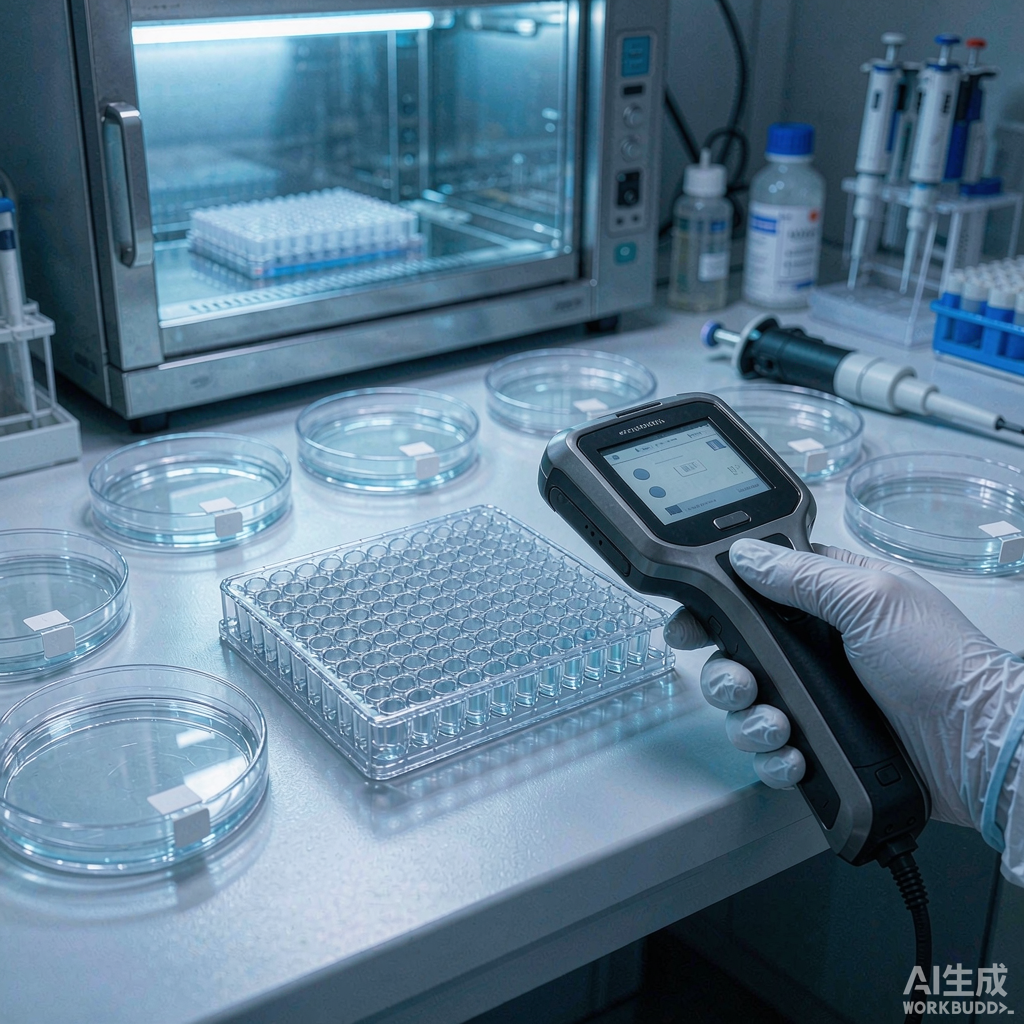
Typical Application 1: Batch Tracking of Culture Dishes and Microplates
Culture dishes and microplates are workhorse consumables in cell culture, drug screening, and microbiology, with enormous volumes and frequent circulation. Applying UHF RFID labels to each dish or plate eliminates the need to inspect each one individually when loading an entire rack into an incubator or cold room—a single handheld reader completes whole-rack batch inventory. Labels applied to the dish lid or side do not obstruct the viewing field, and with a specimen management system, the culture time, batch, and location change history of each plate are automatically recorded.
Microplate (96-well, 384-well) applications impose strict requirements on label size and placement. Labels can only be applied to the plate skirt or side lip, without covering wells. BradyLAB BRD microplate cryogenic RFID labels are custom-sized to ANSI/SLAS standard plate formats, staying within plate edges after application, not interfering with robotic gripper handling or plate stacking, while ensuring stable reading under -80 °C freezer and -196 °C LN₂ storage.
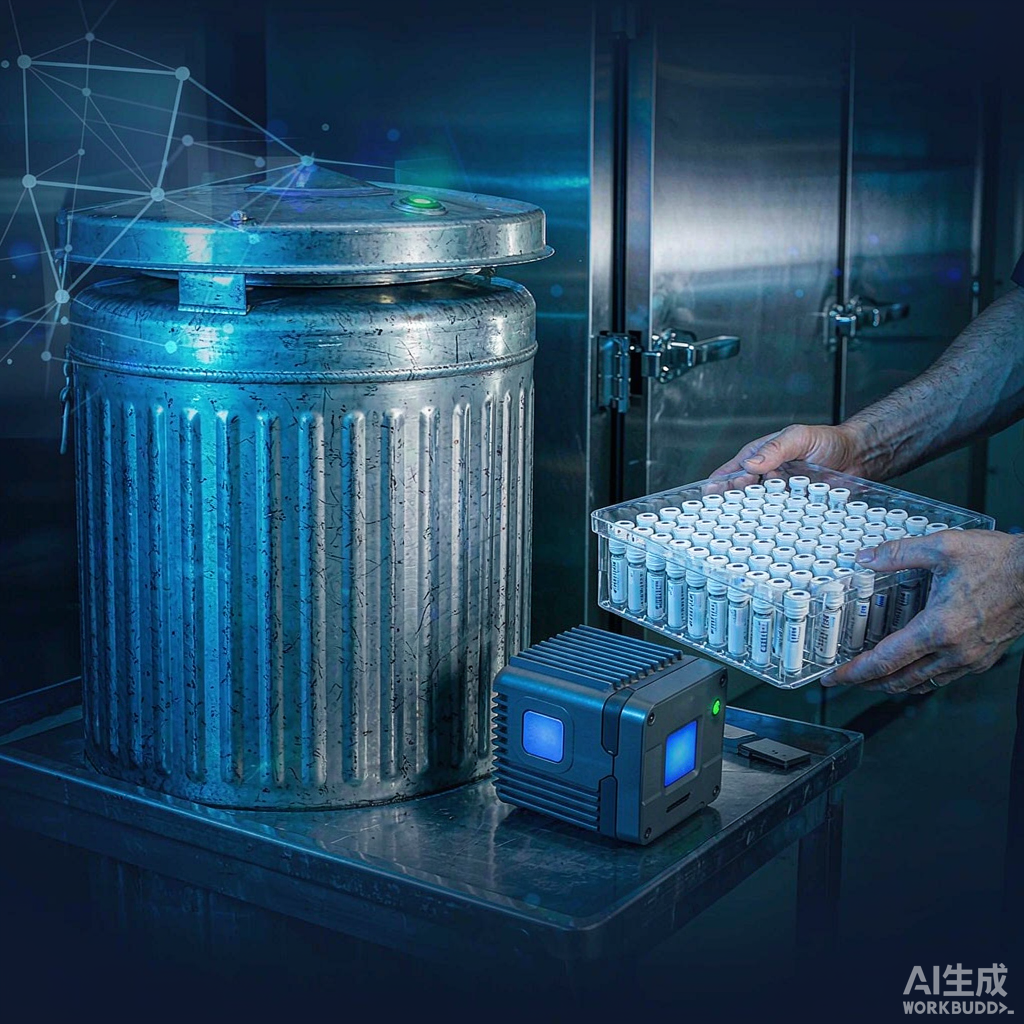
Typical Application 2: Whole-Rack Inventory of Cryovials and Cryoboxes
Cryovials are the primary storage container in biobanks. With UHF RFID labels applied to cryovials, an entire cryobox and its cryovials can be "scanned in one box" by a reader—no need to open the box and focus on each tube. A box-level RFID label can be applied to the outside of the cryobox, forming a "box-tube two-level" identification structure with the specimen labels inside: the reader first reads the box label to confirm box identity, then reads the tube labels to verify each specimen, with both levels automatically reconciled against the specimen management system, significantly improving inventory accuracy.
For long-term storage in LN₂ tanks, batch reading can be completed at the tank mouth immediately after removing the cryobox, without transferring specimens to room temperature, reducing the impact of freeze–thaw cycles on specimen quality. BradyLAB BRD recommends deploying RFID solutions together with metal-resistant/box-penetration-optimized reader antennas and portal gates, establishing fixed inventory points at three nodes—tank mouth, cold room door, and workbench—for automatic recording of specimen check-in and check-out.
Dual-Channel Traceability with RFID and Barcode: Why Not Choose One
RFID and barcode are complementary, not substitutes. Barcodes are low-cost, standards-mature, and scannable by anyone with a phone—ideal as the human-readable layer of specimen identification; RFID suits batch automated capture at the machine-readable layer. BradyLAB BRD recommends a "barcode + RFID" dual-channel specimen identification approach: the label surface carries both 1D/2D barcodes and human-readable text (barcode channel), while the internal chip carries the unique EPC code (RFID channel).
The advantage of the dual-channel approach is resilience. If an RFID reader fails or the inventory environment has strong metal interference, the workflow can fall back to barcode scanning; conversely, batch inventory is completed at once via RFID without tube-by-tube scanning. For specimens with extremely high traceability requirements—cell therapy, human genetic resources—dual-channel is the prudent choice for audit and compliance.
Cryogenic RFID Label Selection Checklist: Six Must-Ask Questions
BradyLAB BRD has compiled six must-ask questions for cryogenic RFID label selection, for biobanks and IVD manufacturers to verify item by item during procurement: First, has the label been validated at -196 °C LN₂, and are the adhesive and face stock matched to LN₂ scenarios? Second, is the UHF band compatible with the facility's readers (the 920–925 MHz national standard is mainstream)? Third, has the label undergone read-range testing in liquid and frost environments? Fourth, is the label size compatible with the target container (cryovial/cryobox/culture dish/microplate)? Fifth, does it support barcode + RFID dual-channel printing? Sixth, are batch read consistency reports and freeze–thaw cycle test data provided? Only when all six answers are "yes" should a small-batch pilot proceed.
BradyLAB BRD offers free sample testing of TRUF series cryogenic RFID labels, allowing users to verify read range and stability in real LN₂ storage and batch inventory environments before bulk purchasing.
Featured Products
For the label materials and application scenarios covered in this article, the following BradyLAB (BRD) products are available for selection reference (click to view specifications and request a quote):
- Lab162-629/40x20 Biobank Cryovial -196 °C LN₂ Nylon Cryogenic Label Biobank 18015583218(¥999/roll)
- Lab208-509/25.4x63.5 Wrap-Around Cryovial Biobank Thin Tube LN₂ Classification Label(Price on request)
- Lab127-449/60x30 Biobank Medical Vessel Identification Gloss White PET Biobank Label(Price on request)
FAQ: Common Questions About Cryogenic RFID Labels
Can RFID labels work properly in LN₂? Yes. Passive UHF RFID labels have no battery, and -196 °C LN₂ environments do not affect chip data retention; the key is that face stock and adhesive are designed for LN₂-grade performance. BradyLAB BRD's TRUF series cryogenic RFID labels are validated for -196 °C liquid-phase and vapor-phase environments and remain readable/writable after long-term storage.
Can an entire box of cryovials be read by RFID all at once? It depends on cryobox material and density. Plastic cryoboxes are essentially transparent to RF signals, enabling full-box batch reading; metal cryoboxes shield signals and require non-metal boxes or antenna optimization solutions. BradyLAB BRD can provide on-site assessment of tank-mouth inventory points and antenna configuration.
Which is better, RFID labels or barcode labels? Neither is absolutely better. RFID is more efficient for batch inventory and rapid check-in/check-out; barcodes are more flexible for temporary labeling and human-readable verification. BradyLAB BRD recommends a "barcode + RFID dual-channel" design that balances efficiency and resilience.
Can cryogenic RFID labels be applied to culture dishes? Yes. The TRUF-329-6506-U8 model is designed specifically for culture dishes and microplates—cryogenic, solvent-resistant, liquid-resistant—with labels that do not obstruct the viewing field, compatible with -196 °C LN₂ and -80 °C freezer storage.
Can the information on RFID labels be corrupted? EPC chip data is rewritable and typically retains data for 10+ years, far exceeding specimen storage periods. Choose industrial-grade chips to avoid data-loss risks from low-end chips under cryogenic stress.