
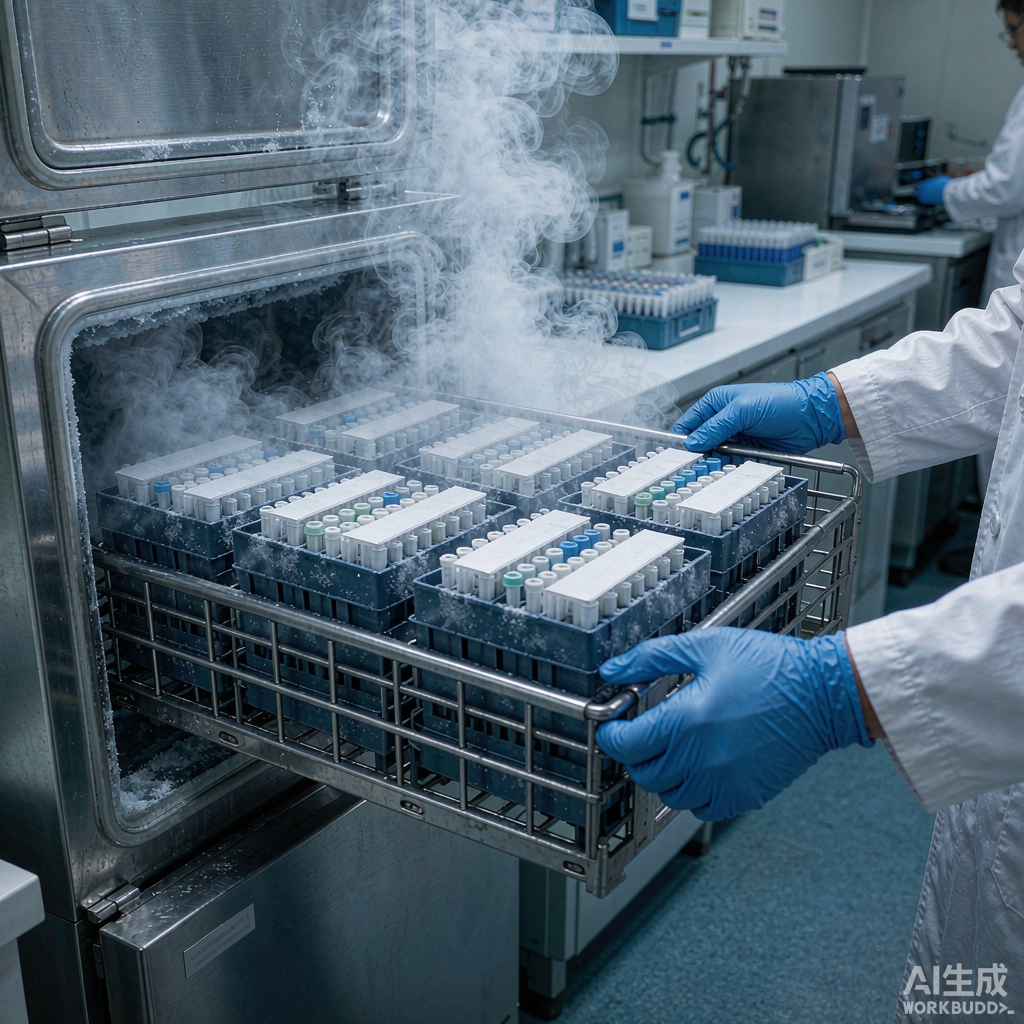
BRD Cryogenic Label Product Matrix Quick Reference
| Series | Typical Material | Temperature Range | Typical Applications | Specifications / Printing Method |
|---|---|---|---|---|
| T629 | Nylon cloth | -196 °C to +121 °C | LN₂ cryovials, cell freezing bags, deep low-temperature specimens | Thermal transfer / 6 mm–50 mm width |
| T509 | Vinyl | -196 °C to +100 °C | ULT freezer specimens, microplates, microscope slides | Thermal transfer / wrap-around |
| T449 | Polypropylene (PP) | -80 °C to +120 °C | Microcentrifuge tubes, cryovials, PCR plates | Thermal transfer / roll continuous |
| T249 | Polyolefin | -40 °C to +80 °C | Room-temperature/refrigerated specimens, QR code traceability | Thermal transfer / laser printing |
| T189 | Synthetic paper | -20 °C to +60 °C | Reagent bottles, document archiving | Thermal transfer / inkjet printing |
| T109 | Vinyl | -20 °C to +80 °C | Equipment identification, instrument labeling | Thermal transfer / full-sheet A4 |
Data source: BRD laboratory cryogenic identification product specifications · Temperature ranges are typical laboratory test values; verify according to actual application scenarios.
Labeling Challenges in Cryogenic Environments
Biobank cryovials, PCR tubes and reagent bottles are exposed long-term to -80 °C ULT or LN₂ vapor-phase environments. Standard labels tend to become brittle, fade or peel off, resulting in loss of specimen traceability information.
Key Points for Cryogenic Label Selection
- Face stock: polyester film (PET) or low-temperature-resistant synthetic paper, suitable for -196 °C LN₂ environments.
- Adhesive: cryogenic-specific adhesive ensuring stable tack at low temperatures with no residue.
- Printing method: thermal-transfer ribbon printing; characters remain clear and resistant to wiping with ethanol, xylene and other solvents.
Application Recommendations
Reserve a label area on the side of the cryovial, use labels rated for -80 °C together with matching ribbons, and periodically spot-check adhesion to ensure full life-cycle traceability of specimens.
1. Why Biological Specimen Cryopreservation Requires Dedicated Cryogenic Labels
Biological specimens (cells, tissues, nucleic acids, proteins, etc.) require long-term storage in deep low-temperature environments: liquid nitrogen (-196 °C), ULT freezers (-80 °C) or low-temperature freezers (-20 °C to -40 °C). Standard labels fail in three ways under such conditions: adhesive embrittlement and peeling (adhesive glass transition temperature Tg higher than storage temperature), face stock cracking (stress concentration during repeated freeze–thaw cycles), and face stock fading or barcode blurring (ink and printing method not resistant to low temperatures).
Choosing the correct cryogenic label is a prerequisite for long-term specimen traceability—once a label fails, the specimen becomes anonymous, and all scientific and clinical value is lost.
2. Core Technical Specifications of Cryogenic Labels
Core criteria for evaluating cryogenic labels include:
1. Temperature range: must cover the actual storage temperature (LN₂ -196 °C / ULT -80 °C / freezer -20 °C) with a safety margin (+10 °C).
2. Freeze–thaw cycle resistance: adhesion stability under repeated freeze–thaw cycles (from room temperature to low temperature and back). Superior products withstand 50+ freeze–thaw cycles.
3. Face stock compatibility: thermal transfer, laser printing and inkjet printing require different face stocks.
4. Adhesive type: pressure-sensitive adhesive (PSA) must have a low Tg to maintain tack at -196 °C.
5. Barcode readability: barcode contrast ratio ≥ 80% at low temperatures (ISO 15416 standard).
3. BRD Cryogenic Label Product Matrix
BRD offers six cryogenic label series covering the full range from -196 °C LN₂ to room temperature:
· T629 nylon cloth series: -196 °C to +121 °C, designed for LN₂ cryovials
· T509 vinyl series: -196 °C to +100 °C, with transparent protective layer
· T449 polypropylene (PP) series: -80 °C to +120 °C, economical option
· T249 polyolefin series: -40 °C to +80 °C, suitable for refrigerated specimens
· T189 synthetic paper series: -20 °C to +60 °C, reagent bottle labeling
· T109 vinyl series: -20 °C to +80 °C, equipment/instrument labeling
4. Typical Applications and Selection Decisions
Selection recommendations for different scenarios:
· LN₂ cryovials (-196 °C): T629 nylon cloth series, thermal transfer printing, matched with resin-based ribbon
· ULT freezer specimens (-80 °C): T509 vinyl series, thermal transfer or laser printing
· Cryovials/PCR plates: T449 PP series, thermal transfer printing, wax/resin ribbons
· Reagent bottles (room temperature/refrigerated): T189 synthetic paper, thermal transfer or inkjet printing
5. Labeling Procedure and Quality Verification
Standard labeling procedure: ① Clean cryovial surface (wipe with alcohol, air dry) → ② Pre-cool labels (acclimate in low-temperature environment for 30 minutes) → ③ Apply label (press with fingers for 5 seconds, ensure no bubbles) → ④ Allow 24 hours to cure → ⑤ Barcode scan verification → ⑥ Log into storage.
Quality verification: sample 5% of each batch for simulated freeze–thaw testing (-196 °C → room temperature, 3 cycles), checking label detachment rate, barcode readability rate and adhesion strength. The T629 series from BRD maintains 99%+ adhesion stability after 50 freeze–thaw cycles.
Recommended Products
For the label materials and applications covered in this article, the following BRD products are available for selection reference (click to view specifications and request a quote):
- Lab162-629/40x20 biobank cryovial -196 °C LN₂ nylon cryogenic label biobank 18015583218(¥999/roll)
- Lab208-509/25.4x63.5 wrap-around cryovial biobank thin tube LN₂ classification label(Price on request)
- Lab127-449/60x30 biobank medical vessel identification gloss white PET biobank label(Price on request)
6. FAQ and BRD Service Commitment
FAQ:
Q1: Do labels become brittle in liquid nitrogen? A: The T629 nylon cloth series uses a nylon cloth face stock that remains flexible at -196 °C and does not become brittle.
Q2: Can barcodes be scanned at low temperatures? A: BRD label face stocks are optimized to match ribbons, with barcode contrast ratio ≥ 85%, allowing direct scanning in LN₂ environments.
Q3: How long does small-batch custom delivery take? A: BRD offers 5-working-day proofing and 10-working-day small-batch delivery.
BRD Service Commitment: All products undergo three quality inspections (temperature resistance/adhesion/printing) before shipment. We provide complete technical data sheets, compliance standards (GMP/ISO 15319) and application acceptance guidance, and support custom sizes, materials and printing solutions.
Full-Workflow Application of Cryogenic Labels in Specimen Cryopreservation
| Stage | Labeling Key Points |
|---|---|
| Collection & registration | On-site numbering, scan-to-create record |
| Aliquoting & cryopreservation | Apply and press label, cure before placing in tank |
| Storage positioning | Tank/box/position mapping |
| Retrieval & traceability | Scan trail, destination records |
Long-Term Reliability of Cryogenic Labels
Specimen cryopreservation periods are long (up to several years or more), and labels must withstand prolonged low temperatures and multiple freeze–thaw cycles. When selecting, focus on freeze–thaw resistance and long-term adhesive stability, and establish a periodic re-scan system to ensure labels on long-term cryopreserved specimens remain readable and identities remain clear.