
Conclusion first: for organoid container label selection, the primary criterion is not "whether it can be applied," but rather that the same organoid line must pass continuously through four temperature interfaces—37 °C, 4 °C, -80 °C, and -196 °C—within a 7–14 day passage cycle, while also withstanding the high-humidity condensation of Matrigel ice-top handling and the chemical attack of DMSO freezing medium. Therefore, selection must be determined separately across three layers: "temperature interface × container geometry × chemical contact," rather than using a single label across the entire bank. The directly actionable conclusion is: for the long-term liquid nitrogen storage layer, use T629 nylon cloth material with end-to-end overlap; for the -80 °C controlled-rate cooling transition layer and downstream microscope slides, use T429; for multi-donor/multi-passage classification, use T439 with top pre-printed six-color coding; for the 2–8 °C refrigerated and ambient-temperature culture vessel layer, use T419. The top surface of well plates must not cover the wells; labels may only be placed in the clear edge zone of the plate frame as defined by ANSI/SLAS 1-2004.
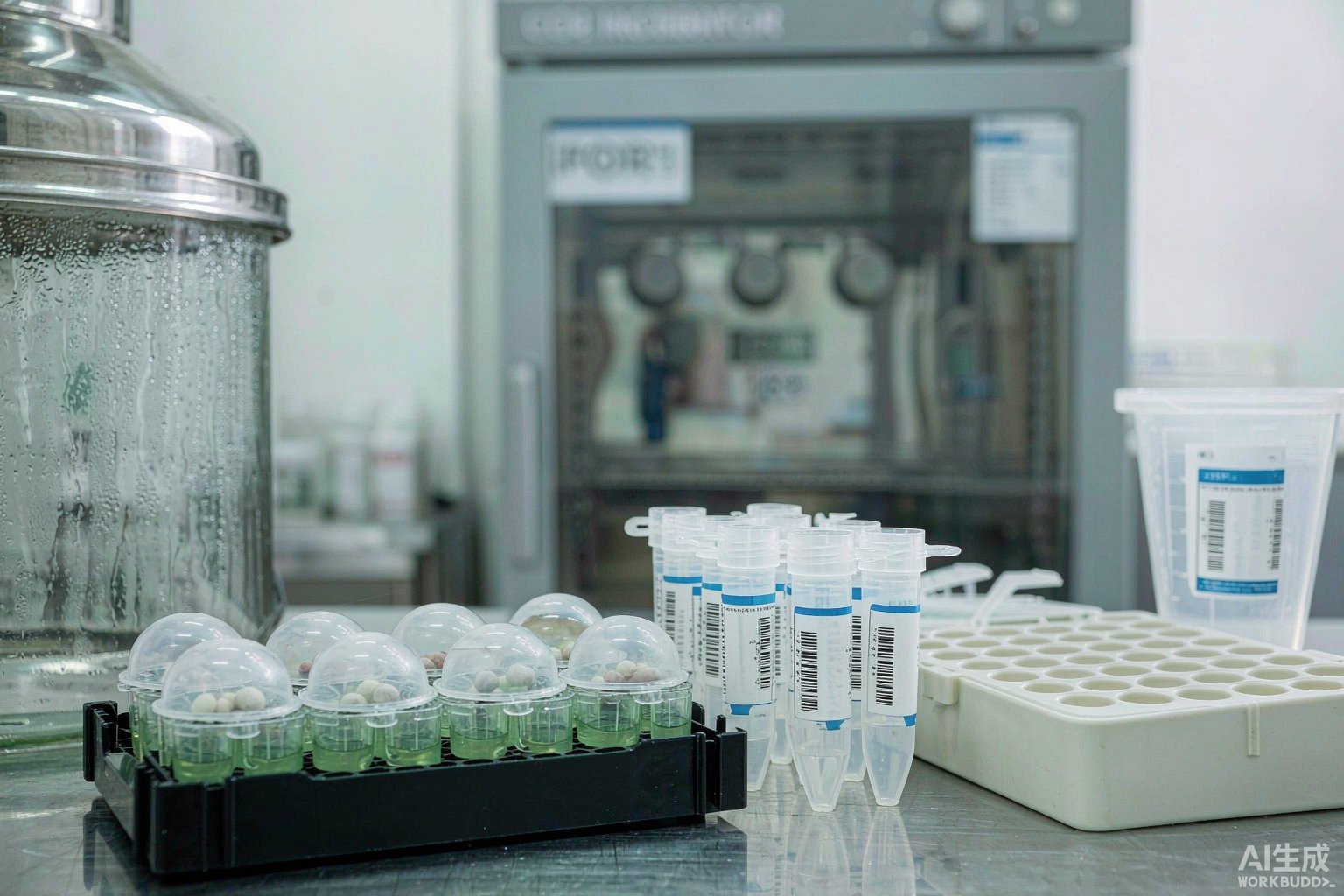
The reason organoid culture imposes stricter labeling requirements than conventional cell lines lies in the fact that it compresses "long-term preservation of living specimens" and "high-throughput in vitro screening" into a single workflow. An organoid line derived from a patient biopsy must go through primary isolation, Matrigel embedding, expansion and passaging, quality-control identification, cryopreservation and banking, thawing and re-culture, sectioning, and immunofluorescence identification from establishment to drug sensitivity screening—each step involving different temperatures, humidity, and chemical contact surfaces. Once a label fails at any interface, what is lost is not just an ID number but a break in the entire traceability chain—an unacceptable quality event under the ISO 20387:2018 biobank system.
I. The Four Temperature Interfaces of the Organoid Workflow and the Labeling Requirements Matrix
Selecting labels by breaking the organoid process into temperature interfaces is the least error-prone approach. The temperature span across the four interfaces reaches 233 °C; no single material can be universal throughout, but "layered selection with consistent information" can be achieved.
| Temperature interface | Typical conditions | Dwell time | Main failure risk | Selection points |
|---|---|---|---|---|
| 37 °C culture layer | 37 °C, 5% CO₂, ≥95% RH incubator | 7–14 days/passage | High-humidity condensation causing adhesive interface displacement and edge lifting | Ambient-temperature-grade material + conformability; cloth-based preferred |
| 4 °C ice-top handling layer | Matrigel embedding, ice-top pipetting, buffer washing | 0.5–4 h/session | Condensate film + repeated glove friction; printed content abrasion | Moisture-resistant, removable and repositionable (temporary labeling) |
| -80 °C transition layer | Controlled-rate cooling box at -1 °C/min | 16–24 h | Adhesive embrittlement under cooling rate; differential shrinkage of cryovials | -80 °C-rated material + end-to-end overlap |
| -196 °C storage layer | Liquid nitrogen liquid phase / gas phase (below -150 °C) | Months to years | Ultra-low-temperature embrittlement, access friction, cryobox grid wear | -196 °C-rated material + overlap + side labeling |
The core value of this matrix is that it breaks the vague requirement of "select a cryogenic label" into four separately verifiable technical conditions. In practice, the most common mistake is using a -40 °C-grade material to cover a -196 °C scenario—the two types of materials are almost indistinguishable in appearance, but their performance after removal from liquid nitrogen differs greatly.
II. Culture Vessel Layer: Labeling Geometric Constraints for Well Plates and Culture Dishes
The most commonly used containers for organoid 3D culture are 24-well, 96-well, and 384-well microplates, as well as 35/60/100 mm culture dishes. The primary labeling constraint comes from geometry: most of the top surface of a well plate is occupied by wells, and the available labeling area is only the edge strips around the plate frame.
Taking the ANSI/SLAS 1-2004 microplate standard as an example, a 96-well plate has external dimensions of 127.76 mm × 85.48 mm, a well center spacing of 9.00 mm, and a well opening diameter of approximately 6.96 mm; for a 384-well plate, the well center spacing narrows to 4.50 mm. This means the clear strip available for labeling on the edge of a 384-well plate is narrower, and the label height must be controlled within "the distance from the plate frame edge to the first row of well centers minus 4.50 mm"; otherwise the label will cover the well openings or be crushed during heat sealing of the plate seal film.
| Well plate format | Well center spacing | Top-surface labelable area | Recommended labeling position | Recommended label height |
|---|---|---|---|---|
| 96-well plate | 9.00 mm | Edge strips around the plate frame | Left/right side walls or front-edge top surface | ≤ 9 mm |
| 384-well plate | 4.50 mm | Edge strips around the plate frame (narrower) | Left/right side walls preferred | ≤ 6 mm |
| 24-well plate | 19.30 mm | Wider edge strips around the plate frame | Top front edge or side walls | ≤ 12 mm |
| 35/60/100 mm culture dish | Not applicable | Lid top surface / dish side wall | Dish side wall (avoid lid rim) | ≤ 15 mm |
One easily overlooked detail deserves attention: well plates are stacked inside the incubator, and top-surface labels come into direct contact with the bottom surface of the plate above and bear the stacking weight. Therefore, a more reliable approach for well plate labeling is to apply labels to the side walls and orient the barcode perpendicular to the stacking direction, avoiding obstruction by the upper plate during reading. If top-surface labeling is unavoidable, choose a thinner material with lower stiffness to reduce stacking interference.
III. Matrigel and Ice-Top Handling Layer: Adhesive Failure at the 4 °C Cold-Wet Interface
Matrigel (basement membrane matrix such as Matrigel) is a core consumable for organoid 3D culture, and its handling window is very narrow: Matrigel is stored at -20 °C or -80 °C, must be thawed overnight at 4 °C before use, remains liquid at 4 °C, and rapidly gels once returned to room temperature or 37 °C (gelation typically completes within 30 min at 22–37 °C). This dictates that the entire embedding operation must be performed on ice.
Ice-top handling presents two superimposed physical challenges to labeling: first, the outer wall of the culture dish and the glove surface continuously generate a condensate film, and the label adhesive cannot achieve effective wetting at the water-film interface; second, the operator, wearing gloves, repeatedly grasps and moves the container, and the label edges experience far more friction than in ambient-temperature benchtop scenarios. The combined result is that labels performing well in ambient benchtop environments begin to lift at the edges after 30 min of ice-top handling.
For this layer, two strategies are typically adopted in engineering: one is to use a repositionable, removable vinyl cloth label with no adhesive residue (such as the T625 material characteristics), allowing re-pressing or complete replacement when lifting occurs without contaminating the container; the other is to move the labeling information up to the cryovial or cryobox level, retaining only minimal temporary markings on the culture dish and carrying the complete traceability information on a carrier that never leaves the cold chain. The latter better conforms to the principle of "information follows the specimen" under the traceability requirements of ISO 20387:2018.
IV. Controlled-Rate Cooling Layer: Effect of -1 °C/min Cooling Rate on Labels
The biggest difference between organoid cryopreservation and cell line cryopreservation lies in specimen size—organoids are multicellular structures tens to hundreds of micrometers in diameter and are more sensitive to cooling rate. The standard practice is to use a controlled-rate cooling box in a -80 °C freezer at approximately -1 °C/min, then transfer to liquid nitrogen after overnight. This two-stage "-80 °C first, then -196 °C" process means the label undergoes a complete temperature slope change rather than direct immersion in liquid nitrogen.
The mechanism by which cooling rate affects labels is mainly thermal expansion coefficient mismatch: cryovials (typically polypropylene, PP) and the label face stock and adhesive layer have different linear expansion coefficients. During slow cooling at -1 °C/min, interfacial stress has ample time to accumulate and cause edge lifting. Therefore, the general application requirement for this layer is end-to-end overlap—after wrapping the label around the cryovial one full turn, the leading and trailing ends must overlap by at least 3 mm, converting the peeling force at the end faces into shear force through the overlap zone. This requirement is universal in ultra-low-temperature scenarios and is not exempted by material.
| Material code | Official material description | Liquid nitrogen -196 °C | Freezer -80 °C | Hot water 100 °C | Autoclave 121 °C | Applicable containers |
|---|---|---|---|---|---|---|
| T629 | Nylon cloth label, high/low temperature resistance, good conformability | Suitable | Suitable | Suitable | Suitable | Ambient/microscope slides/cryovials/conical tubes |
| T429 | When applied to frozen tube surfaces, overlap ends by at least 3 mm | Suitable | Suitable | Suitable | Suitable | Cryovials/test tubes, packaging labels |
| T439 | 6-color pre-printed cryogenic label, top pre-printed color | Suitable | Suitable | Suitable | Not suitable | Cryovials/test tubes, general products |
| T419 | Glossy white PET, resistant to -40 °C and above | Not suitable | Not suitable | Not suitable | Not suitable | Ambient, cryovials, general products, packaging labels |
| T329 | Matte white PP self-adhesive, resistant to -40 °C | Not suitable | Not suitable | Not suitable | Not suitable | Ambient, cryovials, general products, packaging labels |
This comparison table represents the hard boundary for selection: T629 and T429 cover all four levels up to -196 °C and 121 °C autoclaving, T439 covers up to 100 °C, while T419 and T329 are positioned for environments above -40 °C. In organoid banking scenarios, the liquid nitrogen storage layer can only be selected from the first three.
V. Liquid Nitrogen Storage Layer: Material and Application for Long-Term Banking
Once in long-term liquid nitrogen storage, labels face three superimposed effects: the extreme low temperature of -196 °C brings most adhesive layers close to the glass transition region; mechanical friction during access; and repeated thermal shock during removal from liquid nitrogen to room-temperature thawing. At this point, the advantage of nylon cloth substrate material lies in the conformability and tear resistance provided by its fiber structure—it does not rebound from curved surfaces due to excessive stiffness at low temperatures like film-type materials.
There are three mandatory application points. First is overlap, as described above: T429 requires at least 3 mm end-to-end overlap on frozen tube surfaces, and T629, due to its good conformability, is also recommended for overlap on curved surfaces such as conical tubes and microscope slides. Second is label position: cryovials within cryobox grid positions should preferably be labeled on the tube body side rather than the cap top, because the top surface experiences the most concentrated friction during stacked access. Third is avoiding coverage of tube wall graduations and observation windows; organoid cryovials often require visual confirmation of the Matrigel dome position inside the tube, and label obstruction directly affects interpretation during thawing.
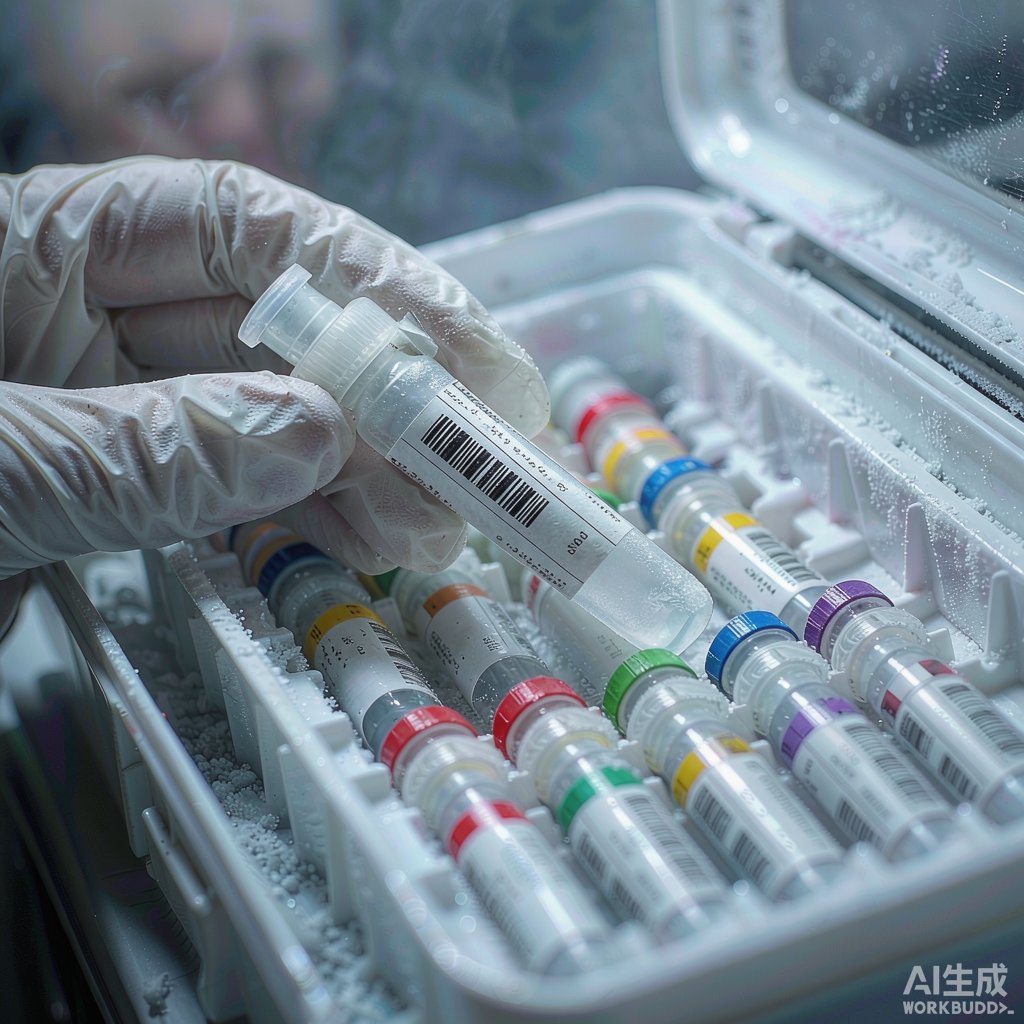
VI. Cryovial Geometry and Label Size Matching
Organoid cryopreservation typically uses 1.8 mL or 2.0 mL cryovials, available in internal-thread and external-thread cap versions. The labelable arc width and curvature differ between the two, directly affecting the label width/height limits and chord-height rebound.
| Cryovial format | Tube body OD | Labelable arc height | Recommended label size | Chord-height rebound | Application points |
|---|---|---|---|---|---|
| 1.8 mL internal-thread cap | Approx. 12.5 mm | Approx. 25 mm | 30 × 15 mm or 25.4 × 9.53 mm | Approx. 0.63 mm | Side labeling, overlap ≥3 mm |
| 2.0 mL external-thread cap | Approx. 12.5 mm | Approx. 28 mm | 35 × 16 mm or 30 × 20 mm | Approx. 0.63–0.84 mm | Avoid thread area, overlap ≥3 mm |
| 5.0 mL cryovial | Approx. 16 mm | Approx. 35 mm | 40 × 20 mm | Approx. 0.51 mm | Preferred for large-volume organoid clumps |
| 15/50 mL conical tube | Approx. 17/30 mm | Approx. 60/90 mm | 60 × 40 mm | Approx. 0.44/0.25 mm | Digestion/collection step, ambient or -80 °C |
The chord-height rebound is calculated as h = R − √(R² − (w/2)²), where R is the container radius and w is the label width. The significance of this value is to quantify "how much the edges must lift when a flat label is applied to a curved surface"—the larger the value, the greater the driving force for edge lifting, and the higher the requirements for adhesive initial tack and material conformability. Smaller-diameter cryovials with the same label width produce greater chord height, which is why small-diameter containers require cloth-based materials even more.
VII. Color-Code Management: Classification Coding for Multiple Donors, Sites, and Passages
The complexity of an organoid biobank far exceeds that of a conventional cell bank: under the same project there may be multiple donors, each donor with multiple collection sites (e.g., primary tumor, adjacent tissue, metastatic lesion), each site with multiple passages, and different culture conditions and treatment groups must also be distinguished. Once the two-dimensional coding dimensions exceed three, text-only labels quickly become unreadable.
The solution is to split dimensions across different carriers: use top pre-printed six-color cryogenic labels to carry the highest-frequency first dimension (e.g., donor source), use 1D or 2D codes to carry the complete record, and use cryobox grid coordinates to carry spatial positioning. The value of top pre-printed color cryogenic labels such as T439 lies in enabling operators, under low-temperature conditions at the liquid nitrogen tank mouth, wearing thick gloves, and with limited visibility, to quickly locate target lines among a row of cryovials by color, reducing lid-open exposure time.
| Coding dimension | Carrier method | Example | Reading scenario | Fault-tolerance requirement |
|---|---|---|---|---|
| Donor source | Top pre-printed six-color | Red=P01, Yellow=P02, Blue=P03 | Visual at LN₂ tank mouth | Hue difference ≥2 levels |
| Collection site | Text short code | T=primary, N=adjacent, M=metastatic | Thawing registration | Font ≥6 pt |
| Passage | Numeric field | P3, P7 | Experimental records | Handwriting prohibited |
| Unique ID | 1D barcode / DataMatrix | ORG-2026-0001 | Scanning for storage | ISO/IEC 15416 grade ≥C |
| Spatial positioning | Box No. + grid position | B12-R03-C07 | Cryobox index | Two-way verification with system |
VIII. Printing and Readability: Thermal-Transfer Ribbon and Barcode Grade
The printing method for organoid labels must be thermal transfer, not direct thermal. There are two reasons: first, direct thermal print legibility degrades significantly after DMSO contact, alcohol wiping, and low-temperature cycling; second, thermal transfer combined with resin-based cryogenic ribbon provides a bond strength between the printed layer and face stock sufficient to withstand liquid nitrogen immersion and subsequent thawing. Taking the BRL series cryogenic ribbon as an example, its black resin formulation is designed for laboratory cryogenic face stocks and is used with laboratory-specific label printers.
Barcode readability should be verified according to ISO/IEC 15416 (1D) and ISO/IEC 15415 (2D) symbol quality grades, with a recommended sampling grade of no less than C before storage. A more effective practice in actual operation is "re-scan at thawing"—before the organoid is thawed and enters culture, scan the same label once and record read failures in the quality management ledger. This action turns label failure from a "one-time check at storage" into "closed-loop verification," a natural extension of the process control approach under ISO 15189:2022 and ISO 17025:2017 systems.
Regarding chemical attack by DMSO: organoid freezing medium typically contains 10% DMSO, and the outer wall of cryovials inevitably contacts the freezing medium during filling and transfer. If the label is not overlapped or the printed layer is insufficiently protected, DMSO will penetrate along the label edges and dissolve part of the printed content. Therefore, in steps with risk of freezing medium contact, self-laminating materials with a protective structure should be preferred, or a transparent protective layer should be added after labeling.
IX. Downstream Identification: Organoid Sectioning and Microscope Slide Labeling
After establishment, organoids typically undergo identification: whole-exome or targeted sequencing to confirm genomic characteristics, and H&E staining and immunofluorescence to confirm histological features and marker expression. This step shifts the labeling scenario from cryovials to microscope slides and embedding cassettes, with operating conditions characterized by xylene clearing, graded alcohol, and H&E staining, completely different from low-temperature scenarios.
For chemical-resistant microscope slide labeling, the official material guide explicitly describes T424 as resistant to xylene and the H&E staining process, and it must be printed with BRS series ribbon; T459 is a self-laminating label with a transparent tail, protecting the printed content while leaving a transparent window for observing the liquid level. It should be noted that some materials do not currently have corresponding in-stock specification pages on the site; specific in-stock specifications are subject to the product specification sheet, and you may contact the product manager for selection.
If organoid specimens are also used for clinical laboratory purposes (e.g., drug sensitivity results reported to clinicians), labeling should also meet the ISO 15189:2022 requirements for pre-examination procedures and specimen traceability; if pathogen-related operations are involved, labeling must also comply with the GB 19489-2008 general requirements for laboratory biosafety. These two requirements are parallel to low-temperature performance and cannot substitute for each other.
X. Traceability Fields for an Organoid Biobank
According to the ISO 20387:2018 biobank requirements, traceability is not just "having an ID number" but "being able to reconstruct the entire process of a specimen from collection to use." For organoids, the minimum necessary field set should include the following.
| Field category | Field content | Source step | On label? | Retention method |
|---|---|---|---|---|
| Identity | Unique ID, donor anonymization code | Establishment registration | Yes | Barcode + color code |
| Biological attributes | Tissue source, site, passage, mycoplasma testing | QC identification | Partial (site, passage) | System records |
| Culture conditions | Matrigel lot number, medium formulation, passage interval | Culture records | No | System records |
| Cryopreservation info | Freezing medium formulation, cooling program, cryopreservation date | Cryopreservation operation | Partial (date) | System + label |
| Spatial positioning | LN₂ tank No., cryobox, grid coordinates | Storage | No | System index |
| Informed consent | Consent scope, usage restrictions | Pre-collection | No | System access control |
The key judgment here is "which fields go on the label." The principle is: only place on the label those fields that must be visually visible or must be obtained by scanning at the low-temperature site; all others remain in the system and are linked by ID number. Label area is limited, and attempting to print all information inevitably results in font sizes compressed to unreadability, actually reducing traceability reliability.
XI. Implementation SOP: Twelve Steps from Establishment to Storage
| Step | Operation | Temperature interface | Labeling action | Acceptance criteria |
|---|---|---|---|---|
| 1 | Donor anonymization code generation and registration | Ambient | Assign color code and ID range | One code per item, no duplicates |
| 2 | Primary tissue processing and digestion | 4 °C ice-top | Label 15/50 mL conical tubes | Conical tube label on side wall, avoid graduations |
| 3 | Matrigel embedding and seeding | 4 °C ice-top | Label well plates/culture dishes | Side wall labeling, do not cover wells |
| 4 | 37 °C culture and medium change | 37 °C / 5% CO₂ | Visual inspection of label integrity | No lifting, no print degradation |
| 5 | Passaging and expansion | 37 °C | Update passage field | Passage consistent with system |
| 6 | QC identification (morphology/markers/mycoplasma) | Ambient | Backfill identification results to system | Only qualified lines may be cryopreserved |
| 7 | Digestion/collection and freezing medium resuspension | 4 °C | Prepare cryovial labels | Pre-label or label simultaneously |
| 8 | Aliquot into cryovials | 4 °C | Label cryovial side | Overlap ≥3 mm, avoid observation window |
| 9 | Controlled-rate cooling -1 °C/min | -80 °C | No action required | Overnight 16–24 h |
| 10 | Transfer to liquid nitrogen long-term storage | -196 °C | Scan to register grid position | Scan success rate 100% |
| 11 | Thawing verification | 37 °C water bath | Re-scan label at thawing | Scan successful and ID consistent |
| 12 | Failure registration and correction | — | Record failure mode | Included in monthly quality review |
XII. Common Failure Modes and Troubleshooting
| Failure phenomenon | Interface | Possible mechanism | Troubleshooting action | Corrective measure |
|---|---|---|---|---|
| Label completely detaches after LN₂ removal | -196 °C | Material not LN₂-resistant + no overlap | Verify material temperature rating and overlap amount | Switch to T629/T429 with overlap ≥3 mm |
| Edge lifting but center still adhered | -80 °C or 37 °C | Chord-height rebound + insufficient adhesive initial tack | Calculate chord height, check labeling pressure | Reduce label width or switch to cloth-based material |
| Print blurred after ice-top handling | 4 °C ice-top | Condensate film + glove friction | Check printing method and ribbon type | Switch to thermal transfer + cryogenic resin ribbon |
| Barcode unscannable but text readable | Storage/thawing | Insufficient barcode grade or contrast degradation | Re-check grade per ISO/IEC 15416 | Raise grade to C or above |
| Print disappears after DMSO contact | Aliquoting step | Printed layer dissolved by solvent | Confirm whether direct thermal printing was used | Switch to thermal transfer and add protective layer |
| Well plate label covers well openings | 37 °C culture | Label height exceeds clear zone | Calculate clear zone based on well spacing | Switch to side wall labeling, reduce label height |
| Multiple lines confused | Full chain | Too many dimensions, insufficient color codes | Review coding dimension split | Introduce six-color pre-printed + grid coordinates |
Recommended Products
For the label materials and application scenarios covered in this article, the following BRD products are available for selection reference (click to view specifications and request a quote):
- Lab231-629/35x16mm Biobank cryovial EP tube microscope slide -196 °C liquid nitrogen nylon cloth label (Request a Quote)
- Lab112-429-3/35x25mm Biobank cryovial microscope slide PET polyester label -80~-196 °C (Request a Quote)
- Lab084-439/30x15mm Biobank cryovial polyester label cryogenic biological sample bank classification label (Request a Quote)
- BRL-110-BK Borjer LAB laboratory-specific cryogenic ribbon 110mm×300m (Request a Quote)
FAQ
Can ordinary -80 °C freezer labels be used directly on organoid cryovials?
Not recommended. The value of organoid banking lies in long-term preservation; once entering the liquid nitrogen gas or liquid phase, temperatures reach the -196 °C or -150 °C range, exceeding the design boundary of -40 °C or -80 °C-grade materials. Materials explicitly covering -196 °C in the official material guide include T629, T429, T439, etc., and should be selected according to the actual preservation method, with end-to-end overlap applied during labeling.
Can labels be applied to the top surface of a 96-well plate? Will it affect plate sealing?
Yes, but they must be placed in the clear edge zone of the plate frame and must not cover the wells. Per ANSI/SLAS 1-2004, 96-well plates have a well center spacing of 9.00 mm, narrowing to 4.50 mm for 384-well plates; label height should be calculated accordingly. A more reliable approach is to switch to side wall labeling, which avoids both the heat-sealing zone of the plate seal film and the stacking weight interference during stacked culture.
Labels always lift during Matrigel ice-top handling—is there a low-cost solution?
The preferred option is to use repositionable, removable vinyl cloth labels with no adhesive residue (corresponding to the T625 material characteristics), which can be re-pressed after lifting without contaminating the container. A more thorough approach is to move the complete traceability information up to the cryovial or cryobox level, retaining only necessary temporary markings on the culture dish, reducing dependence on label integrity during ice-top handling.
With a controlled-rate cooling box at -1 °C/min, do labels require special treatment?
Overlap requires attention. During slow cooling, the difference in linear expansion coefficients between the cryovial and the label face stock allows interfacial stress to fully accumulate, and label end faces without overlap are prone to peeling. Per official application requirements, T429 requires at least 3 mm end-to-end overlap when applied to frozen tube surfaces, and T629 is also recommended for overlap on curved surfaces such as conical tubes and microscope slides.
Why must thermal transfer be used instead of direct thermal printing?
Direct thermal print legibility degrades significantly after DMSO contact, alcohol wiping, and low-temperature cycling, and the direct thermal layer itself has weak chemical resistance. Organoid freezing medium contains 10% DMSO, and labels inevitably contact it during aliquoting; thermal transfer combined with cryogenic resin ribbon raises the bond strength between the printed layer and face stock to a level sufficient to withstand liquid nitrogen immersion and subsequent thawing.
What standards must an organoid biobank meet?
The most core is ISO 20387:2018 general requirements for biobanks, covering full-process traceability from collection to use. If used for clinical laboratory purposes, it must also meet the ISO 15189:2022 requirements for pre-examination procedures; when pathogen operations are involved, follow GB 19489-2008 general requirements for laboratory biosafety; barcode symbol quality is verified per ISO/IEC 15416 and ISO/IEC 15415.
How can a multi-donor, multi-passage organoid bank prevent confusion?
The core is to split coding dimensions across different carriers: donor source carried by top pre-printed six-color labels, collection site and passage by text short codes, unique ID by 1D barcode or DataMatrix, and spatial positioning by cryobox grid coordinates. This allows rapid localization by color even under low-temperature conditions at the liquid nitrogen tank mouth with limited visibility, reducing lid-open exposure time.