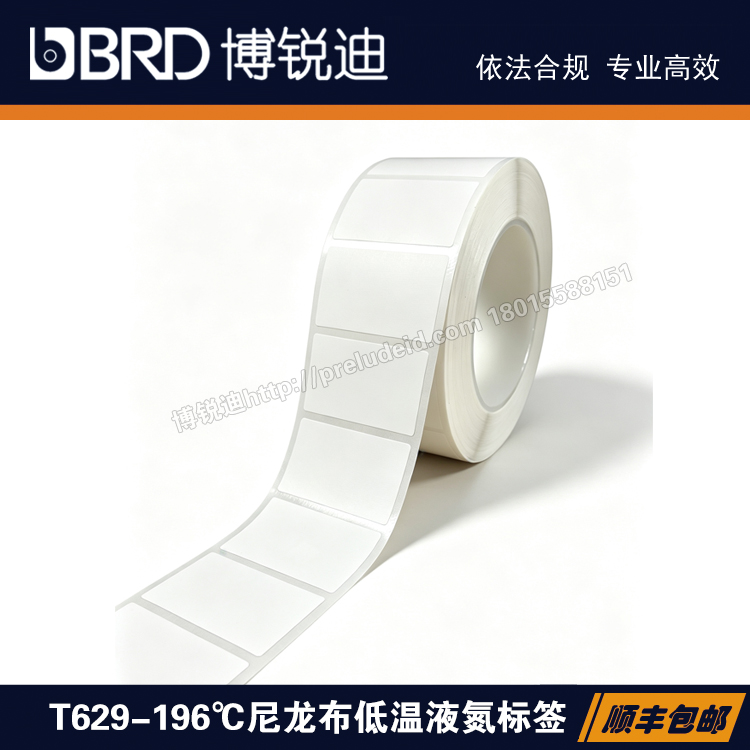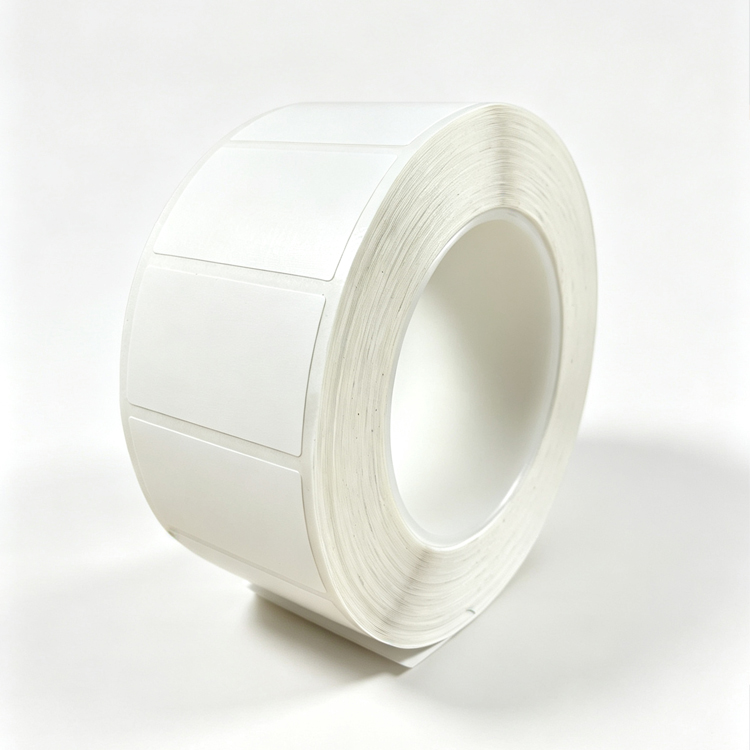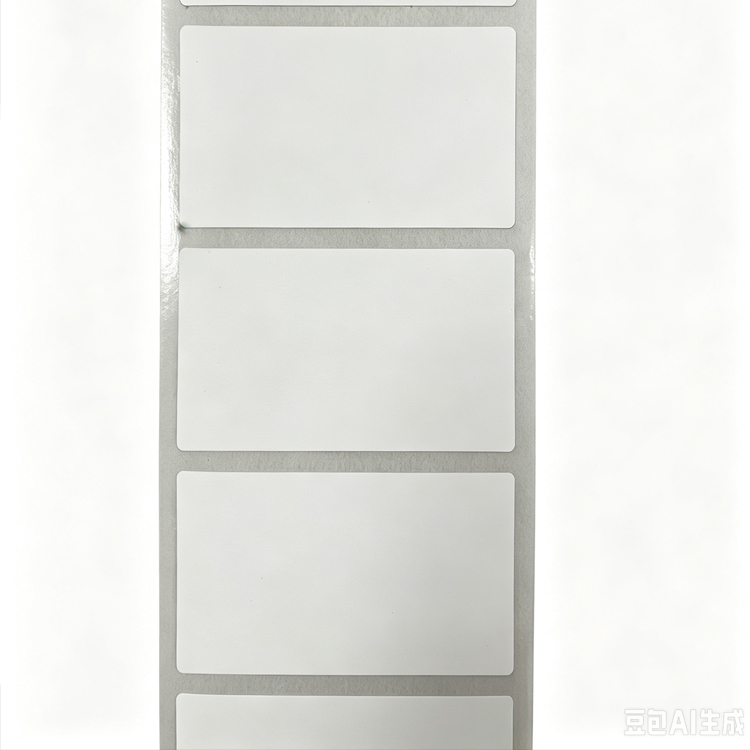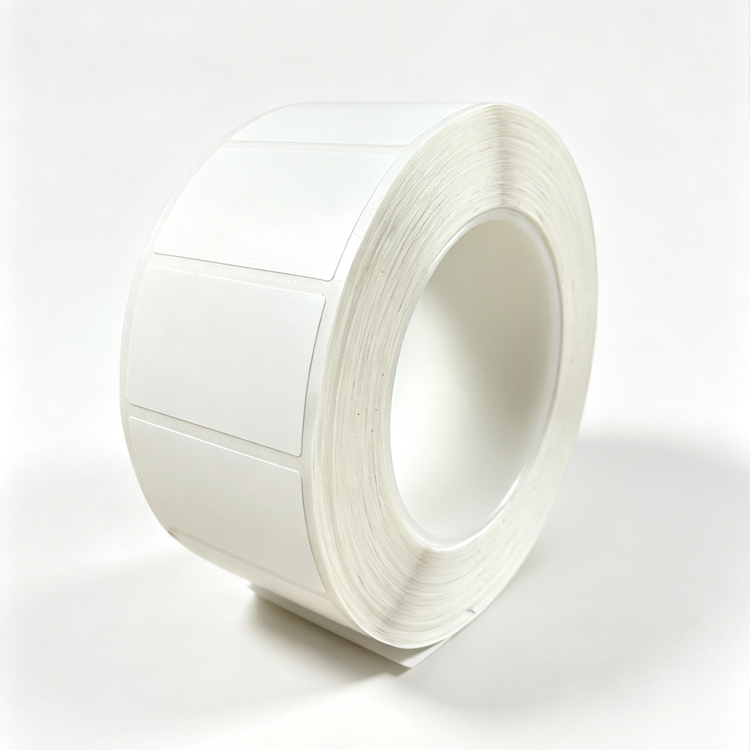
Lab014-629 roll format, actual photo
BRD 博锐迪 · T629 Series
Lab014-629 Nylon Cloth Cryogenic LN₂ Label
50 × 30 mm · Resists -196 °C LN₂ to +121 °C autoclaving · For cryovials / microcentrifuge tubes / microscope slides
50 × 30 mmT629 nylon cloth-196 °C LN₂Passes all four temperature tiers
Product Overview
Lab014-629 is a roll-format cryogenic label made with T629 nylon cloth face stock, 50 × 30 mm per label, for ultra-low temperature identification of cryovials, microcentrifuge tubes, microscope slides and other laboratory containers. The nylon cloth base is soft and conformable, bending with the curved tube body without wrinkling; it withstands everything from -196 °C LN₂ to +121 °C autoclaving, so one label covers the entire workflow of sampling, cryopreservation, water bath rewarming and autoclaving — a general-purpose choice for ultra-low temperature laboratory applications.
Key Features
Why nylon cloth is preferred for LN₂ applications
布
Conformable nylon cloth base
The soft cloth face stock bends and folds, conforming to curved tube bodies and bottle cap sides; it resists edge lifting under repeated handling and friction, and withstands folding better than film materials.
温
Passes all four temperature tiers
Per the official material guide: suitable for LN₂ at -196 °C, freezer at -80 °C, hot water at 100 °C and autoclaving at 121 °C — no need to relabel from cryopreservation through rewarming and autoclaving.
冻
Resists repeated freeze–thaw cycles
Maintains adhesion and legibility through repeated freeze–thaw cycles — removal from LN₂, room-temperature handling and return — suited to the long-term storage management rhythm of biobanks.
用
Suitable for all laboratory scenarios
T629 is the only material in the guide that simultaneously covers room temperature, microscope slides, cryovials/test tubes and conical tubes — one label serves multiple container types, reducing stock keeping.
Specifications
Subject to the factory specification sheet; contact us to confirm before ordering
| Item No. | Lab014-629 |
| Face stock | T629 nylon cloth cryogenic label material |
| Label size | 50 × 30 mm (W × H) |
| Unit of quantity | Roll |
| Temperature range | -196 °C LN₂ / -80 °C freezer / 100 °C hot water / 121 °C autoclaving |
| Typical containers | Cryovials · microcentrifuge tubes · microscope slides · conical tubes |
| Matching ribbon | Laboratory cryogenic ribbon (BRL-80-BK / BRL-110-BK as listed on the same series pages) |
| Compatible printers | Laboratory label printers (M611 / EOS2-3 / MACH4S etc. as listed on the same series pages) |
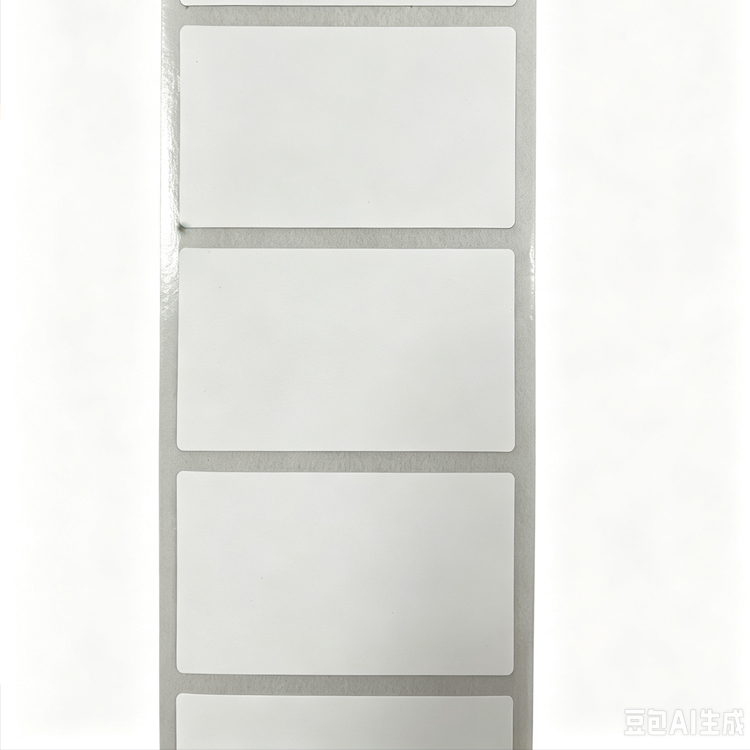
Flat lay actual photo: 50 × 30 mm
Same-Series Temperature Quick Reference
Choose the material by the lowest temperature the container will encounter
| T629 nylon cloth (this item) | -196 °C LN₂ / -80 °C / 100 °C / 121 °C, full temperature range, conformable and fold-resistant |
| T429 freezer label | -196 °C / -80 °C; requires at least 3 mm overlap at both ends when applied to frozen tube surfaces |
| T419 gloss white PET | Resists -40 °C and above; an economical choice for both room temperature and freezer use |
| T329 matte white PP | Resists -40 °C refrigeration and freezing; suitable for packaging labels and routine refrigeration |
Typical Applications
Long-term LN₂ cryovial storage
Print ID and passage number before cell lines and strains go into the LN₂ dewar; barcodes stay put through long-term immersion at -196 °C and scan instantly on recovery.
Microcentrifuge tube aliquoting and kit labeling
The 50 × 30 mm format fits flat on 1.5–2 mL microcentrifuge tube bodies, printing aliquot batch, concentration and date in one pass.
Microscope slide pathology specimen labeling
Nylon cloth conforms to the frosted end of slides; markings remain intact through dehydration and staining, suitable for tissue specimen archiving.
Labeling before autoclaving
Usable at +121 °C autoclaving; labels on autoclave bags and tubes stay through the entire process without relabeling.
FAQ
Q: How do I choose between nylon cloth and PET ultra-low temperature labels?
A: For curved surfaces, resistance to repeated freeze–thaw cycles and spanning multiple temperature tiers from -196 °C to +121 °C, choose T629 nylon cloth; if you only use a -80 °C freezer with straight tube bodies and want lower cost, compare the T429 series.
Q: Are there specific application requirements for tubes stored in LN₂?
A: Apply labels at room temperature and press firmly; let them sit before placing into LN₂. Some ultra-low temperature materials require wrap-around overlap at both ends; T629 can be applied flat. Refer to the product specification sheet for details.
Q: How small can the printed text be?
A: With laboratory cryogenic ribbon and a 300 dpi laboratory printer, small Chinese characters and dense barcodes can be printed. A test print is recommended before full production runs.
Selection & Usage Guide
Four steps to confirm whether this product suits you
1
Confirm temperature tiers
Choose this item for multiple temperature tiers spanning -196 °C/-80 °C/100 °C/121 °C; for refrigeration only above -40 °C, consider the more economical T329.
2
Check container size
50 × 30 mm suits microcentrifuge tubes, medium-diameter cryovials and microscope slides; for larger tube bodies or cap-top labeling, see the 80 × 60 mm and 80 × 80 mm items in the same series.
3
Check printing compatibility
Roll-format thermal transfer, used with laboratory cryogenic ribbon; test print a small batch before switching ribbon models.
4
Test application and freeze–thaw validation
Apply 5–10 labels to actual containers at room temperature and press firmly, complete one LN₂ in-and-out cycle, and confirm no edge lifting and scannable barcodes before scaling up.
Note: Clean the labeling surface with 70% alcohol and let it dry; after applying at room temperature and pressing firmly, let it sit before placing into LN₂; wipe off frost on the tube wall first; applying labels immediately after removal from low temperature will affect initial adhesion due to condensation.
Need a bulk quotation or custom size?
Custom sizes and printing available; free samples for trial.
Sales Hotline 18015583218